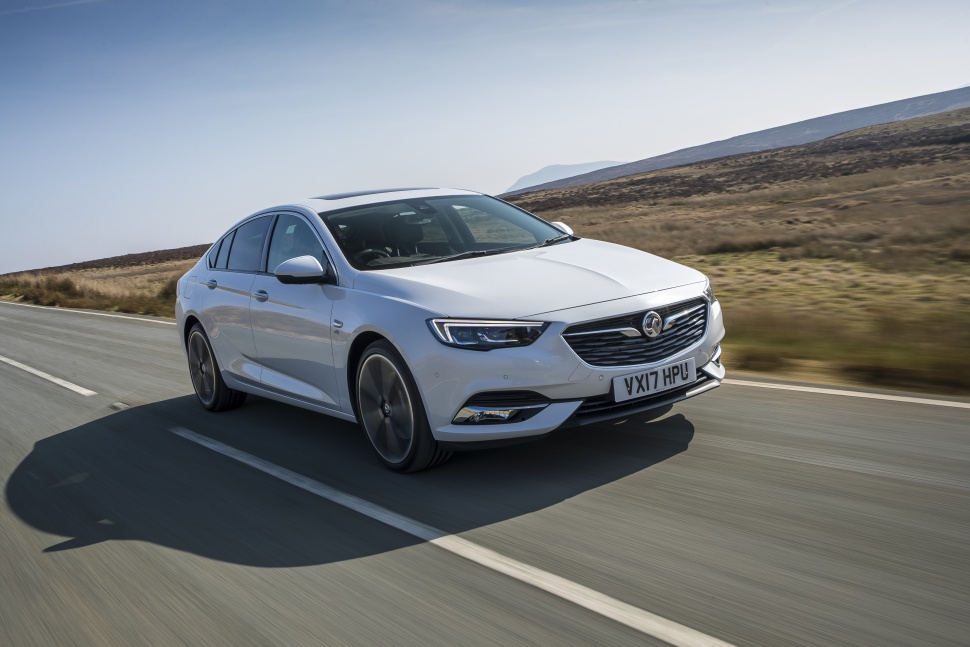
The Vauxhall Insignia II Grand Sport represents the second generation of Vauxhall’s flagship D-segment offering, a vehicle primarily designed for the European and United Kingdom markets. While not sold in the United States, the Insignia, known as an Opel in most of continental Europe and Buick Regal in the U.S., plays a crucial role as a mainstream family car and executive transport across the Atlantic. This particular variant, the Vauxhall Insignia II Grand Sport 1.6 EcoTEC Turbo D (136 Hp), was produced for a relatively short period between June 2017 and July 2018, showcasing a blend of efficiency, practicality, and modern design. As a liftback, it offered a compelling combination of sedan aesthetics with hatchback versatility, appealing to a broad demographic seeking a spacious and economical vehicle.
The Vauxhall Insignia II Grand Sport 1.6 EcoTEC Turbo D (136 Hp) in the European Market
The second-generation Vauxhall Insignia, launched in 2017, marked a significant step forward for the brand, moving away from its predecessor’s somewhat conservative design towards a sleeker, more dynamic aesthetic. The “Grand Sport” designation highlighted its ambition to offer a more premium and athletic driving experience. In markets where it was sold, primarily the UK and Ireland, the Insignia competed fiercely in the highly contested D-segment against established rivals like the Ford Mondeo, Volkswagen Passat, and Skoda Superb. Its success hinged on offering a strong value proposition, combining refined driving dynamics, a spacious interior, and advanced features, all underpinned by efficient powertrains. The 1.6 EcoTEC Turbo D (136 Hp) diesel engine variant was particularly important in Europe, where diesel engines historically dominated the fleet and long-distance travel segments due to their superior fuel economy and torque characteristics.
This iteration of the Insignia was developed under Opel/Vauxhall’s ownership by General Motors, before the brands were acquired by Groupe PSA (now Stellantis). This lineage meant it shared a platform and engineering philosophy with other GM products globally, including the aforementioned Buick Regal sold in North America. However, the Vauxhall badging and specific trim levels catered directly to British consumer preferences, emphasizing a balance of comfort, practicality, and cost-effectiveness. The Grand Sport’s liftback body style was a clever design choice, providing the elegant profile of a sedan with the practical cargo access of a hatchback, a feature highly valued by families and business users alike.
Engine & Performance: The 1.6 EcoTEC Turbo D Powertrain
At the heart of the Vauxhall Insignia II Grand Sport 1.6 EcoTEC Turbo D (136 Hp) lies a sophisticated 1.6-liter (1598 cm³ or 97.52 cu. in.) inline four-cylinder diesel engine, designated with the model code B16DTH. This powerplant was engineered for a balance of efficiency and respectable performance, a common demand in the European market for its class. Generating 136 horsepower (Hp) at a peak range of 3500-4000 rpm, and a robust 236.02 lb.-ft. (320 Nm) of torque available between 2000-2250 rpm, the engine provided ample pulling power for daily driving and highway cruising. Its turbocharger and intercooler system ensured responsive acceleration and efficient combustion across the rev range.
The engine’s design featured a 16:1 compression ratio and a common rail fuel injection system, contributing to its Euro 6 emissions compliance, a crucial standard for vehicles sold in Europe at the time. With a bore of 3.14 inches (79.7 mm) and a stroke of 3.15 inches (80.1 mm), the engine was designed for smooth operation and durability. Power was delivered to the front wheels via a precise 6-speed manual transmission, offering engaging control for the driver. In terms of outright performance, the Insignia 1.6 EcoTEC Turbo D achieved 0-60 mph in a calculated 10 seconds, with a top speed of 131.11 mph (211 km/h), making it competitive within its segment for everyday usability rather than outright speed. Its weight-to-power ratio stood at 11.1 kg/Hp (90.5 Hp/tonne), reflecting its emphasis on efficiency.
Where this powertrain truly shined was in its fuel economy. The official combined fuel consumption figures were an impressive 54.7 US mpg (4.3 l/100 km), with extra urban figures reaching 60.3 US mpg (3.9 l/100 km), making it a highly economical choice for long-distance drivers. Urban consumption was rated at 46.1 US mpg (5.1 l/100 km). These figures, combined with CO2 emissions of 114 g/km, underscored its environmental credentials and low running costs, which were significant selling points in the European context.
Design & Features: Grand Sport Aesthetics and Practicality
The Vauxhall Insignia II Grand Sport adopted a sleek, coupe-like profile that significantly enhanced its visual appeal compared to its more conservative predecessor. Its liftback body type, with five doors and seating for five occupants, cleverly blended the elegance of a traditional sedan with the practical versatility of a hatchback. Measuring 192.8 inches (4897 mm) in length, 73.35 inches (1863 mm) in width (82.4 inches or 2093 mm including mirrors), and 57.28 inches (1455 mm) in height, the Insignia Grand Sport was a substantial vehicle, offering generous interior space for passengers and cargo.
The long wheelbase of 111.38 inches (2829 mm) contributed to both a comfortable ride and excellent stability, while also maximizing cabin room, particularly for rear-seat passengers. The design language featured sharp lines, a prominent grille, and sculpted bodywork, giving it a premium presence on the road. Despite its sporty moniker, practicality remained a core strength. The trunk (boot) space was substantial, offering a minimum of 17.3 cu. ft. (490 liters) with the rear seats up, expanding significantly to 51.21 cu. ft. (1450 liters) when the rear seats were folded down. This cavernous cargo capacity made it an ideal choice for families, road trips, or carrying large items, a distinct advantage over conventional sedans.
In terms of chassis and assisting systems, the Insignia II Grand Sport featured an independent McPherson type front suspension for precise handling and ride comfort. Braking was handled by ventilated discs at the front and solid discs at the rear, supported by an Anti-lock Braking System (ABS) for enhanced safety. The steering system utilized a rack and pinion setup with electric power steering, providing light effort at low speeds for maneuverability and greater feedback at higher speeds. Standard tire size was 215/55 R17, mounted on 17-inch wheel rims, balancing grip, comfort, and rolling resistance for optimal efficiency. Other key features, typical for a car of its era and segment, would include an array of airbags, electronic stability control, and modern infotainment options.
Technical Specifications
| Category | Specification |
| Brand | Vauxhall |
| Model | Insignia |
| Generation | Insignia II Grand Sport |
| Engine Type | 1.6 EcoTEC Turbo D (136 Hp) |
| Production Start | June, 2017 |
| Production End | July, 2018 |
| Powertrain Architecture | Internal Combustion engine |
| Body Type | Liftback |
| Seats | 5 |
| Doors | 5 |
| Fuel Consumption (Urban) | 5.1 l/100 km (46.1 US mpg) |
| Fuel Consumption (Extra Urban) | 3.9 l/100 km (60.3 US mpg) |
| Fuel Consumption (Combined) | 4.3 l/100 km (54.7 US mpg) |
| CO2 Emissions | 114 g/km |
| Fuel Type | Diesel |
| Acceleration 0 – 62 mph (0-100 km/h) | 10.5 sec |
| Acceleration 0 – 60 mph | 10 sec |
| Maximum Speed | 131.11 mph (211 km/h) |
| Emission Standard | Euro 6 |
| Weight-to-Power Ratio | 11.1 kg/Hp (90.5 Hp/tonne) |
| Weight-to-Torque Ratio | 4.7 kg/Nm (212.9 Nm/tonne) |
| Power | 136 Hp @ 3500-4000 rpm |
| Power per Liter | 85.1 Hp/l |
| Torque | 236.02 lb.-ft. (320 Nm) @ 2000-2250 rpm |
| Engine Layout | Front, Transverse |
| Engine Model/Code | B16DTH |
| Engine Displacement | 1.6 liters (1598 cm³ / 97.52 cu. in.) |
| Number of Cylinders | 4 |
| Engine Configuration | Inline |
| Cylinder Bore | 3.14 in. (79.7 mm) |
| Piston Stroke | 3.15 in. (80.1 mm) |
| Compression Ratio | 16:1 |
| Valves per Cylinder | 4 |
| Fuel Injection System | Diesel Commonrail |
| Engine Aspiration | Turbocharger, Intercooler |
| Engine Oil Capacity | 5.28 US qt (5 l) |
| Coolant Capacity | 6.34 US qt (6 l) |
| Engine Systems | Particulate filter |
| Kerb Weight | 3313.55 lbs (1503 kg) |
| Trunk Space (Minimum) | 17.3 cu. ft. (490 l) |
| Trunk Space (Maximum) | 51.21 cu. ft. (1450 l) |
| Fuel Tank Capacity | 16.38 US gal (62 l) |
| Permitted Trailer Load (with brakes, 12%) | 3097.49 lbs (1405 kg) |
| Length | 192.8 in. (4897 mm) |
| Width | 73.35 in. (1863 mm) |
| Width (including mirrors) | 82.4 in. (2093 mm) |
| Height | 57.28 in. (1455 mm) |
| Wheelbase | 111.38 in. (2829 mm) |
| Drivetrain Architecture | Front wheel drive, Internal Combustion engine |
| Drive Wheel | Front wheel drive |
| Gearbox | 6 gears, manual transmission |
| Front Suspension | Independent type McPherson |
| Front Brakes | Ventilated discs |
| Rear Brakes | Disc |
| Assisting Systems | ABS (Anti-lock braking system) |
| Steering Type | Steering rack and pinion |
| Power Steering | Electric Steering |
| Tires Size | 215/55 R17 |
| Wheel Rims Size | 17 inches |
Legacy and Market Impact
The Vauxhall Insignia II Grand Sport 1.6 EcoTEC Turbo D (136 Hp), despite its relatively short production run for this specific variant, contributed to the overall positive reception of the second-generation Insignia. In its primary markets, particularly the UK, the Insignia II was generally well-regarded for its improved aesthetics, enhanced interior quality, and refined driving dynamics compared to its predecessor. The 1.6-liter diesel engine was a key offering, providing a compelling blend of low running costs, sufficient performance for daily tasks, and compliance with strict European emissions standards. This made it a popular choice for fleet operators and private buyers who prioritized fuel efficiency and long-distance comfort.
In a segment dominated by strong competitors like the Volkswagen Passat, Ford Mondeo, and Skoda Superb, the Insignia II Grand Sport carved out its niche by offering a stylish alternative with competitive pricing and a strong emphasis on practicality through its liftback design. Its large trunk capacity and comfortable cabin were significant advantages, appealing to families and business users requiring versatility. While it might not have always matched the perceived premium feel of some German rivals, it offered a more engaging driving experience and a distinctive design that helped it stand out.
The Insignia II’s legacy is also intertwined with the broader corporate changes at Opel/Vauxhall. Launched under General Motors, it represented the pinnacle of GM’s engineering efforts for its European brands before the transition to PSA Group ownership. This particular diesel variant showcases the efficiency-focused engineering that was prevalent in Europe during the mid-to-late 2010s, prior to the broader shift away from diesel powertrains. Today, the second-generation Insignia remains a popular used car choice in the UK and Europe, valued for its robust build, spaciousness, and economical operation, particularly in its diesel configurations. It stands as a testament to Vauxhall’s commitment to offering a competitive, well-rounded D-segment vehicle that ably served the needs of its target market.