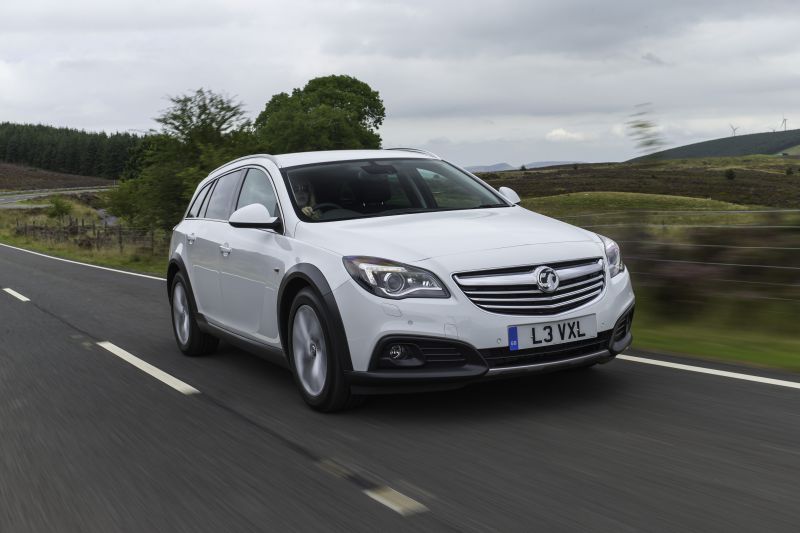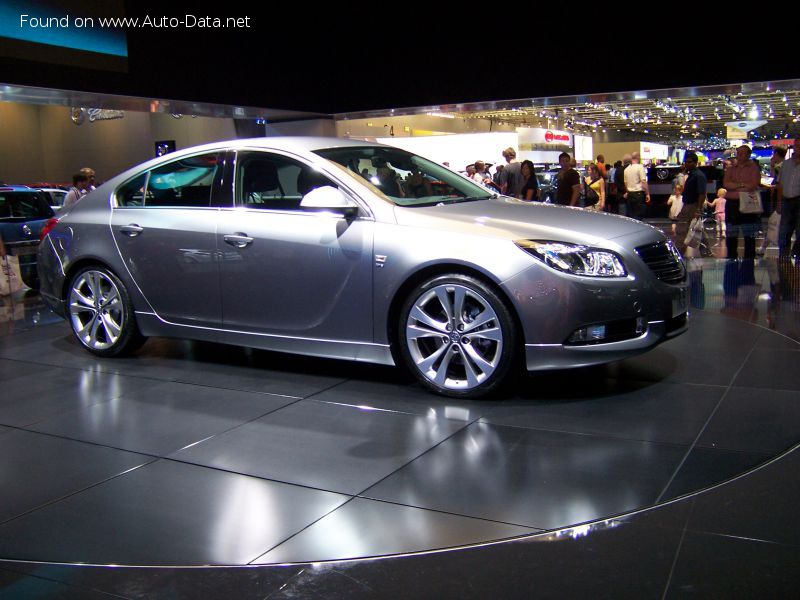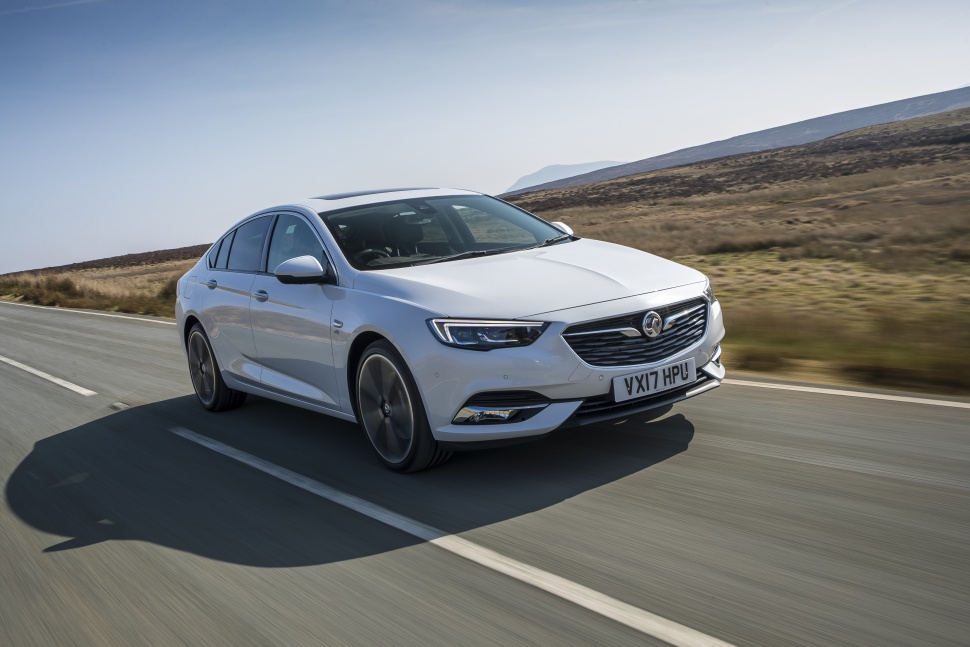
The Vauxhall Insignia II Grand Sport 1.6 Turbo D, produced from 2018 to 2020, represents a significant iteration of Vauxhall’s flagship model. As a liftback, it occupies the mid-size segment, competing with vehicles like the Ford Mondeo and Volkswagen Passat. While the Insignia brand isn’t directly sold in the United States, understanding its position is crucial as it showcases European automotive engineering focused on fuel efficiency, practicality, and a blend of comfort and performance. The “Grand Sport” designation denotes the liftback body style, offering a more versatile cargo area compared to the traditional sedan. This model specifically features a 1.6-liter turbocharged diesel engine, prioritizing fuel economy and lower emissions.
Vauxhall Insignia II Grand Sport: A Detailed Overview
The Insignia II, launched in 2017, was a substantial redesign of the original Insignia, aiming to improve upon its predecessor’s strengths while addressing areas for refinement. The Grand Sport variant, with its liftback configuration, became a popular choice for buyers seeking a spacious and practical vehicle. Vauxhall, as a British brand under the Stellantis umbrella (formerly General Motors), caters primarily to the European market. The Insignia, in its various forms, has been a key model for Vauxhall, demonstrating the brand’s commitment to offering competitive vehicles in the mainstream market.
Engine & Performance
The heart of the Insignia II Grand Sport 1.6 Turbo D is a 1.6-liter inline-four cylinder diesel engine, designated D16DTH. This engine produces 136 horsepower at 3,500-4,000 rpm and a respectable 320 Nm (236.02 lb.-ft.) of torque between 2,000-2,250 rpm. The turbocharger and intercooler work in tandem to enhance power output and efficiency. The engine’s transverse mounting and front-wheel-drive configuration are typical for vehicles in this class, optimizing space utilization and handling characteristics. Paired with a six-speed manual transmission, the powertrain delivers a balance between driver engagement and fuel economy. The vehicle achieves a maximum speed of 210 km/h (130.49 mph). Fuel consumption is rated between 4.9 and 5.5 liters per 100 kilometers (48-42.8 US mpg, 57.6-51.4 UK mpg), and CO2 emissions are rated at 106 g/km, meeting Euro 6d-TEMP emission standards. The inclusion of a Start & Stop system and a particulate filter further contributes to reduced emissions.
Design & Features
The Insignia II Grand Sport boasts a sleek and modern liftback design. Its flowing lines and sculpted bodywork contribute to a drag coefficient of just 0.26, enhancing aerodynamic efficiency. The vehicle measures 4,897 mm (192.8 in) in length, 1,863 mm (73.35 in) in width, and 1,455 mm (57.28 in) in height, providing ample interior space for passengers and cargo. The wheelbase of 2,829 mm (111.38 in) contributes to a comfortable ride. Inside, the Insignia II Grand Sport offers a well-appointed cabin with seating for five. The liftback design provides a versatile cargo area, offering 490 liters (17.3 cu. ft.) of space with the rear seats up and expanding to 1,450 liters (51.21 cu. ft.) with the rear seats folded down. Standard safety features include ABS (Anti-lock braking system) and electric power steering. The vehicle also incorporates an AdBlue tank with a capacity of 15 liters (3.96 US gal) for selective catalytic reduction, further reducing NOx emissions. Practicality is further enhanced by a 62-liter (16.38 US gal) fuel tank and a maximum roof load capacity of 100 kg (220.46 lbs).
Technical Specifications
| Brand | Vauxhall |
| Model | Insignia |
| Generation | Insignia II Grand Sport |
| Type (Engine) | 1.6 Turbo D (136 Hp) |
| Start of production | July, 2018 |
| End of production | 2020 |
| Powertrain Architecture | Internal Combustion engine |
| Body type | Liftback |
| Seats | 5 |
| Doors | 5 |
| Fuel consumption (combined) | 4.9-5.5 l/100 km (48 – 42.8 US mpg, 57.6 – 51.4 UK mpg, 20.4 – 18.2 km/l) |
| CO2 emissions | 106 g/km |
| Fuel Type | Diesel |
| Maximum speed | 210 km/h (130.49 mph) |
| Emission standard | Euro 6d-TEMP |
| Power | 136 Hp @ 3500-4000 rpm |
| Power per litre | 85.1 Hp/l |
| Torque | 320 Nm @ 2000-2250 rpm (236.02 lb.-ft. @ 2000-2250 rpm) |
| Engine layout | Front, Transverse |
| Engine Model/Code | D16DTH |
| Engine displacement | 1598 cm3 (97.52 cu. in.) |
| Number of cylinders | 4 |
| Engine configuration | Inline |
| Number of valves per cylinder | 4 |
| Fuel injection system | Diesel Commonrail |
| Engine aspiration | Turbocharger, Intercooler |
| Valvetrain | DOHC |
| Engine oil capacity | 5 l (5.28 US qt | 4.4 UK qt) |
| Coolant | 6 l (6.34 US qt | 5.28 UK qt) |
| Max. weight | 2070 kg (4563.57 lbs.) |
| Trunk (boot) space – minimum | 490 l (17.3 cu. ft.) |
| Trunk (boot) space – maximum | 1450 l (51.21 cu. ft.) |
| Fuel tank capacity | 62 l (16.38 US gal | 13.64 UK gal) |
| AdBlue tank | 15 l (3.96 US gal | 3.3 UK gal) |
| Max. roof load | 100 kg (220.46 lbs.) |
| Permitted trailer load with brakes (12%) | 1405 kg (3097.49 lbs.) |
| Permitted trailer load without brakes | 730 kg (1609.37 lbs.) |
| Length | 4897 mm (192.8 in.) |
| Width | 1863 mm (73.35 in.) |
| Width including mirrors | 2093 mm (82.4 in.) |
| Height | 1455 mm (57.28 in.) |
| Wheelbase | 2829 mm (111.38 in.) |
| Front overhang | 990 mm (38.98 in.) |
| Rear overhang | 1078 mm (42.44 in.) |
| Drag coefficient (Cd) | 0.26 |
| Minimum turning circle (turning diameter) | 11.5 m (37.73 ft.) |
| Drive wheel | Front wheel drive |
| Number of gears and type of gearbox | 6 gears, manual transmission |
| Front suspension | Independent, type McPherson with coil spring and anti-roll bar |
| Rear suspension | Independent multi-link suspension |
| Front brakes | Ventilated discs, 321 mm |
| Rear brakes | Disc, 288 mm |
| Assisting systems | ABS (Anti-lock braking system) |
| Steering type | Steering rack and pinion |
| Power steering | Electric Steering |
| Tires size | 215/55 R17; 225/55 R17; 245/45 R18 |
| Wheel rims size | 17; 18 |