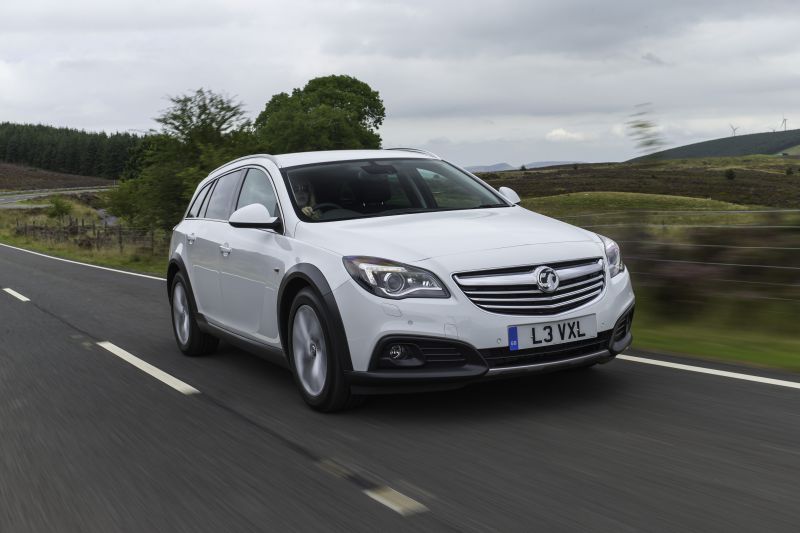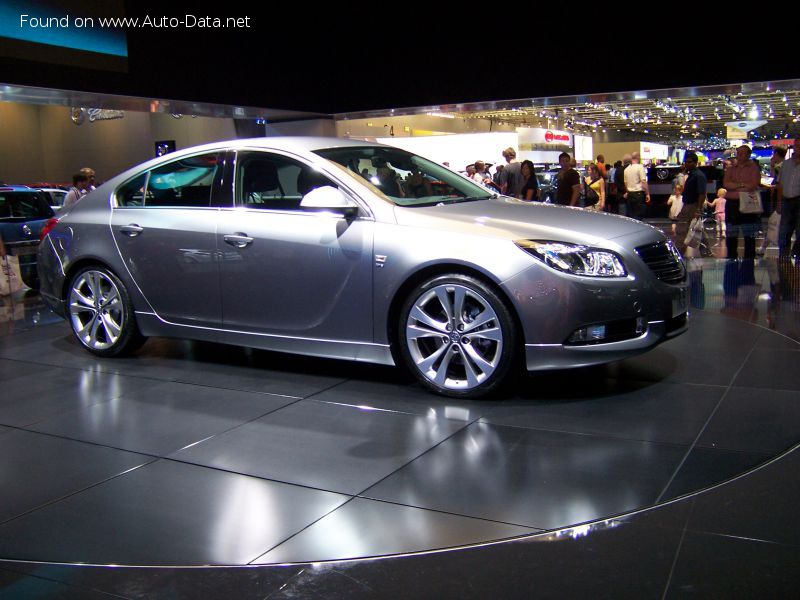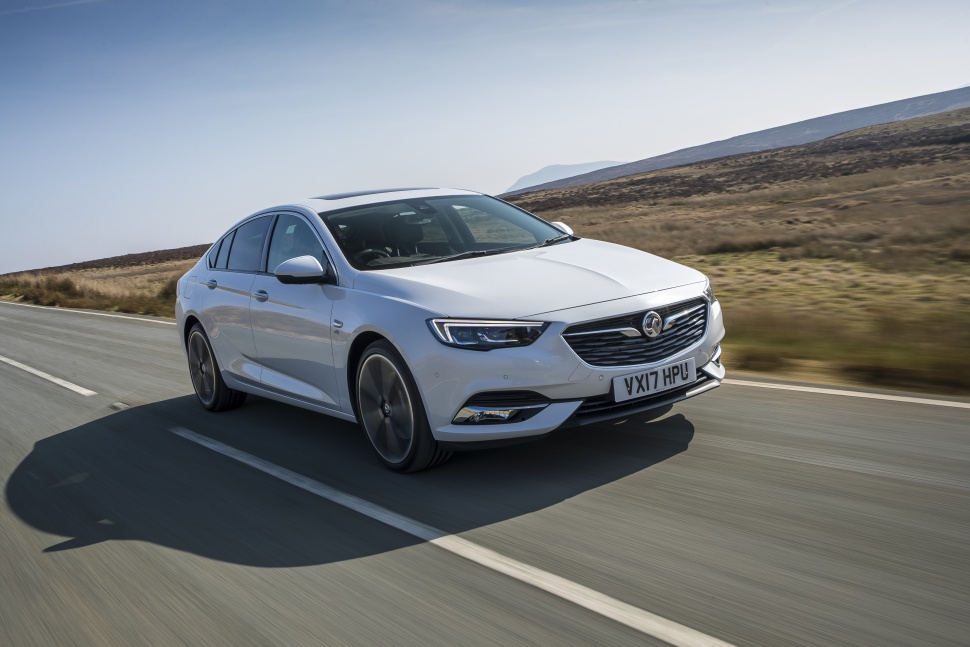
The Vauxhall Insignia II Grand Sport 1.6 Turbo D, produced from June 2017 to July 2018, represents a significant iteration of Vauxhall’s D-segment offering. As a liftback, it aimed to combine practicality with a more stylish profile than traditional saloons. While the Insignia nameplate was well-established in the United Kingdom, the second generation, and particularly the Grand Sport variant, sought to elevate the model’s appeal through improved design, technology, and efficiency. This model was primarily marketed in Europe, where liftbacks and hatchbacks are more prevalent than in the United States. The 1.6 Turbo D trim level focused on providing a balance between fuel economy and reasonable performance, appealing to drivers prioritizing cost-effectiveness.
Vauxhall Insignia II Grand Sport: Overview
The Insignia II Grand Sport was Vauxhall’s competitor in the mid-size car segment, facing rivals such as the Ford Mondeo, Volkswagen Passat, and Peugeot 508. The “Grand Sport” designation specifically refers to the liftback body style, offering a larger, more accessible cargo area compared to the traditional notchback saloon. The 1.6 Turbo D variant was positioned as an entry-level diesel option, utilizing a turbocharged engine to deliver acceptable power while maintaining competitive fuel consumption figures. It was designed to appeal to fleet buyers and private customers alike, offering a practical and relatively affordable option within the Insignia range.
Engine & Performance
The heart of the Insignia II Grand Sport 1.6 Turbo D is a 1.6-liter inline-four cylinder diesel engine, designated the B16DTH. This engine produces 136 horsepower at 3500-4000 rpm and 320 Nm (236.02 lb.-ft.) of torque between 2000-2250 rpm. The engine features a turbocharger and intercooler to enhance performance and efficiency. Power is delivered to the front wheels via a six-speed automatic transmission. Acceleration from 0 to 100 km/h (0-62 mph) takes 10.9 seconds, while 0-60 mph is achieved in approximately 10.4 seconds. The vehicle has a maximum speed of 203 km/h (126.14 mph). The engine’s design prioritizes fuel economy, achieving combined fuel consumption of 5.1 l/100 km (46.1 US mpg, 55.4 UK mpg), and CO2 emissions of 134 g/km, meeting Euro 6 emission standards. The power-to-weight ratio is 11.2 kg/Hp, and the torque-to-weight ratio is 4.8 kg/Nm.
Design & Features
The Insignia II Grand Sport boasts a sleek, modern liftback design. The sloping roofline and integrated rear spoiler contribute to a more dynamic appearance. The vehicle offers seating for five passengers and features a spacious interior, particularly in the rear. The liftback configuration provides a generous 490-liter (17.3 cu. ft.) trunk space, which expands to 1450 liters (51.21 cu. ft.) with the rear seats folded down. Standard features typically included air conditioning, a touchscreen infotainment system, and various safety systems such as ABS (Anti-lock Braking System). The suspension utilizes an independent McPherson strut setup at the front and disc brakes on all wheels. Electric power steering provides a responsive and comfortable driving experience. The vehicle rides on 17-inch alloy wheels with tire size 215/55 R17.
Technical Specifications
| Brand | Vauxhall |
| Model | Insignia |
| Generation | Insignia II Grand Sport |
| Type (Engine) | 1.6 Turbo D (136 Hp) Automatic |
| Start of production | June, 2017 |
| End of production | July, 2018 |
| Powertrain Architecture | Internal Combustion engine |
| Body type | Liftback |
| Seats | 5 |
| Doors | 5 |
| Fuel consumption (urban) | 6.1 l/100 km (38.6 US mpg, 46.3 UK mpg) |
| Fuel consumption (extra urban) | 4.5 l/100 km (52.3 US mpg, 62.8 UK mpg) |
| Fuel consumption (combined) | 5.1 l/100 km (46.1 US mpg, 55.4 UK mpg) |
| CO2 emissions | 134 g/km |
| Fuel Type | Diesel |
| Acceleration 0 – 100 km/h | 10.9 sec |
| Acceleration 0 – 62 mph | 10.9 sec |
| Acceleration 0 – 60 mph | 10.4 sec |
| Maximum speed | 203 km/h (126.14 mph) |
| Emission standard | Euro 6 |
| Weight-to-power ratio | 11.2 kg/Hp |
| Weight-to-torque ratio | 4.8 kg/Nm |
| Power | 136 Hp @ 3500-4000 rpm |
| Torque | 320 Nm @ 2000-2250 rpm (236.02 lb.-ft.) |
| Engine layout | Front, Transverse |
| Engine Model/Code | B16DTH |
| Engine displacement | 1598 cm3 (97.52 cu. in.) |
| Number of cylinders | 4 |
| Engine configuration | Inline |
| Cylinder Bore | 79.7 mm (3.14 in.) |
| Piston Stroke | 80.1 mm (3.15 in.) |
| Compression ratio | 16:1 |
| Number of valves per cylinder | 4 |
| Fuel injection system | Diesel Commonrail |
| Engine aspiration | Turbocharger, Intercooler |
| Engine oil capacity | 5 l (5.28 US qt | 4.4 UK qt) |
| Coolant | 6 l (6.34 US qt | 5.28 UK qt) |
| Kerb Weight | 1522 kg (3355.44 lbs.) |
| Trunk (boot) space – minimum | 490 l (17.3 cu. ft.) |
| Trunk (boot) space – maximum | 1450 l (51.21 cu. ft.) |
| Fuel tank capacity | 62 l (16.38 US gal | 13.64 UK gal) |
| Permitted trailer load with brakes (12%) | 1405 kg (3097.49 lbs.) |
| Length | 4897 mm (192.8 in.) |
| Width | 1863 mm (73.35 in.) |
| Width including mirrors | 2093 mm (82.4 in.) |
| Height | 1455 mm (57.28 in.) |
| Wheelbase | 2829 mm (111.38 in.) |
| Drivetrain Architecture | Front wheel drive |
| Number of gears and type of gearbox | 6 gears, automatic transmission |
| Front suspension | Independent type McPherson |
| Front brakes | Ventilated discs |
| Rear brakes | Disc |
| Steering type | Steering rack and pinion |
| Power steering | Electric Steering |
| Tires size | 215/55 R17 |
| Wheel rims size | 17 |
The Vauxhall Insignia II Grand Sport 1.6 Turbo D offered a compelling package for buyers seeking a practical, efficient, and stylish mid-size vehicle. While not officially sold in the United States, it represents a popular choice in the European market, demonstrating Vauxhall’s commitment to providing competitive vehicles within the D-segment.