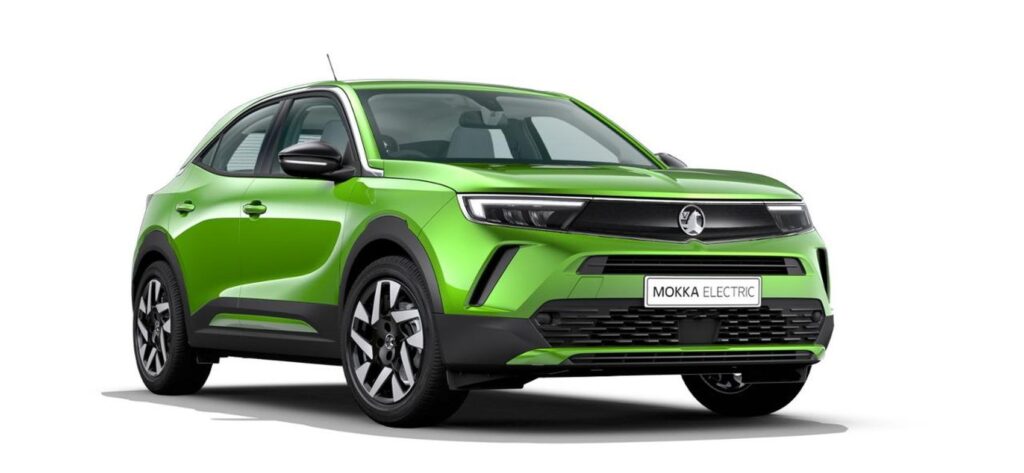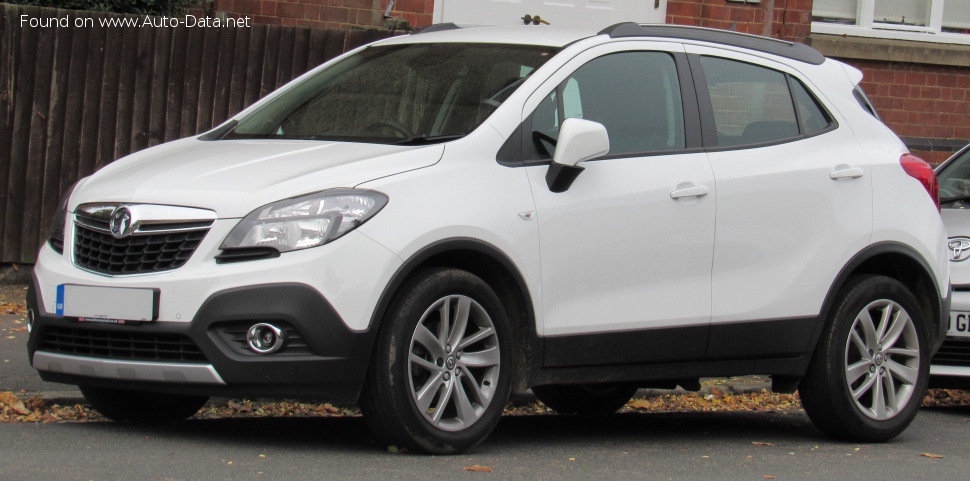
The Vauxhall Mokka, known as the Opel Mokka in mainland Europe, is a subcompact crossover SUV introduced in 2012. Representing Vauxhall’s entry into the rapidly growing B-segment crossover market, the Mokka aimed to blend practicality, affordability, and a degree of style. This article focuses on the first generation Mokka (2012-2016), specifically the 1.4i Turbo ecoTEC variant with Start/Stop technology, a popular engine choice in the European market. While not officially sold in the United States, understanding the Mokka provides insight into the evolving European small SUV landscape and Vauxhall’s (now part of Stellantis) design and engineering philosophies.
Vauxhall Mokka 1.4i Turbo ecoTEC: Overview
The Mokka 1.4i Turbo ecoTEC was positioned as a versatile vehicle for urban and suburban drivers. It offered a higher driving position and increased cargo space compared to traditional hatchbacks, appealing to families and individuals seeking a practical yet modern vehicle. The “ecoTEC” designation highlighted Vauxhall’s efforts to improve fuel efficiency and reduce emissions through technologies like Start/Stop functionality. The Mokka competed with vehicles like the Nissan Juke, Renault Captur, and Peugeot 2008 in the European market.
Engine & Performance
The heart of the Mokka 1.4i Turbo ecoTEC is a 1.4-liter, inline-four cylinder gasoline engine. This engine, identified by the codes A14NET and B14NET, produces 140 horsepower at 4900 rpm and 200 Newton-meters (147.51 lb.-ft.) of torque between 1850 and 4900 rpm. The turbocharger and intercooler significantly enhance performance, providing a responsive driving experience. Power per liter is rated at 102.6 hp/l. The engine is transversely mounted at the front of the vehicle and drives the front wheels. Acceleration from 0 to 100 km/h (0-62 mph) takes 9.3 seconds, while 0-60 mph is achieved in approximately 8.8 seconds. The Mokka 1.4i Turbo ecoTEC has a maximum speed of 193 km/h (119.92 mph). The inclusion of a Start/Stop system contributes to improved fuel economy in urban driving conditions. Fuel consumption figures are rated at 7.6 l/100 km (30.9 US mpg) in urban settings, 5.1 l/100 km (46.1 US mpg) on the extra-urban cycle, and 6.0 l/100 km (39.2 US mpg) combined. CO2 emissions are rated at 139 g/km, meeting Euro 5 emission standards.
Design & Features
The Mokka features a distinctive SUV body style with a relatively compact footprint. It’s a five-door vehicle with seating for five passengers. The exterior design, while polarizing for some, aimed for a bolder aesthetic than many of its competitors. Key design elements included a prominent front grille, sculpted headlights, and a contrasting roof color option. Inside, the Mokka offered a functional and reasonably well-equipped interior. Standard features typically included air conditioning, power windows, and a basic audio system. Higher trim levels added features like alloy wheels, a touchscreen infotainment system, and parking sensors. Safety features, important for a modern crossover, included ABS (Anti-lock Braking System) and multiple airbags. The Mokka’s trunk space is a practical 362 liters (12.78 cu. ft.) with the rear seats up, expanding to 1372 liters (48.45 cu. ft.) when the rear seats are folded down. The fuel tank capacity is 53 liters (14 US gal).
Technical Specifications
| Brand | Vauxhall |
| Model | Mokka |
| Type (Engine) | 1.4i Turbo ecoTEC (140 Hp) Start/Stop |
| Start of production | 2012 |
| End of production | 2016 |
| Powertrain Architecture | Internal Combustion engine |
| Body type | SUV |
| Seats | 5 |
| Doors | 5 |
| Fuel consumption (urban) | 7.6 l/100 km (30.9 US mpg) |
| Fuel consumption (extra urban) | 5.1 l/100 km (46.1 US mpg) |
| Fuel consumption (combined) | 6 l/100 km (39.2 US mpg) |
| CO2 emissions | 139 g/km |
| Fuel Type | Petrol (Gasoline) |
| Acceleration 0 – 100 km/h | 9.3 sec |
| Acceleration 0 – 62 mph | 9.3 sec |
| Acceleration 0 – 60 mph | 8.8 sec |
| Maximum speed | 193 km/h (119.92 mph) |
| Emission standard | Euro 5 |
| Weight-to-power ratio | 10.1 kg/Hp |
| Weight-to-torque ratio | 7.1 kg/Nm |
| Power | 140 Hp @ 4900 rpm |
| Torque | 200 Nm @ 1850-4900 rpm (147.51 lb.-ft.) |
| Engine layout | Front, Transverse |
| Engine Model/Code | A14NET, B14NET |
| Engine displacement | 1364 cm3 (83.24 cu. in.) |
| Number of cylinders | 4 |
| Engine configuration | Inline |
| Cylinder Bore | 72.5 mm (2.85 in.) |
| Piston Stroke | 82.6 mm (3.25 in.) |
| Number of valves per cylinder | 4 |
| Fuel injection system | Multi-port manifold injection |
| Engine aspiration | Turbocharger, Intercooler |
| Valvetrain | DOHC, VVT |
| Engine oil capacity | 4 l (4.23 US qt | 3.52 UK qt) |
| Coolant capacity | 6 l (6.34 US qt | 5.28 UK qt) |
| Kerb Weight | 1414 kg (3117.34 lbs.) |
| Max. weight | 1828 kg (4030.05 lbs.) |
| Max load | 414 kg (912.71 lbs.) |
| Trunk (boot) space – minimum | 362 l (12.78 cu. ft.) |
| Trunk (boot) space – maximum | 1372 l (48.45 cu. ft.) |
| Fuel tank capacity | 53 l (14 US gal | 11.66 UK gal) |
| Permitted trailer load with brakes (12%) | 1200 kg (2645.55 lbs.) |
| Permitted trailer load without brakes | 500 kg (1102.31 lbs.) |
| Length | 4278 mm (168.43 in.) |
| Width | 1777 mm (69.96 in.) |
| Width including mirrors | 2038 mm (80.24 in.) |
| Height | 1654 mm (65.12 in.) |
| Wheelbase | 2555 mm (100.59 in.) |
| Front overhang | 943 mm (37.13 in.) |
| Rear overhang | 780 mm (30.71 in.) |
| Drag coefficient (Cd) | 0.36 |
| Minimum turning circle | 10.8 m (35.43 ft.) |
| Drivetrain | Front wheel drive |
| Number of gears | 6 gears, manual transmission |
| Front suspension | Independent, McPherson with coil spring and anti-roll bar |
| Rear suspension | Independent multi-link suspension |
| Front brakes | Ventilated discs |
| Rear brakes | Disc |
| Tires size | 195/70 R16; 205/70 R16 |
| Wheel rims size | 16 |
The Vauxhall Mokka 1.4i Turbo ecoTEC represented a significant step for Vauxhall in the competitive crossover segment. While never officially available in the US market, it showcased the brand’s commitment to fuel efficiency, practicality, and a distinctive design language within the European automotive landscape.