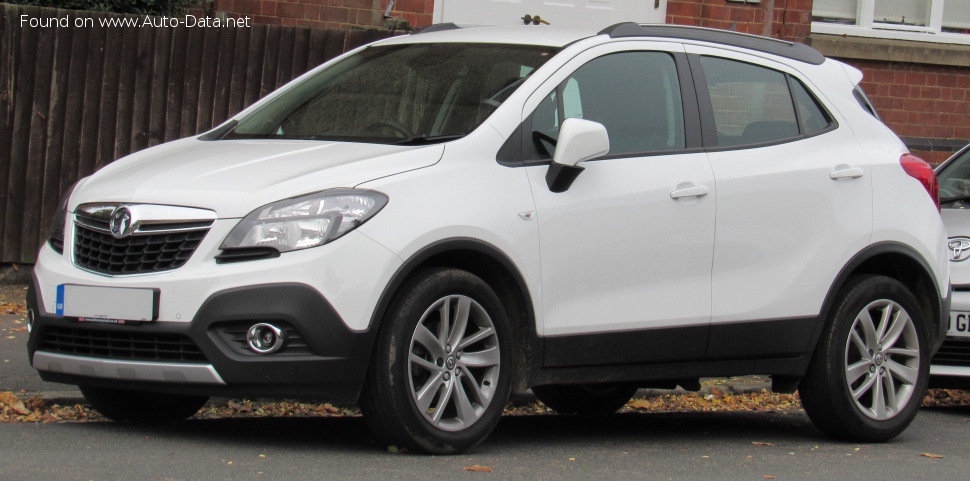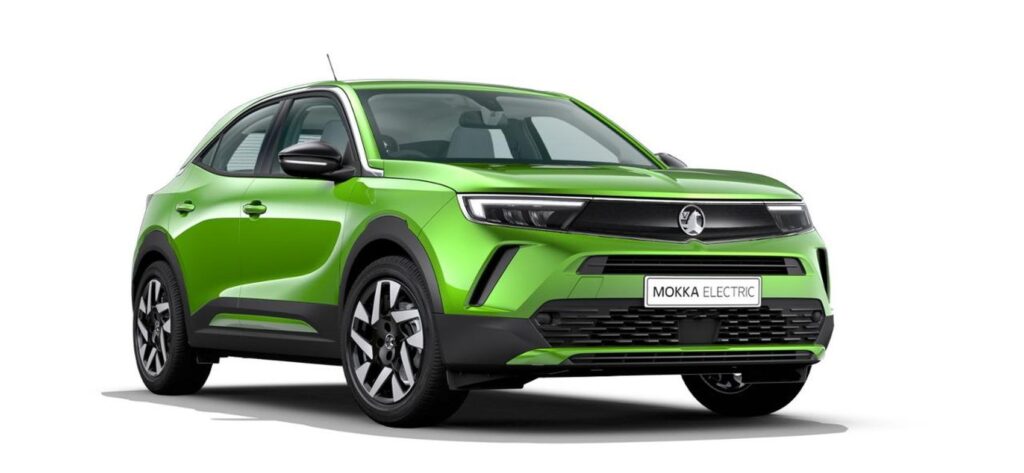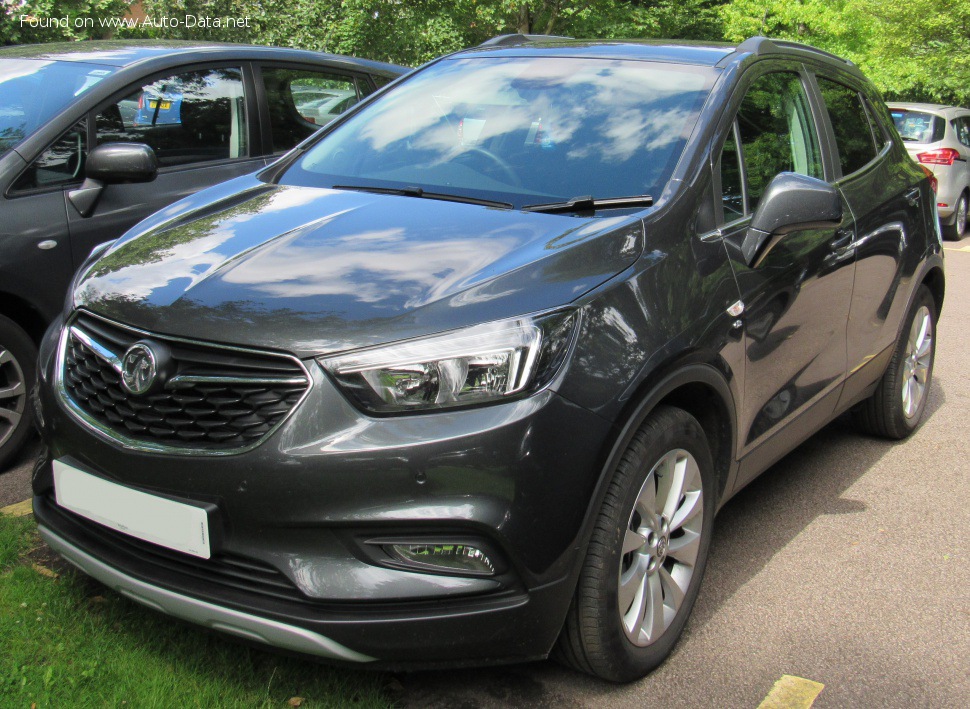
The Vauxhall Mokka X (facelifted in 2016) 1.4i Turbo 4×4 Start/Stop Automatic represents a significant update to Vauxhall’s entry into the increasingly popular subcompact SUV segment. While the Vauxhall brand is not directly marketed in the United States, the Mokka X – and its Opel counterpart – played a crucial role in the European market, competing with vehicles like the Nissan Juke, Renault Captur, and Peugeot 2008. This particular variant, equipped with a 1.4-liter turbocharged engine, all-wheel drive, and an automatic transmission, aimed to provide a blend of efficiency, practicality, and all-weather capability for European drivers. The facelift brought styling revisions and technological enhancements to an already successful model.
Vauxhall Mokka X: Overview and Market Position
Introduced in September 2016 and continuing through June 2018, the Mokka X facelift built upon the foundation laid by the original Mokka, launched in 2012. The “X” designation signified an upgrade in features and a more sophisticated appearance. The Mokka X was designed to appeal to buyers seeking a versatile vehicle suitable for both urban commuting and occasional off-road excursions. Its compact dimensions made it easy to maneuver in city environments, while the available all-wheel-drive system provided added confidence in challenging weather conditions. The Start/Stop system further enhanced its fuel efficiency, a key consideration for European consumers facing high fuel prices and increasingly stringent emissions regulations.
Engine & Performance
The heart of the Mokka X 1.4i Turbo is a 1.4-liter inline four-cylinder gasoline engine, designated the B14XFT. This engine produces 152 horsepower at 5600 rpm and 245 Nm (180.7 lb.-ft.) of torque between 2200 and 4400 rpm. The turbocharger and intercooler work in tandem to deliver responsive performance and a broad torque curve. Power is delivered to all four wheels via a six-speed automatic transmission, providing smooth and effortless gear changes. Acceleration from 0 to 100 km/h (0-62 mph) takes 9.4 seconds, while 0 to 60 mph is achieved in a calculated 8.9 seconds. The Mokka X boasts a maximum speed of 193 km/h (119.92 mph). Fuel economy is rated at 6.5 liters per 100 kilometers (36.2 US mpg) on a combined cycle, with urban consumption at 7.9 l/100km (29.8 US mpg) and extra-urban at 5.7 l/100km (41.3 US mpg). The engine meets Euro 6 emission standards, reflecting its commitment to environmental responsibility.
Design & Features
The Vauxhall Mokka X is a five-door, five-seat SUV characterized by its bold and distinctive styling. The 2016 facelift brought a revised front fascia with a more prominent grille and sleeker headlights, giving the vehicle a more modern and refined appearance. The interior features a driver-focused layout with comfortable seating and a range of technology features. The Mokka X offers 356 liters (12.57 cu. ft.) of trunk space with the rear seats up, expanding to 1305 liters (46.09 cu. ft.) when the seats are folded down. Standard safety features include ABS (Anti-lock Braking System) and a comprehensive airbag system. The vehicle’s dimensions are 4275 mm (168.31 in.) in length, 1780 mm (70.08 in.) in width, and 1658 mm (65.28 in.) in height. The wheelbase measures 2555 mm (100.59 in.). Available wheel sizes range from 18 to 19 inches, with tire sizes of 215/55 R18 and 225/45 R19 respectively.
Technical Specifications
| Brand | Vauxhall |
| Model | Mokka X |
| Generation | Mokka X (facelift 2016) |
| Type (Engine) | 1.4i Turbo (152 Hp) 4×4 Start/Stop Automatic |
| Start of production | September, 2016 |
| End of production | June, 2018 |
| Powertrain Architecture | Internal Combustion engine |
| Body type | SUV |
| Seats | 5 |
| Doors | 5 |
| Fuel consumption (urban) | 7.9 l/100 km (29.8 US mpg) |
| Fuel consumption (extra urban) | 5.7 l/100 km (41.3 US mpg) |
| Fuel consumption (combined) | 6.5 l/100 km (36.2 US mpg) |
| CO2 emissions | 150 g/km |
| Fuel Type | Petrol (Gasoline) |
| Acceleration 0 – 100 km/h | 9.4 sec |
| Acceleration 0 – 62 mph | 9.4 sec |
| Acceleration 0 – 60 mph | 8.9 sec |
| Maximum speed | 193 km/h (119.92 mph) |
| Emission standard | Euro 6 |
| Weight-to-power ratio | 12.6 kg/Hp |
| Weight-to-torque ratio | 7.8 kg/Nm |
| Power | 152 Hp @ 5600 rpm |
| Torque | 245 Nm @ 2200-4400 rpm (180.7 lb.-ft.) |
| Engine layout | Front, Transverse |
| Engine Model/Code | B14XFT |
| Engine displacement | 1399 cm3 (85.37 cu. in.) |
| Number of cylinders | 4 |
| Engine configuration | Inline |
| Cylinder Bore | 74 mm (2.91 in.) |
| Piston Stroke | 81.3 mm (3.2 in.) |
| Number of valves per cylinder | 4 |
| Fuel injection system | Multi-port manifold injection |
| Engine aspiration | Turbocharger, Intercooler |
| Valvetrain | DOHC, VVT |
| Engine oil capacity | 4 l (4.23 US qt | 3.52 UK qt) |
| Coolant | 8.5 l (8.98 US qt | 7.48 UK qt) |
| Kerb Weight | 1915 kg (4221.85 lbs.) |
| Trunk (boot) space – minimum | 356 l (12.57 cu. ft.) |
| Trunk (boot) space – maximum | 1305 l (46.09 cu. ft.) |
| Fuel tank capacity | 53 l (14 US gal | 11.66 UK gal) |
| Permitted trailer load with brakes (12%) | 1500 kg (3306.93 lbs.) |
| Permitted trailer load without brakes | 500 kg (1102.31 lbs.) |
| Length | 4275 mm (168.31 in.) |
| Width | 1780 mm (70.08 in.) |
| Width including mirrors | 2038 mm (80.24 in.) |
| Height | 1658 mm (65.28 in.) |
| Wheelbase | 2555 mm (100.59 in.) |
| Front overhang | 942 mm (37.09 in.) |
| Rear overhang | 778 mm (30.63 in.) |
| Drag coefficient (Cd) | 0.35 |
| Minimum turning circle | 11.5 m (37.73 ft.) |
| Drive wheel | All wheel drive (4×4) |
| Number of gears | 6 |
| Gearbox type | automatic transmission |
| Front suspension | Independent, McPherson with coil spring and anti-roll bar |
| Rear suspension | Independent multi-link suspension |
| Front brakes | Ventilated discs |
| Rear brakes | Disc |
The Vauxhall Mokka X 1.4i Turbo 4×4 Start/Stop Automatic offered a compelling package for European buyers seeking a stylish, practical, and efficient subcompact SUV. Its blend of performance, features, and all-weather capability made it a popular choice in a competitive segment.