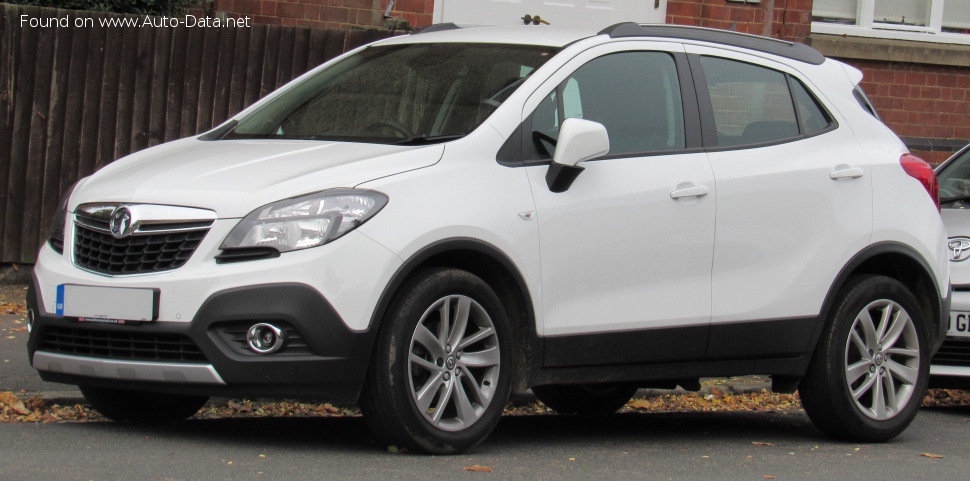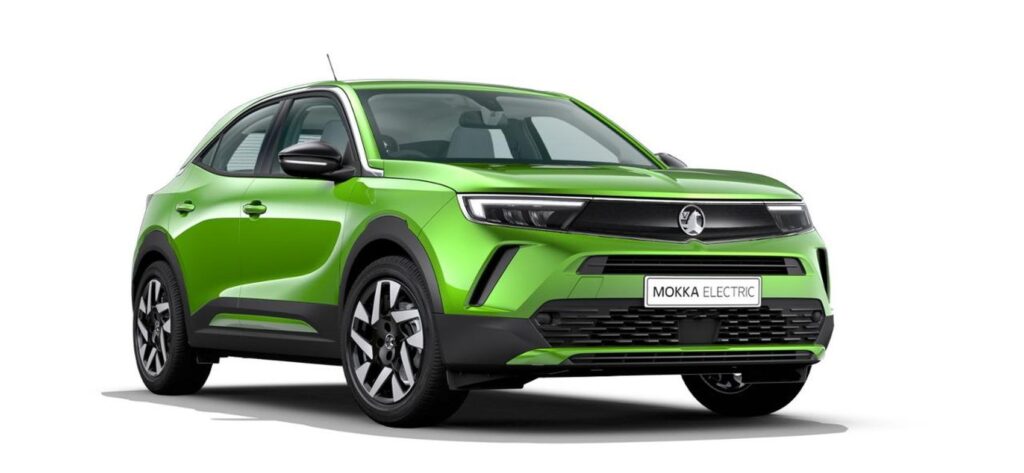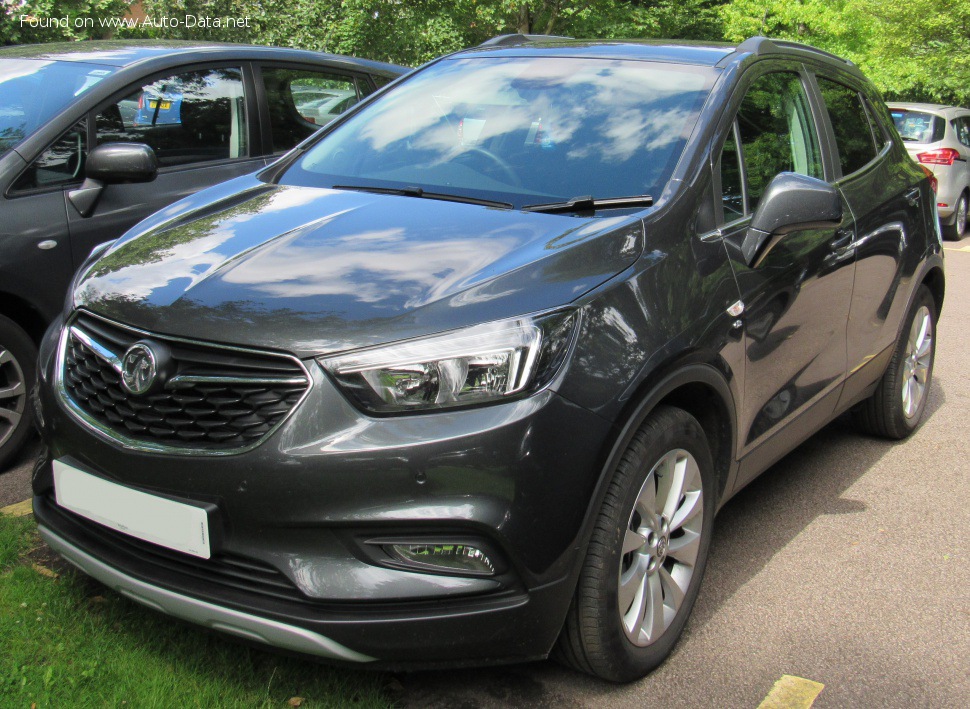
The Vauxhall Mokka X (facelifted in 2016) 1.4i Turbo ecoTEC, producing 140 horsepower, represents a significant iteration of Vauxhall’s entry into the burgeoning subcompact SUV market. Introduced as a more rugged and stylish alternative to traditional hatchbacks, the Mokka X, particularly this 1.4-liter turbocharged variant, aimed to appeal to European buyers seeking a versatile and efficient vehicle. While the Vauxhall brand is not directly marketed in the United States, understanding the Mokka X provides insight into the European automotive landscape and the growing demand for smaller, fuel-efficient SUVs. This model, produced from 2018 to 2019, featured updates to its exterior styling, interior technology, and powertrain options, solidifying its position as a competitive offering in its segment.
Vauxhall Mokka X: A European Subcompact SUV
The Mokka X is essentially the facelifted version of the original Vauxhall Mokka, launched in 2012. The “X” designation was added to align with Vauxhall’s broader SUV naming strategy, emphasizing its crossover capabilities. Vauxhall, a British manufacturer now part of the Stellantis group (formed from the merger of Fiat Chrysler Automobiles and PSA Group), primarily caters to the European market. The Mokka X competed with vehicles like the Nissan Juke, Renault Captur, and Peugeot 2008. Its appeal lay in its combination of compact dimensions, raised ride height, and available all-wheel drive, making it suitable for both urban driving and occasional off-road excursions. The 1.4i Turbo ecoTEC engine was a key component of the Mokka X lineup, offering a balance of performance and fuel economy.
Engine & Performance
The heart of the Mokka X 1.4i Turbo ecoTEC is a 1.4-liter inline-four cylinder engine, designated D14NET. This engine utilizes a turbocharger and intercooler to boost power output to 140 horsepower at 4,900-6,000 rpm, and 200 Nm (147.51 lb.-ft.) of torque between 1,850 and 4,900 rpm. The engine’s power-to-liter ratio is a respectable 102.6 hp/l. This powerplant is coupled with a 6-speed manual transmission, directing power to the front wheels. Acceleration from 0 to 100 km/h (0-62 mph) takes 9.3 seconds, while 0-60 mph is achieved in approximately 8.8 seconds. The Mokka X 1.4i Turbo ecoTEC has a top speed of 196 km/h (121.79 mph). The inclusion of a Start/Stop system contributes to improved fuel efficiency in urban driving conditions. Fuel economy figures are rated at 7.6 l/100 km (30.9 US mpg) in urban settings, 5.1 l/100 km (46.1 US mpg) on the extra-urban cycle, and a combined 6.0 l/100 km (39.2 US mpg). CO2 emissions are rated at 140 g/km, meeting Euro 6 emission standards.
Design & Features
The Vauxhall Mokka X is a five-door, five-seat SUV characterized by its bold and distinctive styling. The 2016 facelift brought revised front-end aesthetics, including a more prominent grille and updated headlight design. The vehicle’s dimensions are 4,275 mm (168.31 in) in length, 1,780 mm (70.08 in) in width, and 1,658 mm (65.28 in) in height. The wheelbase measures 2,555 mm (100.59 in). Inside, the Mokka X offers a practical and functional cabin. Standard features included air conditioning, power windows, and a basic audio system. Higher trim levels offered features such as a touchscreen infotainment system with smartphone integration, navigation, and advanced safety technologies like lane departure warning and automatic emergency braking. The trunk offers 356 liters (12.57 cu. ft.) of space with the rear seats up, expanding to 1,305 liters (46.09 cu. ft.) when folded down. The Mokka X’s focus was on providing a comfortable and versatile driving experience, with a particular emphasis on safety and convenience features for the European market.
Technical Specifications
| Brand | Vauxhall |
| Model | Mokka X |
| Generation | Mokka X (facelift 2016) |
| Type (Engine) | 1.4i Turbo ecoTEC (140 Hp) Start/Stop |
| Start of production | 2018 |
| End of production | 2019 |
| Powertrain Architecture | Internal Combustion engine |
| Body type | SUV |
| Seats | 5 |
| Doors | 5 |
| Fuel consumption (urban) | 7.6 l/100 km (30.9 US mpg) |
| Fuel consumption (extra urban) | 5.1 l/100 km (46.1 US mpg) |
| Fuel consumption (combined) | 6 l/100 km (39.2 US mpg) |
| CO2 emissions | 140 g/km |
| Fuel Type | Petrol (Gasoline) |
| Acceleration 0 – 100 km/h | 9.3 sec |
| Acceleration 0 – 62 mph | 9.3 sec |
| Acceleration 0 – 60 mph | 8.8 sec |
| Maximum speed | 196 km/h (121.79 mph) |
| Emission standard | Euro 6 |
| Power | 140 Hp @ 4900-6000 rpm |
| Torque | 200 Nm @ 1850-4900 rpm (147.51 lb.-ft.) |
| Engine layout | Front, Transverse |
| Engine Model/Code | D14NET |
| Engine displacement | 1364 cm3 (83.24 cu. in.) |
| Number of cylinders | 4 |
| Engine configuration | Inline |
| Cylinder Bore | 72.5 mm (2.85 in.) |
| Piston Stroke | 82.6 mm (3.25 in.) |
| Number of valves per cylinder | 4 |
| Fuel injection system | Multi-port manifold injection |
| Engine aspiration | Turbocharger, Intercooler |
| Valvetrain | DOHC, VVT |
| Engine oil capacity | 4 l (4.23 US qt | 3.52 UK qt) |
| Coolant | 7.35 l (7.77 US qt | 6.47 UK qt) |
| Max. weight | 1828 kg (4030.05 lbs.) |
| Trunk (boot) space – minimum | 356 l (12.57 cu. ft.) |
| Trunk (boot) space – maximum | 1305 l (46.09 cu. ft.) |
| Fuel tank capacity | 53 l (14 US gal | 11.66 UK gal) |
| Permitted trailer load with brakes (12%) | 1200 kg (2645.55 lbs.) |
| Permitted trailer load without brakes | 500 kg (1102.31 lbs.) |
| Length | 4275 mm (168.31 in.) |
| Width | 1780 mm (70.08 in.) |
| Width including mirrors | 2038 mm (80.24 in.) |
| Height | 1658 mm (65.28 in.) |
| Wheelbase | 2555 mm (100.59 in.) |
| Front overhang | 942 mm (37.09 in.) |
| Rear overhang | 778 mm (30.63 in.) |
| Drag coefficient (Cd) | 0.35 |
| Minimum turning circle (turning diameter) | 11.5 m (37.73 ft.) |
| Drive wheel | Front wheel drive |
| Number of gears and type of gearbox | 6 gears, manual transmission |
| Front suspension | Independent, type McPherson with coil spring and anti-roll bar |
| Rear suspension | Semi-independent, coil spring |
| Front brakes | Ventilated discs |
| Rear brakes | Disc |
| Assisting systems | ABS (Anti-lock braking system) |
| Steering type | Steering rack and pinion |
| Tires size | 215/55 R18; 225/45 R19 |
| Wheel rims size | 18; 19 |