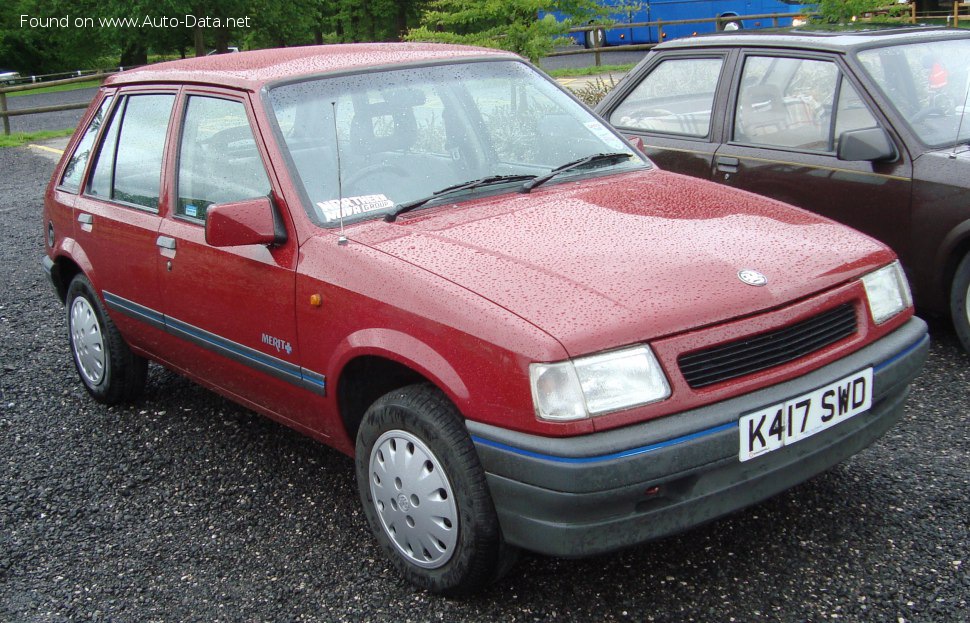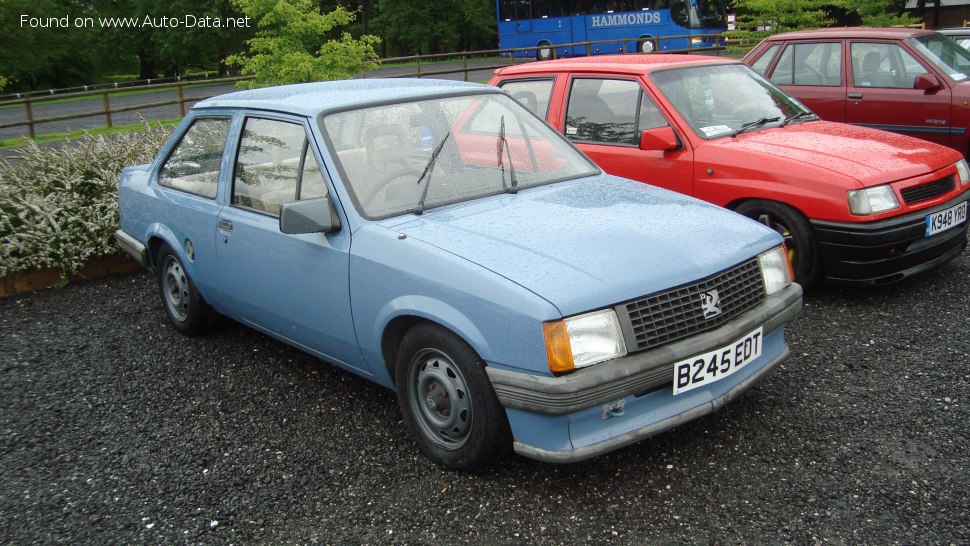
The Vauxhall Nova is a supermini car that was produced by Vauxhall from 1983 to 1999. It was Vauxhall’s entry into the increasingly popular small car market, intended to replace the aging Viva and Chevette models. The Nova, and its Opel Corsa counterpart, were significant for Vauxhall as they represented a move towards more modern, front-wheel-drive designs. This article focuses on the early generation Nova 1.0, produced between 1983 and 1987, a model primarily sold in the United Kingdom and other European markets. While not officially sold in the United States, understanding the Nova provides insight into the European small car landscape of the 1980s.
Vauxhall Nova 1.0: An Overview
The initial Nova range was offered with a variety of engine options, but the 1.0-liter version was the mainstay, offering affordable transportation for a wide range of buyers. Positioned in the supermini segment, it competed with vehicles like the Ford Fiesta, Austin Metro, and Peugeot 205. The Nova was available in both 3-door and 5-door body styles, catering to different needs and preferences. The 1.0-liter engine, while modest in power, provided reasonable fuel economy and was relatively reliable, making it a popular choice for first-time car buyers and city commuters.
Engine & Performance
The heart of the Nova 1.0 is a 993cc (60.6 cubic inch) inline-four cylinder engine. This naturally aspirated engine produces 45 horsepower at 5400 rpm and 68 Nm (50.15 lb-ft) of torque at 2600 rpm. The engine utilizes a carburettor fuel injection system and an overhead valve (OHV) valvetrain with two valves per cylinder. Power delivery is modest, resulting in a 0-60 mph (0-97 km/h) acceleration time of approximately 19 seconds and a top speed of 86.99 mph (140 km/h). The engine’s power-to-weight ratio is 16.4 kg/Hp, and the torque-to-weight ratio is 10.9 kg/Nm. The engine is transversely mounted at the front of the vehicle, driving the front wheels through a four-speed manual transmission. While not a performance car by any means, the Nova 1.0 offered adequate performance for urban driving and shorter journeys.
Design & Features
The Vauxhall Nova 1.0 is a compact, two or four-door sedan (though often referred to as a hatchback due to its rear access). Its design was fairly conventional for the early 1980s, prioritizing practicality and affordability over stylistic flair. The interior was simple and functional, offering seating for five passengers. Features were basic, reflecting the car’s price point. Safety features were limited by the standards of the time, typically including seatbelts and a basic steering column. The Nova’s relatively small size made it easy to maneuver in tight urban environments, and its rear hatch provided reasonable cargo space for its class. The drag coefficient of 0.38 was typical for vehicles of this era. The turning circle is 9.4 meters (30.84 ft).
Technical Specifications
| Brand | Vauxhall |
| Model | Nova |
| Generation | Nova |
| Type (Engine) | 1.0 (45 Hp) |
| Start of production | 1983 |
| End of production | 1987 |
| Powertrain Architecture | Internal Combustion engine |
| Body type | Sedan |
| Seats | 5 |
| Doors | 2-4 |
| Fuel consumption (urban) | 7.6 l/100 km (30.9 US mpg, 37.2 UK mpg, 13.2 km/l) |
| Fuel Type | Petrol (Gasoline) |
| Acceleration 0 – 100 km/h | 20 sec |
| Acceleration 0 – 62 mph | 20 sec |
| Acceleration 0 – 60 mph | 19 sec |
| Maximum speed | 140 km/h (86.99 mph) |
| Weight-to-power ratio | 16.4 kg/Hp |
| Weight-to-torque ratio | 10.9 kg/Nm |
| Power | 45 Hp @ 5400 rpm |
| Power per litre | 45.3 Hp/l |
| Torque | 68 Nm @ 2600 rpm (50.15 lb.-ft. @ 2600 rpm) |
| Engine layout | Front, Transverse |
| Engine Model/Code | 10S |
| Engine displacement | 993 cm3 (60.6 cu. in.) |
| Number of cylinders | 4 |
| Engine configuration | Inline |
| Cylinder Bore | 72 mm (2.83 in.) |
| Piston Stroke | 61 mm (2.4 in.) |
| Compression ratio | 9.2:1 |
| Number of valves per cylinder | 2 |
| Fuel injection system | Carburettor |
| Engine aspiration | Naturally aspirated |
| Valvetrain | OHV |
| Engine oil capacity | 2.75 l (2.91 US qt | 2.42 UK qt) |
| Coolant | 5.5 l (5.81 US qt | 4.84 UK qt) |
| Kerb Weight | 739-750 kg (1629.22 – 1653.47 lbs.) |
| Max. weight | 1215 kg (2678.62 lbs.) |
| Max load | 465-476 kg (1025.15 – 1049.4 lbs.) |
| Fuel tank capacity | 42 l (11.1 US gal | 9.24 UK gal) |
| Permitted trailer load with brakes (12%) | 400 kg (881.85 lbs.) |
| Permitted trailer load without brakes | 365 kg (804.69 lbs.) |
| Length | 3955 mm (155.71 in.) |
| Width | 1541 mm (60.67 in.) |
| Height | 1358 mm (53.46 in.) |
| Wheelbase | 2341 mm (92.17 in.) |
| Drag coefficient (Cd) | 0.38 |
| Minimum turning circle | 9.4 m (30.84 ft.) |
| Drivetrain Architecture | Front wheel drive |
| Number of gears | 4 |
| Type of gearbox | Manual transmission |
| Front brakes | Ventilated discs |
| Rear brakes | Drum |
| Steering type | Steering rack and pinion |
The Vauxhall Nova 1.0, while not a groundbreaking vehicle, played an important role in the British automotive market of the 1980s. It provided affordable, reliable transportation for a generation of drivers and helped establish Vauxhall as a major player in the supermini segment. Its simple design and robust engineering ensured its longevity, and many examples remain on the road today, cherished by enthusiasts and collectors.