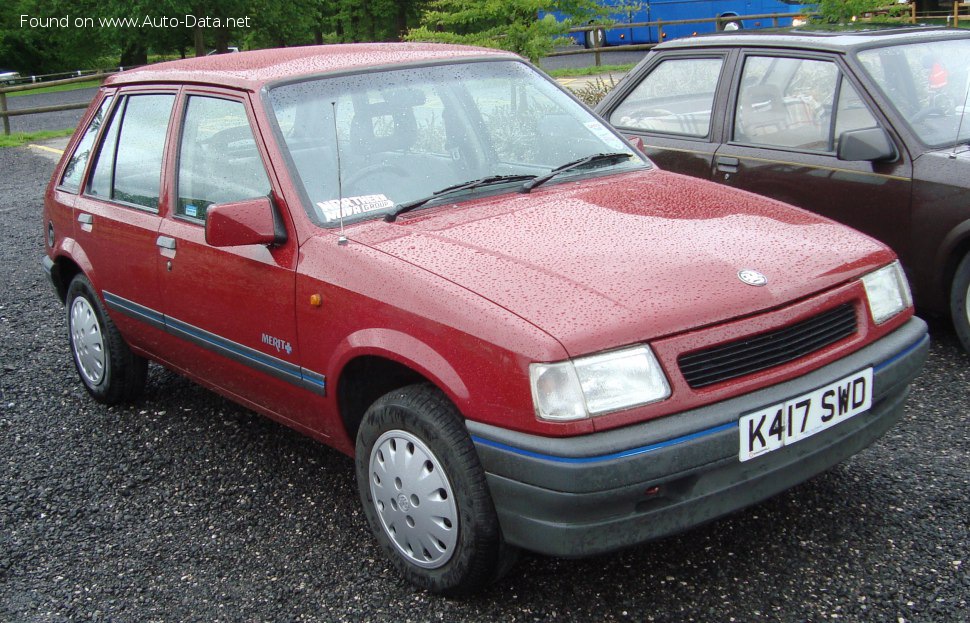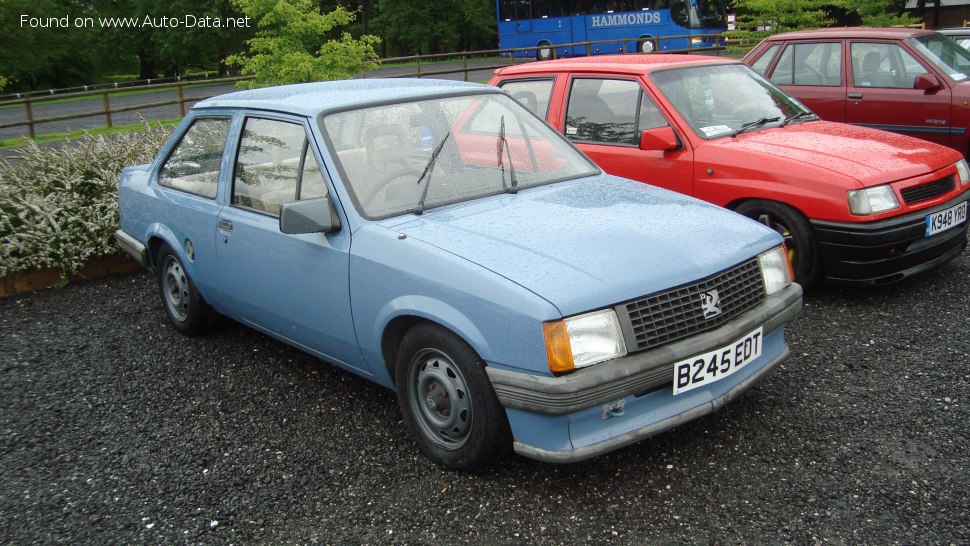
The Vauxhall Nova is a supermini car that was produced by Vauxhall from 1983 to 1993. Part of the General Motors (GM) “T-Car” platform, it was also sold under the Opel Corsa name throughout much of Europe. The 1.2 N variant, produced between 1985 and 1987, represented an entry-level offering within the Nova range, characterized by its economical engine and affordability. While not a performance vehicle, the Nova 1.2 N played a significant role in providing basic, reliable transportation to a wide segment of the UK market.
Vauxhall Nova 1.2 N: An Overview
The Nova was intended to replace the aging Vauxhall Chevette and provide a modern, more efficient alternative in the increasingly competitive supermini segment. The 1.2 N model, with its 1.2-liter engine producing 45 horsepower, was positioned as the most economical version, appealing to first-time car buyers and those seeking low running costs. It was available in both 3-door and 5-door body styles, offering a degree of practicality for its size. The Nova, and the Corsa it was based on, were significant for GM in establishing a strong foothold in the small car market in Europe.
Engine & Performance
The heart of the Nova 1.2 N is its 1196 cc (72.98 cubic inches) inline-four cylinder engine. This naturally aspirated engine, designated 12NC or E12GV, produced a modest 45 horsepower at 5400 rpm and 90 Nm (66.38 lb-ft) of torque at 2200 rpm. Power delivery was relatively smooth, though acceleration was understandably leisurely. The 0-60 mph (0-96 km/h) time was approximately 15.2 seconds, and it reached a top speed of around 94.45 mph (152 km/h). The engine utilized a carburettor fuel injection system, a common feature for vehicles of this era, and featured an overhead camshaft (OHC) valvetrain with four valves per cylinder. The engine’s power-to-weight ratio was 16.4 kg/Hp, and the power per litre was 37.6 Hp/l. The front-wheel-drive configuration, coupled with a four-speed manual transmission, provided predictable handling, although it wasn’t designed for spirited driving. Fuel economy was a key selling point, achieving around 28.3 US mpg (34 UK mpg or 12 km/l) in urban conditions.
Design & Features
The Vauxhall Nova 1.2 N was a typical supermini of the 1980s, characterized by its boxy, functional design. Available as a 2- or 4-door sedan, it offered seating for five passengers. The interior was basic but practical, with durable materials and a focus on usability. Features were limited by the car’s price point, but typically included a basic instrument cluster, manual windows, and a heater. Safety features were rudimentary by modern standards, consisting primarily of seatbelts. The Nova’s design prioritized affordability and ease of maintenance over luxury or advanced technology. The relatively small dimensions (3955 mm length, 1541 mm width, 1358 mm height) made it easy to maneuver in urban environments. The drag coefficient of 0.39 was typical for cars of this period. The Nova’s simple construction and readily available parts contributed to its reputation for reliability and low maintenance costs.
Technical Specifications
| Brand | Vauxhall |
| Model | Nova |
| Generation | Nova |
| Type (Engine) | 1.2 N (45 Hp) |
| Start of production | 1985 |
| End of production | 1987 |
| Powertrain Architecture | Internal Combustion engine |
| Body type | Sedan |
| Seats | 5 |
| Doors | 2-4 |
| Fuel consumption (urban) | 8.3 l/100 km (28.3 US mpg, 34 UK mpg, 12 km/l) |
| Fuel Type | Petrol (Gasoline) |
| Acceleration 0 – 100 km/h | 16 sec |
| Acceleration 0 – 62 mph | 16 sec |
| Acceleration 0 – 60 mph | 15.2 sec |
| Maximum speed | 152 km/h (94.45 mph) |
| Weight-to-power ratio | 16.4 kg/Hp |
| Weight-to-torque ratio | 8.2 kg/Nm |
| Power | 45 Hp @ 5400 rpm |
| Power per litre | 37.6 Hp/l |
| Torque | 90 Nm @ 2200 rpm (66.38 lb.-ft. @ 2200 rpm) |
| Engine layout | Front, Transverse |
| Engine Model/Code | 12NC, E12GV |
| Engine displacement | 1196 cm3 (72.98 cu. in.) |
| Number of cylinders | 4 |
| Engine configuration | Inline |
| Cylinder Bore | 77.8 mm (3.06 in.) |
| Piston Stroke | 62.9 mm (2.48 in.) |
| Compression ratio | 9.2:1 |
| Number of valves per cylinder | 4 |
| Fuel injection system | Carburettor |
| Engine aspiration | Naturally aspirated |
| Valvetrain | OHC |
| Engine oil capacity | 3 l (3.17 US qt | 2.64 UK qt) |
| Coolant capacity | 6.1 l (6.45 US qt | 5.37 UK qt) |
| Kerb Weight | 739-750 kg (1629.22 – 1653.47 lbs.) |
| Max. weight | 1215 kg (2678.62 lbs.) |
| Max load | 465-476 kg (1025.15 – 1049.4 lbs.) |
| Fuel tank capacity | 42 l (11.1 US gal | 9.24 UK gal) |
| Length | 3955 mm (155.71 in.) |
| Width | 1541 mm (60.67 in.) |
| Height | 1358 mm (53.46 in.) |
| Wheelbase | 2341 mm (92.17 in.) |
| Drag coefficient (Cd) | 0.39 |
| Minimum turning circle | 9.4 m (30.84 ft.) |
| Drivetrain Architecture | ICE, Front wheel drive |
| Drive wheel | Front wheel drive |
| Number of gears | 4 |
| Gearbox type | Manual transmission |
| Front brakes | Ventilated discs |
| Rear brakes | Drum |
| Steering type | Steering rack and pinion |
The Vauxhall Nova 1.2 N, while not a groundbreaking vehicle, served as a dependable and affordable option for many drivers in the 1980s. Its simple design, economical engine, and relatively low running costs made it a popular choice in the competitive supermini market. It laid the groundwork for the subsequent generations of the Corsa/Nova, which would continue to be successful in Europe for decades to come.