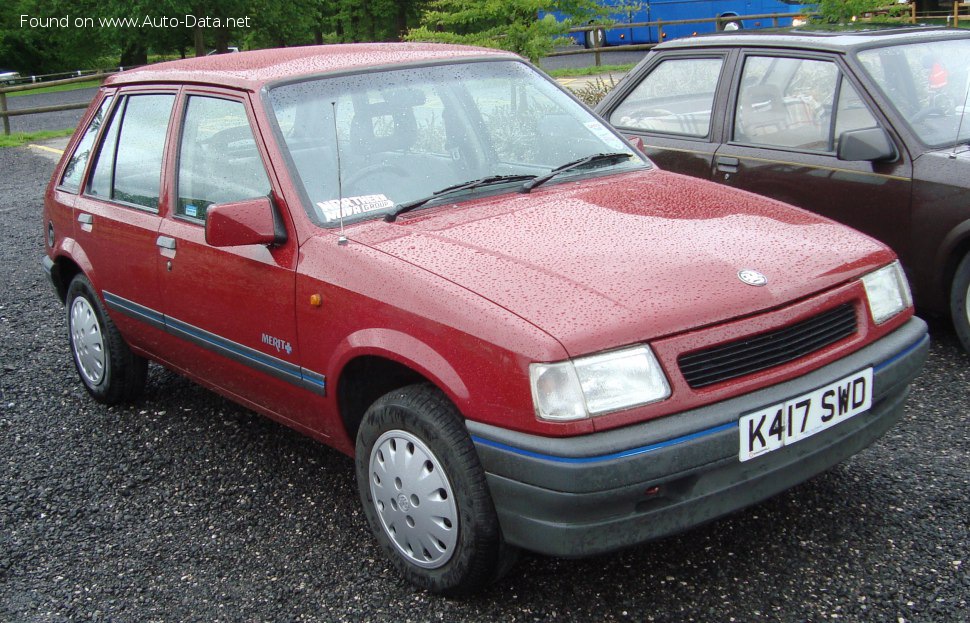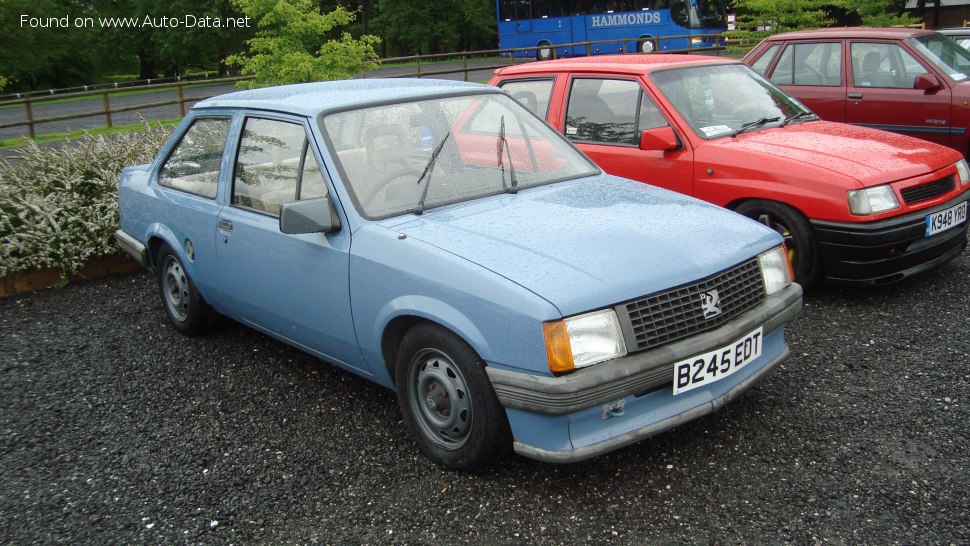
The Vauxhall Nova 1.3i, produced between 1985 and 1987, represents a significant entry in the supermini segment, primarily aimed at the UK and European markets. As Vauxhall’s replacement for the aging Chevette, the Nova was intended to offer a modern, economical, and practical vehicle for everyday use. While not officially sold in the United States, understanding the Nova provides insight into the evolving automotive landscape of the 1980s and the increasing demand for small, fuel-efficient cars. The 1.3i designation refers to the engine displacement and power output, making it a common variant within the Nova range.
Vauxhall Nova 1.3i: A Supermini Overview
The Vauxhall Nova, known as the Opel Corsa in mainland Europe, was a crucial model for General Motors in the 1980s and 90s. It was designed to compete with popular superminis like the Ford Fiesta and Austin Metro. The Nova offered a choice of body styles, including 2-door and 4-door versions, catering to a wider range of buyers. The 1.3i model, with its 60 horsepower engine, was positioned as a balance between affordability and performance, making it a popular choice for first-time car buyers and those seeking a cost-effective city car.
Engine & Performance
The heart of the Nova 1.3i is its 1297 cc (79.15 cubic inches) inline four-cylinder engine. This engine, designated 13NB, produces 60 horsepower at 5800 rpm and 92 Nm (67.86 lb-ft) of torque at 3500 rpm. While not a powerhouse, the engine provides adequate performance for urban driving and shorter journeys. The power-to-weight ratio of 12.5 kg/Hp (80 Hp/tonne) and torque-to-weight ratio of 8.2 kg/Nm (122.7 Nm/tonne) contribute to a reasonably sprightly driving experience. The engine utilizes a carburettor fuel injection system and an overhead camshaft (OHC) valvetrain with two valves per cylinder. The naturally aspirated configuration and 8.2:1 compression ratio were typical for the era, prioritizing fuel economy and reliability over outright power. The engine requires 3 liters (3.17 US quarts / 2.64 UK quarts) of engine oil and 6.1 liters (6.45 US quarts / 5.37 UK quarts) of coolant for optimal operation.
Design & Features
The Vauxhall Nova 1.3i is a compact sedan (or hatchback, depending on the market and specific configuration) with a simple, functional design. It typically seats five passengers and is available with either two or four doors. The body dimensions are 3955 mm (155.71 inches) in length, 1541 mm (60.67 inches) in width, and 1358 mm (53.46 inches) in height, with a wheelbase of 2341 mm (92.17 inches). The drag coefficient of 0.39 was respectable for the time, contributing to reasonable fuel efficiency.
Safety features were relatively basic by modern standards, reflecting the automotive technology of the mid-1980s. Front brakes are ventilated discs, while the rear brakes are drums. Steering is rack and pinion, providing responsive handling. The Nova’s interior is characterized by its practicality and durability, with a focus on providing a comfortable and functional space for passengers. The fuel tank capacity is 42 liters (11.1 US gallons / 9.24 UK gallons), offering a reasonable driving range. The minimum turning circle is 9.4 meters (30.84 feet).
Technical Specifications
| Brand | Vauxhall |
| Model | Nova |
| Generation | Nova |
| Type (Engine) | 1.3i (60 Hp) |
| Start of production | 1985 |
| End of production | 1987 |
| Powertrain Architecture | Internal Combustion engine |
| Body type | Sedan |
| Seats | 5 |
| Doors | 2-4 |
| Fuel consumption (urban) | 8.3 l/100 km (28.3 US mpg / 34 UK mpg / 12 km/l) |
| Fuel Type | Petrol (Gasoline) |
| Weight-to-power ratio | 12.5 kg/Hp (80 Hp/tonne) |
| Weight-to-torque ratio | 8.2 kg/Nm (122.7 Nm/tonne) |
| Power | 60 Hp @ 5800 rpm |
| Power per litre | 46.3 Hp/l |
| Torque | 92 Nm @ 3500 rpm (67.86 lb.-ft. @ 3500 rpm) |
| Engine layout | Front, Transverse |
| Engine Model/Code | 13NB |
| Engine displacement | 1297 cm3 (79.15 cu. in.) |
| Number of cylinders | 4 |
| Engine configuration | Inline |
| Cylinder Bore | 75 mm (2.95 in.) |
| Piston Stroke | 73.4 mm (2.89 in.) |
| Compression ratio | 8.2:1 |
| Number of valves per cylinder | 2 |
| Fuel injection system | Carburettor |
| Engine aspiration | Naturally aspirated |
| Valvetrain | OHC |
| Engine oil capacity | 3 l (3.17 US qt / 2.64 UK qt) |
| Coolant | 6.1 l (6.45 US qt / 5.37 UK qt) |
| Kerb Weight | 750-770 kg (1653.47 – 1697.56 lbs.) |
| Max. weight | 1215-1230 kg (2678.62 – 2711.69 lbs.) |
| Max load | 460-465 kg (1014.13 – 1025.15 lbs.) |
| Fuel tank capacity | 42 l (11.1 US gal / 9.24 UK gal) |
| Length | 3955 mm (155.71 in.) |
| Width | 1541 mm (60.67 in.) |
| Height | 1358 mm (53.46 in.) |
| Wheelbase | 2341 mm (92.17 in.) |
| Drag coefficient (Cd) | 0.39 |
| Minimum turning circle | 9.4 m (30.84 ft.) |
| Drivetrain Architecture | Internal Combustion engine (ICE) – Front Wheel Drive |
| Drive wheel | Front wheel drive |
| Number of gears | 5 gears, manual transmission |
| Front brakes | Ventilated discs |
| Rear brakes | Drum |
| Steering type | Steering rack and pinion |
The Vauxhall Nova 1.3i, while a relatively simple vehicle by today’s standards, played a significant role in the European automotive market. Its affordability, practicality, and fuel efficiency made it a popular choice for a generation of drivers. Although never officially available in the US, the Nova represents a key example of the supermini class and the trends shaping automotive design and engineering in the 1980s.