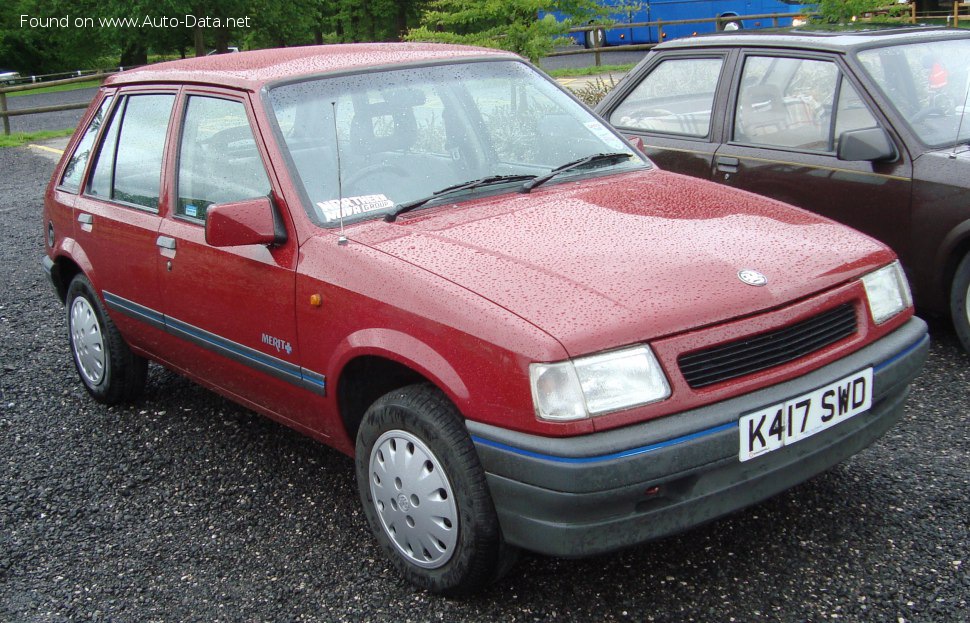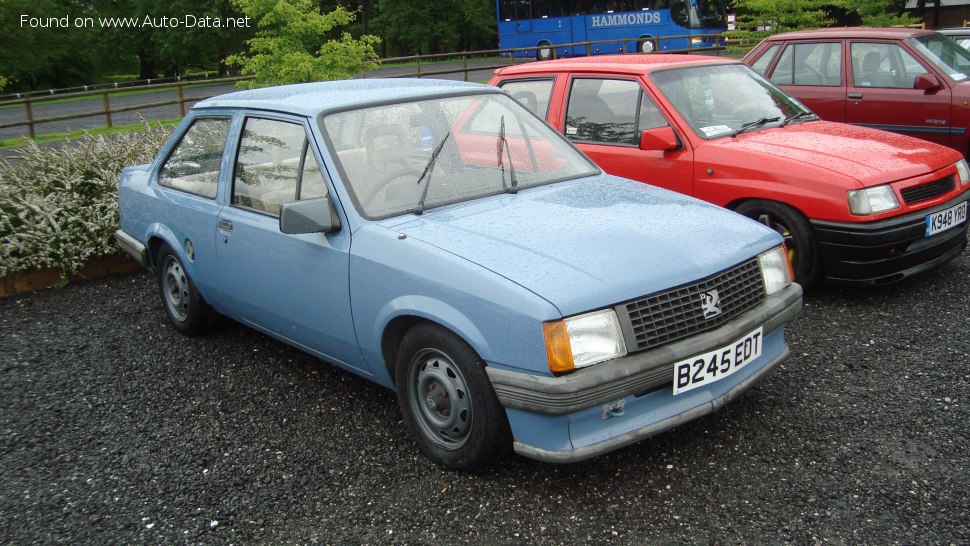
The Vauxhall Nova 1.4 S, produced between 1990 and 1993, represents a significant entry in the supermini segment, primarily aimed at the UK and European markets. As a rebadged Opel Corsa A, the Nova was Vauxhall’s attempt to capture a larger share of the small car market, offering affordability, practicality, and a degree of sporting appeal with the ‘S’ trim level. This generation of Nova was notable for its relatively simple, yet robust engineering, and its popularity as a first car or economical runabout. While not officially sold in the United States, understanding the Nova provides insight into the European small car landscape of the early 1990s and the design philosophies prevalent at the time.
The Vauxhall Nova 1.4 S: A Detailed Overview
The Nova, and its Opel Corsa A sibling, were designed to replace the aging Vauxhall Chevette and Opel Kadett. The Nova aimed to offer a more modern and refined experience, with improved styling, interior comfort, and a range of efficient engines. The 1.4 S variant, with its 72 horsepower engine, positioned itself as a slightly more performance-oriented option within the Nova lineup, appealing to drivers seeking a bit more zest than the base models provided. It was a common sight on British roads throughout the early to mid-1990s, becoming a cultural icon for a generation.
Engine & Performance
The heart of the Nova 1.4 S is its 1389cc (84.76 cubic inch) naturally aspirated, inline-four cylinder petrol engine, designated the 14NV. This engine produced 72 horsepower, resulting in a power-to-liter ratio of 51.8 hp/l. While not a powerhouse by modern standards, this output was respectable for a supermini of its era. The engine featured an overhead camshaft (OHC) valvetrain, a configuration common in European small cars of the time, balancing simplicity with reasonable performance. Power is delivered to the front wheels via a five-speed manual transmission, providing drivers with a degree of control over the engine’s output. The front-wheel-drive layout was standard for this class of vehicle, contributing to improved fuel efficiency and handling in various conditions.
The Nova 1.4 S wasn’t designed for outright speed, but its relatively light weight and responsive engine allowed for brisk acceleration in urban environments and comfortable cruising on motorways. The engine oil capacity is 3 liters (3.17 US quarts or 2.64 UK quarts), and specific oil requirements would have been detailed in the owner’s manual for optimal performance and longevity. The engine’s transverse mounting further optimized space utilization within the engine bay, a common practice in front-wheel-drive vehicles.
Design & Features
The Vauxhall Nova 1.4 S is a two or four-door sedan (though often referred to as a hatchback due to its rear access), seating five passengers. Its design was characterized by a relatively boxy, yet functional shape, typical of early 1990s automotive aesthetics. The ‘S’ trim level typically included some visual enhancements, such as sportier wheels and potentially some minor body kit additions, though these were often understated. The interior was designed with practicality in mind, offering a reasonably spacious cabin for its size.
Safety features were relatively basic by today’s standards, reflecting the regulatory environment of the early 1990s. However, the Nova did offer features such as seatbelts and a robust chassis construction. The focus was more on providing an affordable and reliable mode of transportation than on incorporating advanced safety technologies. The fuel tank capacity of 42 liters (11.1 US gallons or 9.24 UK gallons) provided a reasonable driving range between fill-ups. The Nova’s dimensions – a length of 3955 mm (155.71 inches), a width of 1541 mm (60.67 inches), and a height of 1358 mm (53.46 inches) – positioned it squarely within the supermini segment, making it easy to maneuver in urban environments.
The drag coefficient of 0.39, while not exceptional, was typical for cars of this era and body style. The minimum turning circle of 9.4 meters (30.84 feet) further enhanced its maneuverability in tight spaces. The Nova’s design prioritized functionality and affordability, making it a popular choice for drivers seeking a practical and economical vehicle.
Technical Specifications
| Brand | Vauxhall |
| Model | Nova |
| Generation | Nova |
| Type (Engine) | 1.4 S (72 Hp) |
| Start of production | 1990 |
| End of production | 1993 |
| Powertrain Architecture | Internal Combustion engine |
| Body type | Sedan |
| Seats | 5 |
| Doors | 2-4 |
| Fuel Type | Petrol (Gasoline) |
| Power | 72 Hp |
| Power per litre | 51.8 Hp/l |
| Engine layout | Front, Transverse |
| Engine Model/Code | 14NV |
| Engine displacement | 1389 cm3 / 84.76 cu. in. |
| Engine aspiration | Naturally aspirated engine |
| Valvetrain | OHC |
| Engine oil capacity | 3 l / 3.17 US qt | 2.64 UK qt |
| Fuel tank capacity | 42 l / 11.1 US gal | 9.24 UK gal |
| Length | 3955 mm / 155.71 in. |
| Width | 1541 mm / 60.67 in. |
| Height | 1358 mm / 53.46 in. |
| Wheelbase | 2341 mm / 92.17 in. |
| Drag coefficient (Cd) | 0.39 |
| Minimum turning circle (turning diameter) | 9.4 m / 30.84 ft. |
| Drivetrain Architecture | The Internal combustion engine (ICE) drives the front wheels of the vehicle. |
| Drive wheel | Front wheel drive |
| Number of gears and type of gearbox | 5 gears, manual transmission |
In conclusion, the Vauxhall Nova 1.4 S was a representative example of the European supermini class during the early 1990s. Its blend of affordability, practicality, and modest performance made it a popular choice for a wide range of drivers. While not a groundbreaking vehicle in terms of innovation, it served as a reliable and economical mode of transportation for many, and remains a fondly remembered car for those who grew up with it.