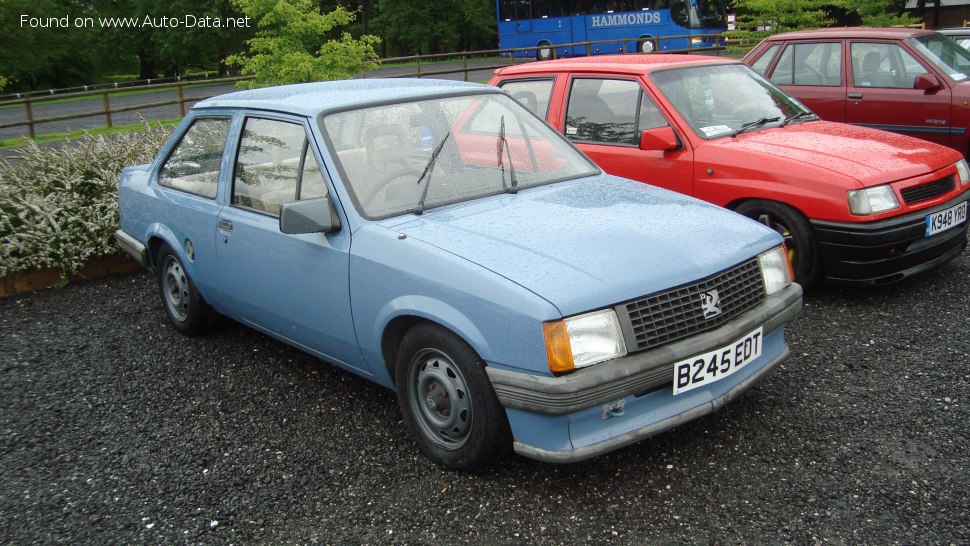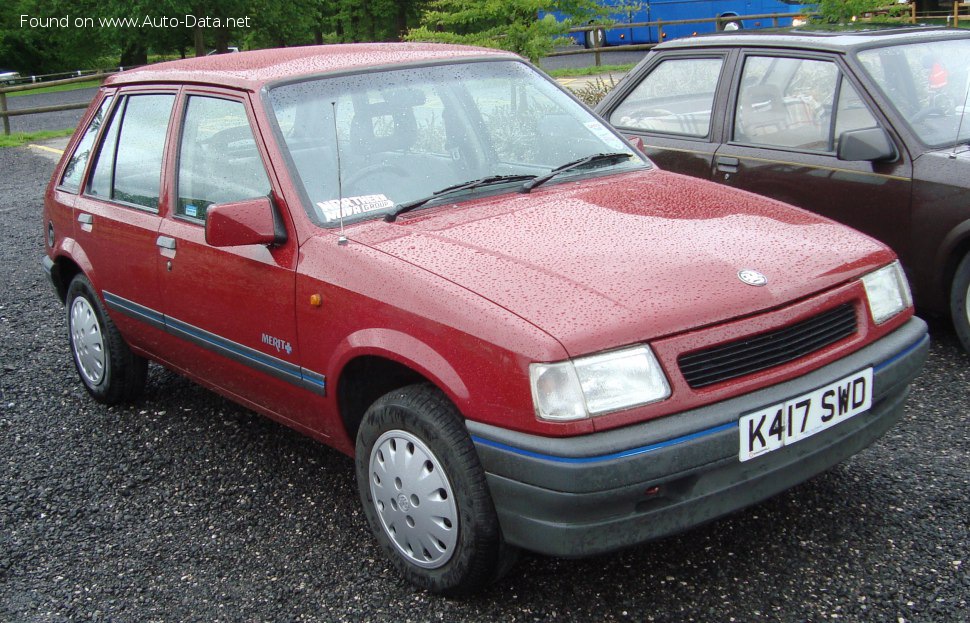
The Vauxhall Nova, produced between 1983 and 1993, was a supermini car marketed by Vauxhall in the United Kingdom. The Nova CC 1.2i CAT (Catalytic Converter) represents a mid-life refresh of the original Nova, produced from 1990 to 1993. Positioned as an affordable and practical city car, the Nova competed with models like the Ford Fiesta and Austin Metro. While not officially sold in the United States, understanding the Nova provides insight into the European small car market of the early 1990s and the evolution of automotive technology during that period.
Vauxhall Nova CC: A Detailed Overview
The Nova CC (for ‘Climate Control’, although this referred to improved ventilation rather than full climate control) was a significant update to the original Nova. It featured revised styling, including a more rounded front end and updated interior trim. The 1.2i CAT model, powered by a 1.2-liter inline-four engine, was a popular choice due to its fuel efficiency and relatively low running costs. The ‘CAT’ designation indicates the inclusion of a catalytic converter, a crucial component for reducing harmful emissions and meeting increasingly stringent European environmental regulations.
Engine & Performance
The heart of the Nova CC 1.2i CAT is its 1196 cc (72.98 cubic inches) inline-four cylinder engine. This naturally aspirated engine produced 45 horsepower at 5400 rpm and 90 Nm (66.38 lb-ft) of torque at 2200 rpm. While not a performance powerhouse, the engine provided adequate power for urban driving and shorter journeys. The engine featured a single overhead camshaft (OHC) valvetrain and utilized a carburetor fuel injection system, a common technology for the time. Acceleration from 0 to 60 mph took approximately 15.2 seconds, and the car had a top speed of 94.45 mph (152 km/h). The power-to-weight ratio of 16.3 kg/Hp and a weight-to-torque ratio of 8.2 kg/Nm contributed to its reasonable, if uninspiring, performance. The engine’s modest output and relatively light weight (735 kg or 1620.4 lbs) resulted in acceptable fuel economy for the era, achieving around 28.3 US mpg in urban conditions.
Design & Features
The Vauxhall Nova CC was a three or five-door hatchback, offering practical access to the rear seats and cargo area. Its compact dimensions – 3622 mm (142.6 in) in length, 1535 mm (60.43 in) in width, and 1364 mm (53.7 in) in height – made it easy to maneuver in crowded city streets and park in tight spaces. The interior was functional and basic, prioritizing practicality over luxury. Features were limited by the car’s price point, but typically included cloth upholstery, a basic instrument cluster, and manual windows and door locks. Safety features were also rudimentary by modern standards, consisting primarily of seatbelts. The Nova’s design reflected the styling trends of the early 1990s, with a boxy silhouette and relatively simple lines. The drag coefficient of 0.36 was typical for cars of this era. The Nova’s 42-liter (11.1 US gal) fuel tank provided a reasonable driving range.
Technical Specifications
| Brand | Vauxhall |
| Model | Nova |
| Generation | Nova CC |
| Type (Engine) | 1.2i CAT (45 Hp) |
| Start of production | 1990 |
| End of production | 1993 |
| Powertrain Architecture | Internal Combustion engine |
| Body type | Hatchback |
| Seats | 5 |
| Doors | 3-5 |
| Fuel consumption (urban) | 8.3 l/100 km (28.3 US mpg, 34 UK mpg, 12 km/l) |
| Fuel Type | Petrol (Gasoline) |
| Acceleration 0 – 100 km/h | 16 sec |
| Acceleration 0 – 62 mph | 16 sec |
| Acceleration 0 – 60 mph | 15.2 sec |
| Maximum speed | 152 km/h (94.45 mph) |
| Weight-to-power ratio | 16.3 kg/Hp |
| Weight-to-torque ratio | 8.2 kg/Nm |
| Power | 45 Hp @ 5400 rpm |
| Power per litre | 37.6 Hp/l |
| Torque | 90 Nm @ 2200 rpm (66.38 lb.-ft. @ 2200 rpm) |
| Engine layout | Front, Transverse |
| Engine Model/Code | C12NZ |
| Engine displacement | 1196 cm3 (72.98 cu. in.) |
| Number of cylinders | 4 |
| Engine configuration | Inline |
| Cylinder Bore | 77.8 mm (3.06 in.) |
| Piston Stroke | 62.9 mm (2.48 in.) |
| Compression ratio | 9.2:1 |
| Fuel injection system | Carburettor |
| Engine aspiration | Naturally aspirated |
| Valvetrain | OHC |
| Engine oil capacity | 3 l (3.17 US qt | 2.64 UK qt) |
| Coolant | 6.1 l (6.45 US qt | 5.37 UK qt) |
| Kerb Weight | 735 kg (1620.4 lbs.) |
| Max. weight | 1215 kg (2678.62 lbs.) |
| Max load | 480 kg (1058.22 lbs.) |
| Fuel tank capacity | 42 l (11.1 US gal | 9.24 UK gal) |
| Permitted trailer load with brakes (12%) | 450 kg (992.08 lbs.) |
| Permitted trailer load without brakes | 365 kg (804.69 lbs.) |
| Length | 3622 mm (142.6 in.) |
| Width | 1535 mm (60.43 in.) |
| Height | 1364 mm (53.7 in.) |
| Wheelbase | 2343 mm (92.24 in.) |
| Front track | 1320 mm (51.97 in.) |
| Rear track | 1300 mm (51.18 in.) |
| Drag coefficient (Cd) | 0.36 |
| Minimum turning circle | 9.4 m (30.84 ft.) |
| Drivetrain | Front wheel drive |
| Number of gears | 5 gears, manual transmission |
| Front brakes | Ventilated discs |
| Rear brakes | Drum |
| Steering type | Steering rack and pinion |
| Tires size | 165/65 R14 |
| Wheel rims size | 4.5J x 14 |
The Vauxhall Nova CC 1.2i CAT, while a relatively simple car by today’s standards, played an important role in providing affordable transportation to a wide range of buyers in the UK and other European markets. Its fuel efficiency, practicality, and low running costs made it a popular choice for first-time car owners and city dwellers. The Nova’s legacy continues as a reminder of a time when small, economical cars were highly valued for their functionality and accessibility.