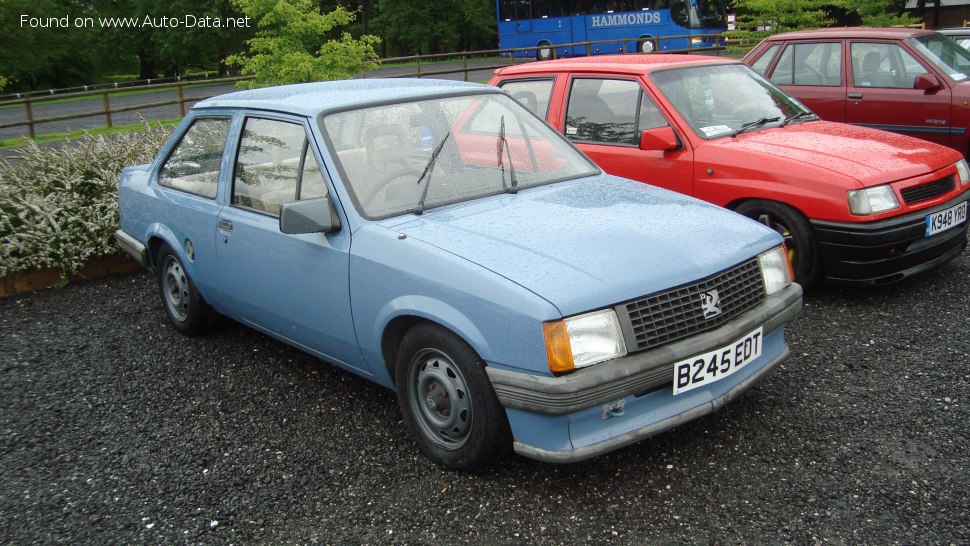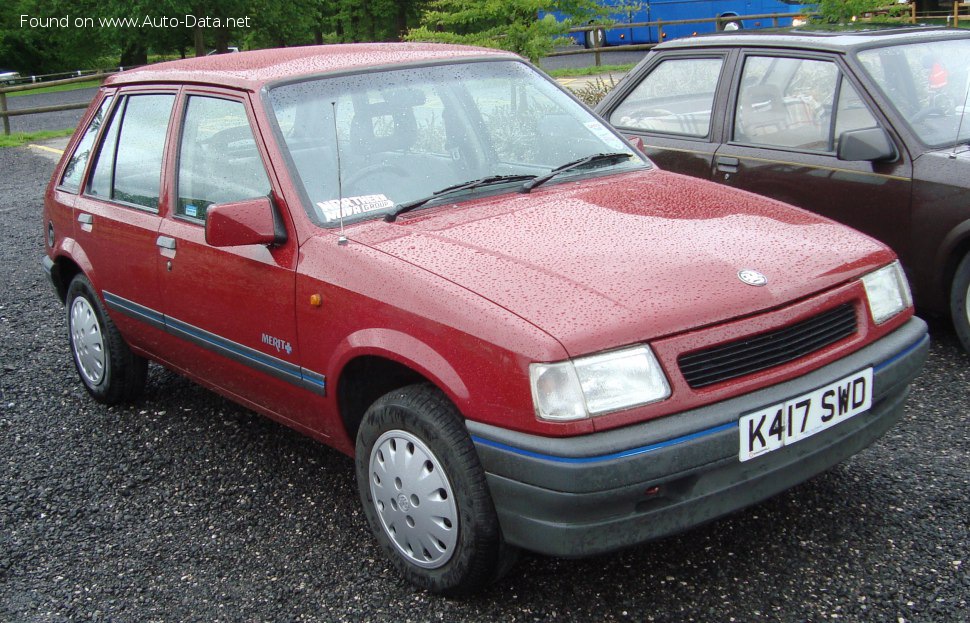
The Vauxhall Nova CC 1.3i, produced between 1985 and 1989, was a supermini car marketed by Vauxhall, the British arm of General Motors. Positioned as a direct replacement for the aging Vauxhall Chevette, the Nova aimed to provide affordable and practical transportation to a broader audience. The “CC” designation stood for “Coupé Cabriolet,” although it was a fixed-roof hatchback, reflecting a marketing strategy to emphasize its sporty styling. While not officially sold in the United States, the Nova was a significant player in the European small car market, competing with vehicles like the Ford Fiesta and Renault 5. It represented a shift towards more modern, efficient, and stylish small cars, and laid the groundwork for future Vauxhall/Opel models.
Vauxhall Nova CC: A Detailed Overview
The Nova CC, specifically the 1.3i variant, was a popular choice due to its balance of affordability, fuel economy, and practicality. It was available with both three and five-door body styles, catering to different customer needs. The 1.3i engine, producing 60 horsepower, was the mainstay of the range, offering sufficient power for urban driving and economical cruising. The Nova’s design, while relatively simple, was considered modern for its time, and its compact dimensions made it easy to maneuver in crowded city streets. The car’s success stemmed from its ability to provide reliable and inexpensive motoring during a period of economic change in the UK.
Engine & Performance
The heart of the Vauxhall Nova CC 1.3i was a 1.3-liter, inline-four cylinder petrol engine, designated the 13NB. This naturally aspirated engine produced 60 horsepower at 5800 rpm and 92 Nm (67.86 lb.-ft.) of torque at 3500 rpm. While not a performance powerhouse, the engine provided adequate power for its intended purpose. The engine featured a single overhead camshaft (OHC) valvetrain with two valves per cylinder and utilized a carburetor fuel injection system – a common setup for vehicles of this era. The engine’s transverse front-wheel-drive layout contributed to its compact size and improved handling. The 5-speed manual transmission allowed drivers to optimize fuel efficiency and engine performance. Power per liter was rated at 46.3 hp/l, a respectable figure for the time. The engine oil capacity was 3 liters (3.17 US qt / 2.64 UK qt) and required a specific oil specification (details not provided in the source data). The cooling system held 6.1 liters (6.45 US qt / 5.37 UK qt) of coolant.
Design & Features
The Vauxhall Nova CC was a three or five-door hatchback, offering a practical and versatile body style. Its compact dimensions – 3622 mm (142.6 in) in length, 1535 mm (60.43 in) in width, and 1364 mm (53.7 in) in height – made it well-suited for urban environments. The interior provided seating for five passengers, although rear passenger space was somewhat limited. The Nova’s interior was functional rather than luxurious, with a focus on durability and ease of use. Safety features were relatively basic by modern standards, reflecting the automotive safety standards of the 1980s. The front brakes were ventilated discs, providing reasonable stopping power, while the rear brakes were drums. The trunk (boot) space offered 260 liters (9.18 cu. ft.) with the rear seats up and expanded to 1150 liters (40.61 cu. ft.) with the rear seats folded down, providing a good level of cargo versatility. The drag coefficient of 0.37 was typical for cars of this period.
Technical Specifications
| Brand | Vauxhall |
| Model | Nova |
| Generation | Nova CC |
| Type (Engine) | 1.3i (60 Hp) |
| Start of production | 1985 |
| End of production | 1989 |
| Powertrain Architecture | Internal Combustion engine |
| Body type | Hatchback |
| Seats | 5 |
| Doors | 3-5 |
| Fuel Type | Petrol (Gasoline) |
| Power | 60 Hp @ 5800 rpm |
| Power per litre | 46.3 Hp/l |
| Torque | 92 Nm @ 3500 rpm / 67.86 lb.-ft. @ 3500 rpm |
| Engine layout | Front, Transverse |
| Engine Model/Code | 13NB |
| Engine displacement | 1297 cm3 / 79.15 cu. in. |
| Number of cylinders | 4 |
| Engine configuration | Inline |
| Cylinder Bore | 75 mm / 2.95 in. |
| Piston Stroke | 73.4 mm / 2.89 in. |
| Compression ratio | 8.2:1 |
| Number of valves per cylinder | 2 |
| Fuel injection system | Carburettor |
| Engine aspiration | Naturally aspirated engine |
| Valvetrain | OHC |
| Engine oil capacity | 3 l / 3.17 US qt | 2.64 UK qt |
| Coolant | 6.1 l / 6.45 US qt | 5.37 UK qt |
| Trunk (boot) space – minimum | 260 l / 9.18 cu. ft. |
| Trunk (boot) space – maximum | 1150 l / 40.61 cu. ft. |
| Fuel tank capacity | 42 l / 11.1 US gal | 9.24 UK gal |
| Length | 3622 mm / 142.6 in. |
| Width | 1535 mm / 60.43 in. |
| Height | 1364 mm / 53.7 in. |
| Wheelbase | 2343 mm / 92.24 in. |
| Front track | 1320 mm / 51.97 in. |
| Rear (Back) track | 1300 mm / 51.18 in. |
| Drag coefficient (Cd) | 0.37 |
| Minimum turning circle (turning diameter) | 9.4 m / 30.84 ft. |
| Drivetrain Architecture | ICE, Front wheel drive |
| Drive wheel | Front wheel drive |
| Number of gears and type of gearbox | 5 gears, manual transmission |
| Front brakes | Ventilated discs |
| Rear brakes | Drum |
| Steering type | Steering rack and pinion |
| Tires size | 155/70 R13 |
| Wheel rims size | 13 |
The Vauxhall Nova CC 1.3i, while a relatively simple car by today’s standards, played an important role in providing affordable and reliable transportation to a generation of drivers. Its compact size, fuel efficiency, and practicality made it a popular choice in the European small car market, and it remains a fondly remembered vehicle for many who owned one during the late 1980s.