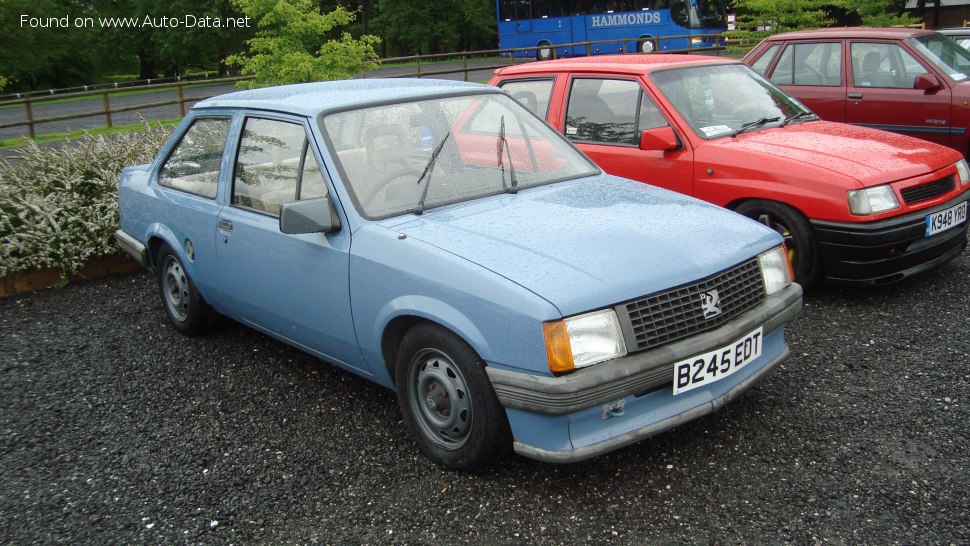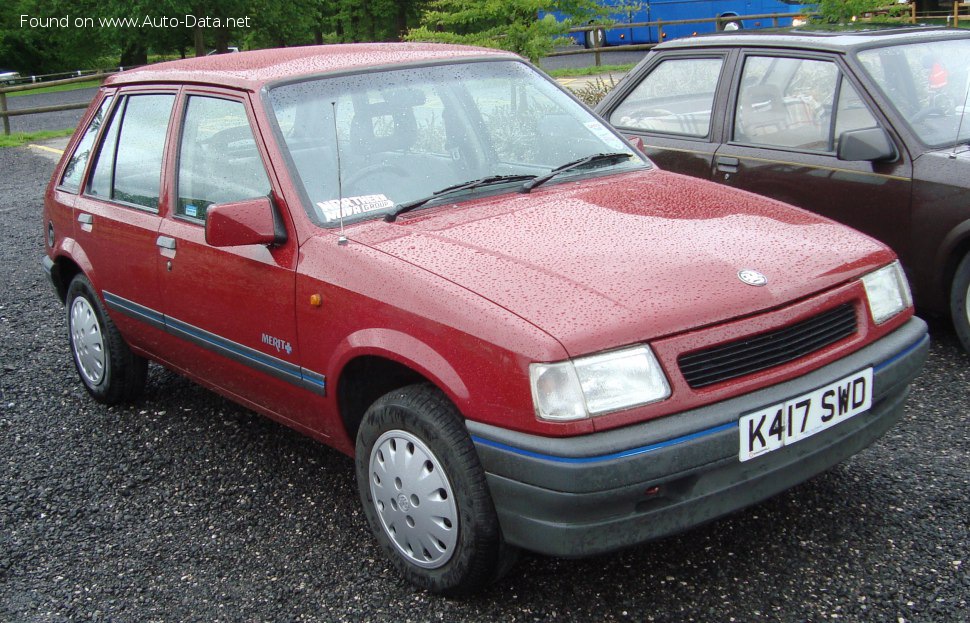
The Vauxhall Nova, known as the Opel Corsa in many European markets, was a supermini car produced by Vauxhall from 1983 to 1993. The Nova CC, introduced in 1990, represented a significant refresh of the original model, offering updated styling and improved features. Positioned as an affordable and practical vehicle, the Nova CC competed with other popular superminis like the Ford Fiesta and Austin Metro in the United Kingdom and broader European market. This article details the 1.4i variant of the Nova CC, a popular engine choice offering a balance of economy and performance.
Vauxhall Nova CC 1.4i: Overview and Market Position
The Nova CC (for ‘Current Collection’) was a crucial model for Vauxhall, aiming to modernize the aging first-generation Nova. While not sold in the United States, the Nova and its Opel Corsa sibling were immensely popular in Europe, offering a compact and economical transportation solution. The 1.4i engine, producing 60 horsepower, was a mainstay of the range, appealing to buyers seeking a reliable and fuel-efficient vehicle for daily commuting and urban driving. The Nova CC’s success lay in its affordability, practicality, and relatively low running costs, making it a popular choice for first-time car buyers and families.
Engine & Performance
The heart of the Nova CC 1.4i is a 1.4-liter, inline-four cylinder petrol engine, designated the C14NZ. This naturally aspirated engine produces 60 horsepower at 5200 rpm and 103 Nm (75.97 lb.-ft.) of torque at 2800 rpm. While not a performance powerhouse, the engine provides adequate power for everyday driving. The power-to-weight ratio of 14.2 kg/Hp and torque-to-weight ratio of 8.3 kg/Nm contribute to a reasonably responsive driving experience. Acceleration from 0 to 60 mph takes approximately 14.3 seconds, and it reaches a top speed of 155 km/h (96.31 mph). Fuel economy is rated at 8.6 l/100 km (27.4 US mpg) in urban conditions. The engine utilizes a single-point fuel injection system and an overhead camshaft (OHC) valvetrain, representing a common configuration for vehicles of this era. The engine’s transverse front-engine layout contributes to efficient packaging within the Nova’s compact footprint.
Design & Features
The Nova CC is a three or five-door hatchback, offering a practical and versatile body style. The CC update brought revised front and rear styling, including a more integrated front bumper and updated taillights. The interior was functional and designed for practicality, with seating for five passengers. While not luxurious, the Nova CC offered a reasonable level of comfort for its price point. Safety features were relatively basic by modern standards, reflecting the automotive safety standards of the early 1990s. The Nova CC’s key appeal was its affordability and ease of use. The rear seats fold down, expanding the trunk space from a minimum of 260 liters (9.18 cu. ft.) to a maximum of 1150 liters (40.61 cu. ft.). The vehicle’s compact dimensions – 3622 mm (142.6 in.) in length and 1535 mm (60.43 in.) in width – made it easy to maneuver in urban environments. The drag coefficient of 0.37 was typical for vehicles of this period.
Technical Specifications
| Brand | Vauxhall |
| Model | Nova |
| Generation | Nova CC |
| Type (Engine) | 1.4i (60 Hp) |
| Start of production | 1990 |
| End of production | 1993 |
| Powertrain Architecture | Internal Combustion engine |
| Body type | Hatchback |
| Seats | 5 |
| Doors | 3-5 |
| Fuel consumption (urban) | 8.6 l/100 km (27.4 US mpg) |
| Fuel Type | Petrol (Gasoline) |
| Acceleration 0 – 100 km/h | 15 sec |
| Acceleration 0 – 62 mph | 15 sec |
| Acceleration 0 – 60 mph | 14.3 sec |
| Maximum speed | 155 km/h (96.31 mph) |
| Weight-to-power ratio | 14.2 kg/Hp |
| Weight-to-torque ratio | 8.3 kg/Nm |
| Power | 60 Hp @ 5200 rpm |
| Power per litre | 43.2 Hp/l |
| Torque | 103 Nm @ 2800 rpm (75.97 lb.-ft. @ 2800 rpm) |
| Engine layout | Front, Transverse |
| Engine Model/Code | C14NZ |
| Engine displacement | 1388 cm3 (84.7 cu. in.) |
| Number of cylinders | 4 |
| Engine configuration | Inline |
| Cylinder Bore | 77.6 mm (3.06 in.) |
| Piston Stroke | 73.4 mm (2.89 in.) |
| Compression ratio | 9.4:1 |
| Number of valves per cylinder | 2 |
| Fuel injection system | Single-point injection |
| Engine aspiration | Naturally aspirated |
| Valvetrain | OHC |
| Engine oil capacity | 3 l (3.17 US qt | 2.64 UK qt) |
| Coolant | 5.7 l (6.02 US qt | 5.02 UK qt) |
| Kerb Weight | 850 kg (1873.93 lbs.) |
| Max. weight | 1335 kg (2943.17 lbs.) |
| Max load | 485 kg (1069.24 lbs.) |
| Trunk (boot) space – minimum | 260 l (9.18 cu. ft.) |
| Trunk (boot) space – maximum | 1150 l (40.61 cu. ft.) |
| Fuel tank capacity | 42 l (11.1 US gal | 9.24 UK gal) |
| Length | 3622 mm (142.6 in.) |
| Width | 1535 mm (60.43 in.) |
| Height | 1364 mm (53.7 in.) |
| Wheelbase | 2343 mm (92.24 in.) |
| Front track | 1320 mm (51.97 in.) |
| Rear (Back) track | 1300 mm (51.18 in.) |
| Drag coefficient (Cd) | 0.37 |
| Minimum turning circle | 9.4 m (30.84 ft.) |
| Drivetrain Architecture | Front wheel drive |
| Number of gears | 5 gears, manual transmission |
| Front brakes | Ventilated discs |
| Rear brakes | Drum |
| Tires size | 165/65 R14 |
| Wheel rims size | 14 |
The Vauxhall Nova CC 1.4i, while a relatively simple vehicle by today’s standards, played a significant role in providing affordable and reliable transportation to a wide range of drivers in Europe during the early 1990s. Its practicality, fuel efficiency, and compact size made it a popular choice in a competitive market segment.