
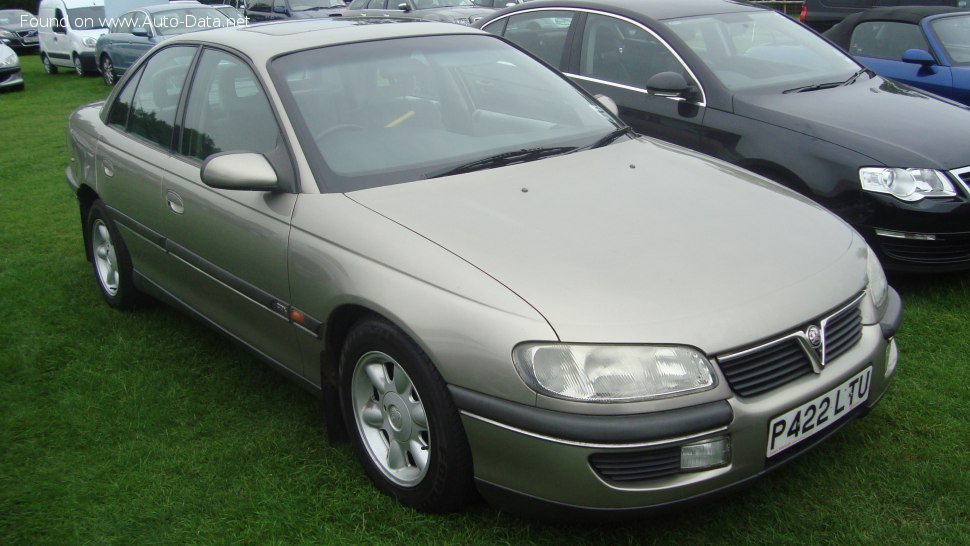
The Vauxhall Omega B 2.0 DTI 16V, produced between 1998 and 1999, represents a significant iteration of Vauxhall’s flagship executive car. Part of the Omega B generation (1994-2003), this model was primarily aimed at the European market, offering a blend of comfort, space, and relatively economical diesel power. While not officially sold in the United States, understanding its specifications and position within the European automotive landscape provides insight into the preferences and engineering standards of the time. The Omega B competed with vehicles like the Ford Mondeo, BMW 5 Series, and Audi A6, offering a more affordable alternative with a focus on practicality and a spacious interior.
Vauxhall Omega B 2.0 DTI 16V: A Detailed Overview
The Omega B series was a crucial model for Vauxhall (owned by General Motors at the time), intended to elevate the brand’s image and provide a genuine competitor in the executive car segment. The 2.0 DTI 16V variant specifically targeted buyers seeking a diesel-powered option with a balance between performance and fuel efficiency. This model distinguished itself with a direct injection turbo diesel engine, offering improved torque and economy compared to earlier Omega models. It was a popular choice for high-mileage drivers and those prioritizing running costs.
Engine & Performance
The heart of the Omega B 2.0 DTI 16V is a 1,995 cc (121.74 cu. in.) inline-four cylinder diesel engine, designated the X20DTH. This engine produces 101 horsepower (Hp) at 4,300 rpm and 205 Newton-meters (151.2 lb.-ft.) of torque at 1,650 rpm. The engine utilizes a diesel commonrail fuel injection system and a turbocharger to enhance power and efficiency. While its 0-60 mph acceleration time of 14.3 seconds isn’t particularly brisk by modern standards, the engine’s torque delivery provides reasonable performance for everyday driving and overtaking. The Omega B 2.0 DTI 16V achieves a maximum speed of 186 km/h (115.58 mph). Fuel economy is a strong point, with figures of 9.2 l/100 km (25.6 US mpg) in urban conditions and 5 l/100 km (47 US mpg) on the extra-urban cycle. The engine’s longitudinal front-engine layout and rear-wheel drive configuration contribute to balanced handling characteristics.
Design & Features
The Vauxhall Omega B is a four-door sedan with a classic, understated design typical of European executive cars of the late 1990s. It offers seating for five passengers and a generous 530-liter (18.72 cu. ft.) trunk. The car’s dimensions – 4,787 mm (188.46 in.) in length, 1,786 mm (70.31 in.) in width, and 1,455 mm (57.28 in.) in height – provide ample interior space. Safety features for the time included ABS (Anti-lock Braking System) as standard. The Omega B prioritized comfort and practicality, offering a well-equipped interior with features expected of a car in its class, such as power windows, central locking, and air conditioning (depending on the trim level). The drag coefficient of 0.29 was respectable for the era, contributing to improved fuel efficiency and reduced wind noise. The suspension system, featuring independent McPherson struts at the front and an independent multi-link setup at the rear, aimed to provide a comfortable ride and stable handling.
Technical Specifications
| Brand | Vauxhall |
| Model | Omega |
| Generation | Omega B |
| Type (Engine) | 2.0 DTI 16V (101 Hp) |
| Start of production | 1998 |
| End of production | 1999 |
| Powertrain Architecture | Internal Combustion engine |
| Body type | Sedan |
| Seats | 5 |
| Doors | 4 |
| Fuel consumption (urban) | 9.2 l/100 km (25.6 US mpg) |
| Fuel consumption (extra urban) | 5 l/100 km (47 US mpg) |
| Fuel Type | Diesel |
| Acceleration 0 – 100 km/h | 15 sec |
| Acceleration 0 – 62 mph | 15 sec |
| Acceleration 0 – 60 mph | 14.3 sec |
| Maximum speed | 186 km/h (115.58 mph) |
| Weight-to-power ratio | 14.1 kg/Hp |
| Weight-to-torque ratio | 7 kg/Nm |
| Power | 101 Hp @ 4300 rpm |
| Torque | 205 Nm @ 1650 rpm (151.2 lb.-ft. @ 1650 rpm) |
| Engine layout | Front, Longitudinal |
| Engine Model/Code | X20DTH |
| Engine displacement | 1995 cm3 (121.74 cu. in.) |
| Number of cylinders | 4 |
| Engine configuration | Inline |
| Cylinder Bore | 84 mm (3.31 in.) |
| Piston Stroke | 90 mm (3.54 in.) |
| Compression ratio | 18.5:1 |
| Number of valves per cylinder | 4 |
| Fuel injection system | Diesel Commonrail |
| Engine aspiration | Turbocharger |
| Engine oil capacity | 5.5 l (5.81 US qt | 4.84 UK qt) |
| Coolant capacity | 7.9 l (8.35 US qt | 6.95 UK qt) |
| Kerb Weight | 1425-1469 kg (3141.59 – 3238.59 lbs.) |
| Max. weight | 1955 kg (4310.04 lbs.) |
| Max load | 486-530 kg (1071.45 – 1168.45 lbs.) |
| Trunk (boot) space – maximum | 530 l (18.72 cu. ft.) |
| Fuel tank capacity | 75 l (19.81 US gal | 16.5 UK gal) |
| Max. roof load | 100 kg (220.46 lbs.) |
| Permitted trailer load with brakes (12%) | 1700 kg (3747.86 lbs.) |
| Permitted trailer load without brakes | 750 kg (1653.47 lbs.) |
| Permitted towbar download | 75 kg (165.35 lbs.) |
| Length | 4787 mm (188.46 in.) |
| Width | 1786 mm (70.31 in.) |
| Width including mirrors | 1960 mm (77.17 in.) |
| Height | 1455 mm (57.28 in.) |
| Wheelbase | 2730 mm (107.48 in.) |
| Front track | 1514 mm (59.61 in.) |
| Rear track | 1528 mm (60.16 in.) |
| Rear overhang | 1140 mm (44.88 in.) |
| Drag coefficient (Cd) | 0.29 |
| Minimum turning circle | 10.2 m (33.46 ft.) |
| Drivetrain Architecture | Rear wheel drive |
| Number of gears and type of gearbox | 5 gears, manual transmission |
| Front suspension | Independent, type McPherson with coil spring and anti-roll bar |
| Rear suspension | Independent multi-link suspension |
| Front brakes | Ventilated discs |
| Rear brakes | Disc |
| Assisting systems | ABS (Anti-lock braking system) |
| Tires size | 195/65 R15 |
| Wheel rims size | 6.5J x 15 |
The Vauxhall Omega B 2.0 DTI 16V, while not a performance car, offered a compelling package for European buyers seeking a comfortable, spacious, and economical executive sedan. Its blend of practicality, efficiency, and reasonable performance ensured its popularity during its short production run.
