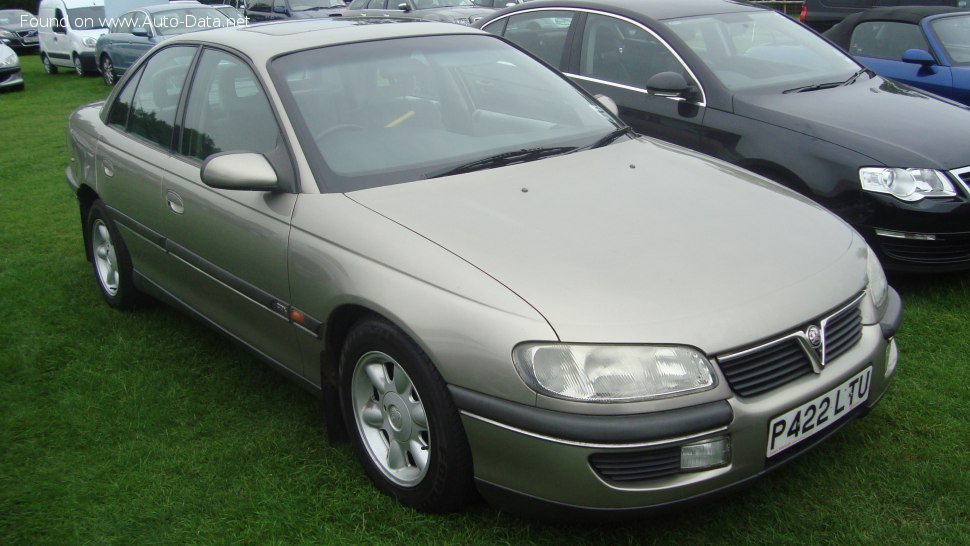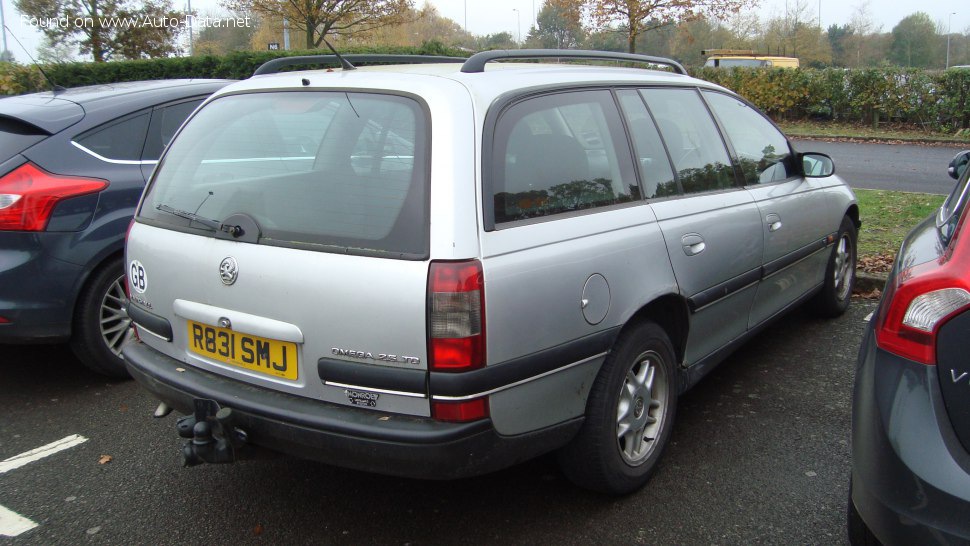
The Vauxhall Omega Estate B 2.5 TD (130 Hp), produced between 1994 and 1999, represented a significant offering in the executive and family car segments within its primary European markets, particularly the United Kingdom. As a large station wagon (estate car in British English) from General Motors’ British subsidiary, Vauxhall, the Omega B served as a comfortable, capacious, and often understated workhorse for professionals and families alike. It succeeded the Omega A (and its predecessor, the Carlton) and was largely identical to its German counterpart, the Opel Omega B, illustrating GM Europe’s strategy of badge engineering to cater to regional brand loyalties. This particular diesel variant, with its robust 2.5-liter turbocharged engine, was especially appealing in an era when diesel power was gaining considerable traction across Europe for its efficiency, longevity, and strong low-end torque, making it an ideal choice for long-distance cruising and load-lugging.
Engine and Performance of the Vauxhall Omega Estate B 2.5 TD (130 Hp)
At the heart of the Vauxhall Omega Estate B 2.5 TD (130 Hp) was a formidable 2.5-liter inline-six cylinder diesel engine, designated by codes 25DT or X25DT. This powertrain architecture, featuring a front, longitudinal engine layout and rear-wheel drive, underscored the Omega’s traditional executive car roots, prioritizing balanced weight distribution and a refined driving experience. The engine itself was a testament to 1990s diesel engineering, equipped with a turbocharger and intercooler to boost power output and efficiency. With a displacement of 2497 cm³ (152.38 cu. in.), it produced a respectable 130 horsepower at 4500 rpm. More critically for a large estate car, it delivered a substantial 250 Nm (184.39 lb.-ft.) of torque, peaking at a relatively low 2200 rpm. This characteristic torque delivery ensured strong pulling power from low engine speeds, ideal for overtaking, climbing hills, or when carrying a full complement of passengers and cargo.
The engine’s configuration as an inline-six, combined with a DOHC (Double Overhead Camshaft) valvetrain and two valves per cylinder, contributed to its smooth operation and reliability. Fuel was delivered via a Diesel Commonrail injection system, a then-advanced technology that allowed for precise fuel metering, improving both power and fuel economy. With a high compression ratio of 22:1, typical for diesel engines, the 2.5 TD offered commendable efficiency for its size and power. Fuel consumption in urban conditions was rated at 9.1 liters per 100 km, which translates to an economical 25.8 US mpg. On the open road, this figure would improve significantly, affirming its suitability for long-haul journeys. The Omega Estate B 2.5 TD could achieve a maximum speed of 195 km/h (121.17 mph), providing ample performance for motorway driving in its target markets. Power was transmitted to the rear wheels through a standard 5-speed manual transmission, offering direct engagement and control over the engine’s output, further enhancing the driving experience for those who preferred a more involved feel.
Design, Features, and Practicality
The Vauxhall Omega Estate B, with its station wagon body type, was designed with practicality and utility at its forefront. Measuring 4819 mm (189.72 in.) in length, 1786 mm (70.31 in.) in width (or 1960 mm / 77.17 in. including mirrors), and 1545 mm (60.83 in.) in height, it commanded a significant road presence. Its generous dimensions were underpinned by a 2730 mm (107.48 in.) wheelbase, which not only contributed to a spacious cabin but also to a stable and comfortable ride. The design language of the Omega B was typical of mid-to-late 1990s European sedans and estates: smooth, aerodynamic, and functional, with a drag coefficient (Cd) of 0.32, which aided both fuel efficiency and reduced wind noise at speed.
Inside, the Omega Estate B was configured for five occupants across five doors, offering substantial comfort and ample head and legroom for all passengers. The true highlight of the estate variant, however, was its cargo capacity. With the rear seats in place, the trunk offered a generous 540 liters (19.07 cu. ft.) of space, capable of accommodating multiple suitcases or a week’s worth of groceries. When the rear seats were folded down, this volume expanded dramatically to a cavernous 1800 liters (63.57 cu. ft.), transforming the Omega into a highly capable load-carrier, suitable for everything from furniture transport to outdoor equipment. Complementing its cargo credentials, the Omega Estate also boasted strong towing capabilities, with a permitted trailer load of 1600 kg (3527.4 lbs) with brakes and 750 kg (1653.47 lbs) without, making it a versatile option for those with caravans or utility trailers.
Underpinning the Omega’s comfort and handling was a well-engineered chassis. The front suspension featured an independent McPherson strut setup with coil springs and an anti-roll bar, providing responsive steering and good road holding. At the rear, an independent multi-link suspension system was employed, a sophisticated design for its time, which further enhanced ride comfort and stability, particularly when the vehicle was fully laden. Braking performance was handled by ventilated discs at the front and solid discs at the rear, augmented by an Anti-lock Braking System (ABS), a crucial safety feature that was becoming standard in executive vehicles of the era. The car rode on 205/65 R15 tires mounted on 6.5J x 15-inch wheel rims, providing a good balance between comfort, grip, and durability. With a minimum turning circle of 10.2 meters (33.46 ft.), the large estate remained surprisingly maneuverable in urban environments.
The overall package of the Vauxhall Omega Estate B 2.5 TD (130 Hp) combined robust engineering, practical design, and a focus on comfort and efficiency. While not sold in the United States, its legacy in Europe as a reliable, spacious, and economical executive estate car is well-established, embodying a period when large, rear-wheel-drive diesel wagons were a staple of continental motoring, offering a blend of luxury, performance, and utilitarianism that remains appealing to enthusiasts of classic European automobiles.
Technical Specifications: Vauxhall Omega Estate B 2.5 TD (130 Hp)
| Brand | Vauxhall |
| Model | Omega |
| Generation | Omega Estate B |
| Type (Engine) | 2.5 TD (130 Hp) |
| Start of production | 1994 year |
| End of production | 1999 year |
| Powertrain Architecture | Internal Combustion engine |
| Body type | Station wagon (estate) |
| Seats | 5 |
| Doors | 5 |
| Fuel consumption (economy) – urban | 9.1 l/100 km (25.8 US mpg) |
| Fuel Type | Diesel |
| Maximum speed | 195 km/h (121.17 mph) |
| Weight-to-power ratio | 12 kg/Hp (83.2 Hp/tonne) |
| Weight-to-torque ratio | 6.3 kg/Nm (159.9 Nm/tonne) |
| Power | 130 Hp @ 4500 rpm |
| Power per liter | 52.1 Hp/l |
| Torque | 250 Nm @ 2200 rpm (184.39 lb.-ft. @ 2200 rpm) |
| Engine layout | Front, Longitudinal |
| Engine Model/Code | 25DT, X25DT |
| Engine displacement | 2497 cm³ (152.38 cu. in.) |
| Number of cylinders | 6 |
| Engine configuration | Inline |
| Cylinder Bore | 80 mm (3.15 in.) |
| Piston Stroke | 82.8 mm (3.26 in.) |
| Compression ratio | 22:1 |
| Number of valves per cylinder | 2 |
| Fuel injection system | Diesel Commonrail |
| Engine aspiration | Turbocharger, Intercooler |
| Valvetrain | DOHC |
| Engine oil capacity | 6.5 l (6.87 US qt) |
| Coolant | 10.2 l (10.78 US qt) |
| Kerb Weight | 1563-1654 kg (3445.83 – 3646.45 lbs) |
| Max. weight | 2195-2225 kg (4839.15 – 4905.29 lbs) |
| Max load | 571-632 kg (1258.84 – 1393.32 lbs) |
| Trunk (boot) space – minimum | 540 l (19.07 cu. ft.) |
| Trunk (boot) space – maximum | 1800 l (63.57 cu. ft.) |
| Fuel tank capacity | 75 l (19.81 US gal) |
| Max. roof load | 100 kg (220.46 lbs) |
| Permitted trailer load with brakes (12%) | 1600 kg (3527.4 lbs) |
| Permitted trailer load without brakes | 750 kg (1653.47 lbs) |
| Permitted towbar download | 75 kg (165.35 lbs) |
| Length | 4819 mm (189.72 in.) |
| Width | 1786 mm (70.31 in.) |
| Width including mirrors | 1960 mm (77.17 in.) |
| Height | 1545 mm (60.83 in.) |
| Wheelbase | 2730 mm (107.48 in.) |
| Front track | 1514 mm (59.61 in.) |
| Rear (Back) track | 1528 mm (60.16 in.) |
| Rear overhang | 1170 mm (46.06 in.) |
| Drag coefficient (Cd) | 0.32 |
| Minimum turning circle (turning diameter) | 10.2 m (33.46 ft.) |
| Drivetrain Architecture | The Internal combustion engine (ICE) drives the rear wheels of the vehicle. |
| Drive wheel | Rear wheel drive |
| Number of gears and type of gearbox | 5 gears, manual transmission |
| Front suspension | Independent, type McPherson with coil spring and anti-roll bar |
| Rear suspension | Independent multi-link suspension |
| Front brakes | Ventilated discs |
| Rear brakes | Disc |
| Assisting systems | ABS (Anti-lock braking system) |
| Tires size | 205/65 R15 |
| Wheel rims size | 6.5J x 15 |