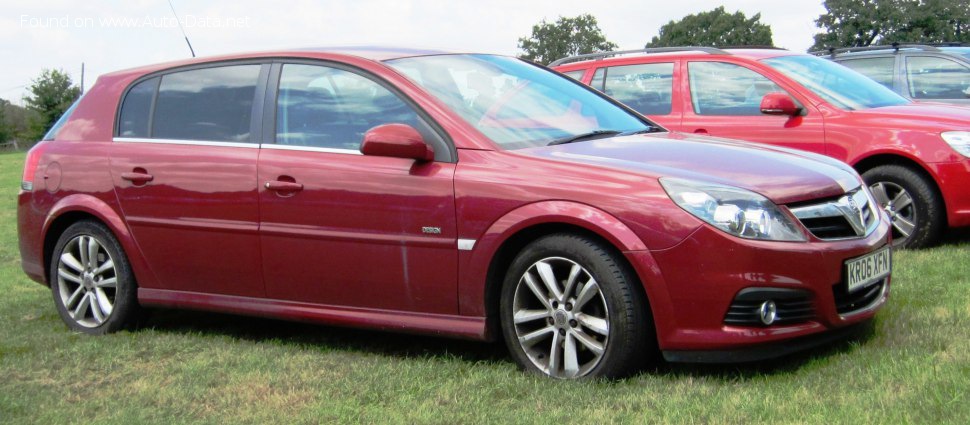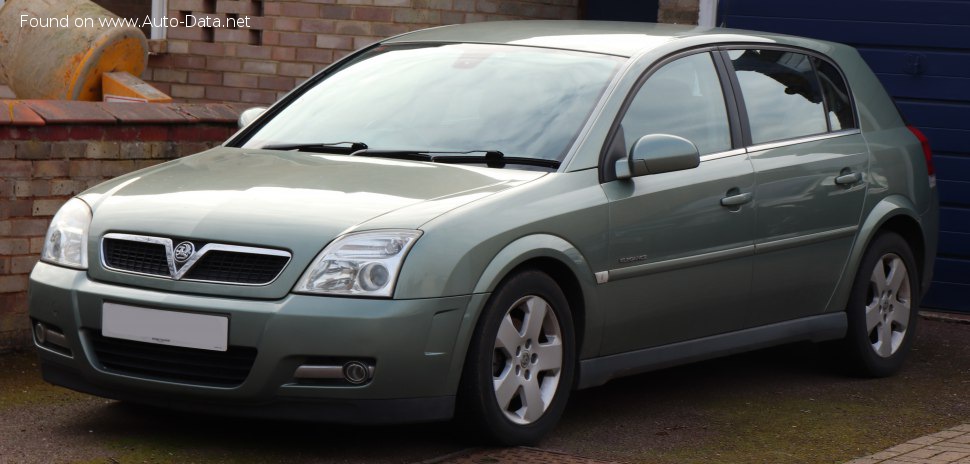
The Vauxhall Signum, a distinctive executive hatchback, represented a unique proposition within the European automotive landscape during its production run from 2003 to 2005. Positioned above the Vectra, the Signum aimed to blend the practicality of a conventional hatchback with the spaciousness and comfort typically associated with larger, more premium sedans and even compact MPVs. While never officially sold in the United States, the Signum played a noteworthy role in Vauxhall’s strategy for the European market, offering a sophisticated and versatile option for buyers seeking something beyond the traditional three-box sedan or estate car. This particular variant, the 2.0i 16V Turbo ECOTEC (175 Hp), stood out for its blend of spirited performance and commendable efficiency, targeting consumers who desired a dynamic driving experience without compromising on interior room or utility.
Engine and Performance of the Vauxhall Signum
At the heart of the Vauxhall Signum 2.0i 16V Turbo ECOTEC (175 Hp) was a sophisticated 2.0-liter turbocharged inline-four engine, designated with the model code Z20NET. This powerplant, a testament to General Motors’ ECOTEC engineering principles, was designed to deliver a compelling balance of power, fuel economy, and refined operation. Producing a robust 175 horsepower at 5500 revolutions per minute, the engine provided ample motivation for the executive hatchback. More impressively, its turbocharged nature, complete with an intercooler, generated a substantial 195.45 lb.-ft. of torque, available across a broad and usable rev range from 2500 to 3800 rpm. This wide torque band ensured flexible acceleration and confident overtaking capabilities, making it well-suited for both urban commutes and high-speed highway cruising.
The engine’s technical specifications further underscore its advanced design. With a displacement of 1998 cubic centimeters (121.93 cubic inches), an 86 mm bore, and an 86 mm piston stroke, it featured a square engine configuration, often favored for its balance between torque and high-revving potential. A compression ratio of 9.5:1, coupled with a multi-port manifold fuel injection system, optimized combustion efficiency. The DOHC (Double Overhead Camshaft) valvetrain with four valves per cylinder ensured precise control over air intake and exhaust gas scavenging, contributing to both power output and emissions control. Power was channeled to the front wheels via a precise 6-speed manual transmission, offering drivers an engaging and direct connection to the car’s performance. This powertrain architecture allowed the Signum to achieve a maximum speed of 137.94 mph (222 km/h), a respectable figure for a vehicle of its class and era.
Despite its performance credentials, the 2.0i 16V Turbo ECOTEC also demonstrated a commendable focus on fuel efficiency and environmental responsibility for its time. It adhered to the Euro 4 emission standard, a significant benchmark for vehicles produced in the mid-2000s. Combined fuel economy was rated at 26.4 US miles per gallon (8.9 liters per 100 km), with urban consumption at 18.4 US mpg (12.8 l/100 km) and extra-urban figures reaching 35.6 US mpg (6.6 l/100 km). CO2 emissions were recorded at 214 grams per kilometer. The engine’s oil capacity was 6 liters (6.34 US quarts), and the cooling system required 7.5 liters (7.93 US quarts) of coolant, indicating a robust design for thermal management.
Design and Features: The Vauxhall Signum
The Vauxhall Signum’s design was a departure from conventional automotive styling, aiming to create a niche for itself as a “recreational vehicle” or “executive express” that prioritized passenger space and versatility. Classified as a 5-door hatchback, its exterior dimensions were substantial for its segment, measuring 183.11 inches (4651 mm) in length, 70.79 inches (1798 mm) in width (80.16 inches or 2036 mm including mirrors), and 57.72 inches (1466 mm) in height. A particularly elongated wheelbase of 111.42 inches (2830 mm) was a key differentiator, providing exceptional rear legroom and contributing to a stable and comfortable ride.
Aesthetically, the Signum presented a sleek profile with a low drag coefficient (Cd) of 0.28, which not only contributed to its aerodynamic efficiency but also reduced wind noise at higher speeds. The five-door configuration offered excellent access to both the front and rear cabins, and the spacious interior comfortably accommodated five occupants. The hatchback design was not merely for show; it provided practical cargo flexibility. The trunk offered a minimum capacity of 12.89 cubic feet (365 liters), which could be expanded significantly to a cavernous 49.79 cubic feet (1410 liters) with the rear seats folded, making it highly adaptable for various cargo needs, from daily groceries to holiday luggage.
Underneath its distinctive body, the Signum featured a sophisticated chassis designed for both comfort and dynamic handling. The drivetrain architecture was front-wheel drive, with the internal combustion engine transversely mounted at the front. The front suspension utilized an independent McPherson strut setup with coil springs and an anti-roll bar, a proven design for precise steering and ride comfort. At the rear, an independent multi-link suspension system further enhanced handling stability and passenger comfort, particularly over uneven surfaces. Braking performance was assured by ventilated discs at the front and solid discs at the rear, complemented by an Anti-lock Braking System (ABS), a crucial safety feature that prevented wheel lock-up during emergency braking scenarios, allowing the driver to maintain steering control.
With a kerb weight of 3119.54 pounds (1415 kg), the Signum struck a good balance between solidity and agility. Its weight-to-power ratio of 8.1 kg/Hp (123.7 Hp/tonne) and weight-to-torque ratio of 5.3 kg/Nm (187.3 Nm/tonne) indicated a responsive driving character. The 15.85 US gallon (60 liter) fuel tank provided a decent cruising range, aligning with its role as a comfortable long-distance cruiser. Overall, the Vauxhall Signum 2.0i 16V Turbo ECOTEC (175 Hp) was a thoughtfully engineered vehicle that, while niche, offered a compelling combination of performance, practicality, and comfort for its targeted European consumers.
Technical Specifications: Vauxhall Signum 2.0i 16V Turbo ECOTEC (175 Hp)
| Brand | Vauxhall |
| Model | Signum |
| Generation | Signum |
| Type (Engine) | 2.0i 16V Turbo ECOTEC (175 Hp) |
| Start of production | 2003 year |
| End of production | 2005 year |
| Powertrain Architecture | Internal Combustion engine |
| Body type | Hatchback |
| Seats | 5 |
| Doors | 5 |
| Fuel consumption (economy) – urban | 12.8 l/100 km (18.4 US mpg) |
| Fuel consumption (economy) – extra urban | 6.6 l/100 km (35.6 US mpg) |
| Fuel consumption (economy) – combined | 8.9 l/100 km (26.4 US mpg) |
| CO2 emissions | 214 g/km |
| Fuel Type | Petrol (Gasoline) |
| Maximum speed | 222 km/h (137.94 mph) |
| Emission standard | Euro 4 |
| Weight-to-power ratio | 8.1 kg/Hp (123.7 Hp/tonne) |
| Weight-to-torque ratio | 5.3 kg/Nm (187.3 Nm/tonne) |
| Power | 175 Hp @ 5500 rpm. |
| Power per litre | 87.6 Hp/l |
| Torque | 265 Nm @ 2500-3800 rpm. (195.45 lb.-ft.) |
| Engine layout | Front, Transverse |
| Engine Model/Code | Z20NET |
| Engine displacement | 1998 cm3 (121.93 cu. in.) |
| Number of cylinders | 4 |
| Engine configuration | Inline |
| Cylinder Bore | 86 mm (3.39 in.) |
| Piston Stroke | 86 mm (3.39 in.) |
| Compression ratio | 9.5:1 |
| Number of valves per cylinder | 4 |
| Fuel injection system | Multi-port manifold injection |
| Engine aspiration | Turbocharger, Intercooler |
| Valvetrain | DOHC |
| Engine oil capacity | 6 l (6.34 US qt) |
| Coolant | 7.5 l (7.93 US qt) |
| Kerb Weight | 1415 kg (3119.54 lbs.) |
| Trunk (boot) space – minimum | 365 l (12.89 cu. ft.) |
| Trunk (boot) space – maximum | 1410 l (49.79 cu. ft.) |
| Fuel tank capacity | 60 l (15.85 US gal) |
| Length | 4651 mm (183.11 in.) |
| Width | 1798 mm (70.79 in.) |
| Width including mirrors | 2036 mm (80.16 in.) |
| Height | 1466 mm (57.72 in.) |
| Wheelbase | 2830 mm (111.42 in.) |
| Drag coefficient (Cd) | 0.28 |
| Drivetrain Architecture | The Internal combustion engine (ICE) drives the front wheels of the vehicle. |
| Drive wheel | Front wheel drive |
| Number of gears and type of gearbox | 6 gears, manual transmission |
| Front suspension | Independent, type McPherson with coil spring and anti-roll bar |
| Rear suspension | Independent multi-link suspension |
| Front brakes | Ventilated discs |
| Rear brakes | Disc |
| Assisting systems | ABS (Anti-lock braking system) |