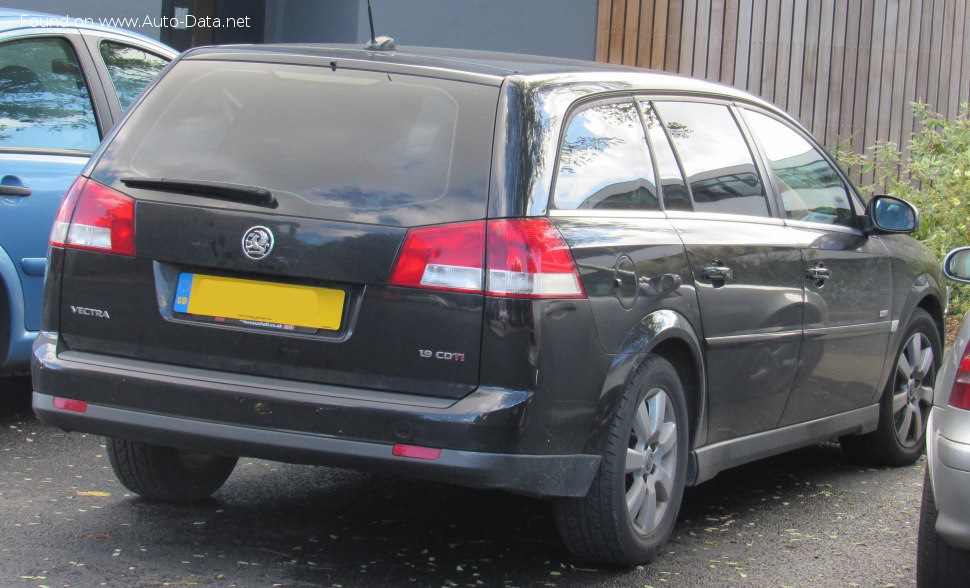
The Vauxhall Vectra C Estate 2.2i 16V Direct ECOTEC (155 Hp) Automatic, produced between 2004 and 2005, represents a significant iteration in Vauxhall’s mid-size family car lineup. As part of the Vectra C generation (2002-2008), the Estate model – a station wagon – offered increased practicality and cargo space compared to the saloon and hatchback variants. While the Vectra nameplate has been discontinued, the C generation, and specifically the Estate, was a popular choice in the United Kingdom and Europe for families and individuals needing a versatile vehicle. It competed with models like the Ford Mondeo Estate, Peugeot 407 SW, and Volkswagen Passat Variant.
Vauxhall Vectra C Estate: Overview and Market Position
The Vectra C Estate aimed to provide a balance between comfort, practicality, and reasonable performance. The 2.2i 16V Direct ECOTEC engine, coupled with an automatic transmission, was a common configuration, offering a blend of efficiency and ease of driving. Vauxhall, as a British brand (now part of Stellantis), focused on providing value and practicality to its customers. The Vectra C Estate, therefore, was positioned as a sensible and reliable option within the competitive European market. It wasn’t necessarily a performance-oriented vehicle, but rather a well-rounded family car designed for everyday use.
Engine & Performance
The heart of the Vectra C Estate 2.2i is a 2.2-liter, inline-four cylinder ECOTEC engine. This naturally aspirated powerplant produces 155 horsepower at 5600 rpm and 220 Newton-meters (162.26 lb.-ft.) of torque at 3800 rpm. The ECOTEC designation signified Vauxhall’s efforts to improve fuel efficiency and reduce emissions. The engine features multi-port fuel injection and a double overhead camshaft (DOHC) valvetrain with four valves per cylinder. This configuration allows for good responsiveness and a relatively smooth power delivery. Paired with a five-speed automatic transmission, the vehicle achieves a maximum speed of 205 km/h (127.38 mph). The weight-to-power ratio is 9 kg/Hp, and the weight-to-torque ratio is 6.3 kg/Nm, indicating a reasonable balance between weight and performance. Fuel economy is rated at 8.3 liters per 100 kilometers combined (28.3 US mpg, 34 UK mpg), with urban consumption at 11.6 l/100km (20.3 US mpg) and extra-urban at 6.4 l/100km (36.8 US mpg). The engine meets Euro 4 emission standards, reflecting the environmental regulations in place during its production period.
Design & Features
The Vectra C Estate is a five-door station wagon, offering seating for five passengers. Its design, while functional, was considered somewhat conservative compared to some of its competitors. The Estate body style provides a significant advantage in terms of cargo capacity. With the rear seats up, the trunk offers a minimum of 530 liters (18.72 cu. ft.) of space, expanding to a substantial 1850 liters (65.33 cu. ft.) with the rear seats folded down. The vehicle’s dimensions are 4839 mm (190.51 in.) in length, 1798 mm (70.79 in.) in width, and 1500 mm (59.06 in.) in height. The wheelbase measures 2830 mm (111.42 in.). Safety features included ABS (Anti-lock Braking System), a standard offering for vehicles of this era. The suspension utilizes an independent McPherson strut setup at the front and an independent multi-link suspension at the rear, providing a comfortable ride and reasonable handling characteristics. The drag coefficient of 0.28 contributes to aerodynamic efficiency.
Technical Specifications
| Brand | Vauxhall |
| Model | Vectra |
| Generation | Vectra C Estate |
| Type (Engine) | 2.2i 16V Direct ECOTEC (155 Hp) Automatic |
| Start of production | 2004 |
| End of production | 2005 |
| Powertrain Architecture | Internal Combustion engine |
| Body type | Station wagon (estate) |
| Seats | 5 |
| Doors | 5 |
| Fuel consumption (urban) | 11.6 l/100 km (20.3 US mpg, 24.4 UK mpg) |
| Fuel consumption (extra urban) | 6.4 l/100 km (36.8 US mpg, 44.1 UK mpg) |
| Fuel consumption (combined) | 8.3 l/100 km (28.3 US mpg, 34 UK mpg) |
| CO2 emissions | 199 g/km |
| Fuel Type | Petrol (Gasoline) |
| Maximum speed | 205 km/h (127.38 mph) |
| Emission standard | Euro 4 |
| Weight-to-power ratio | 9 kg/Hp |
| Weight-to-torque ratio | 6.3 kg/Nm |
| Power | 155 Hp @ 5600 rpm |
| Torque | 220 Nm @ 3800 rpm (162.26 lb.-ft. @ 3800 rpm) |
| Engine layout | Front, Transverse |
| Engine Model/Code | Z22YH |
| Engine displacement | 2198 cm3 (134.13 cu. in.) |
| Number of cylinders | 4 |
| Engine configuration | Inline |
| Cylinder Bore | 86 mm (3.39 in.) |
| Piston Stroke | 94.6 mm (3.72 in.) |
| Compression ratio | 12:1 |
| Number of valves per cylinder | 4 |
| Fuel injection system | Multi-port manifold injection |
| Engine aspiration | Naturally aspirated engine |
| Valvetrain | DOHC |
| Engine oil capacity | 5 l (5.28 US qt | 4.4 UK qt) |
| Coolant capacity | 7.6 l (8.03 US qt | 6.69 UK qt) |
| Kerb Weight | 1395 kg (3075.45 lbs.) |
| Trunk (boot) space – minimum | 530 l (18.72 cu. ft.) |
| Trunk (boot) space – maximum | 1850 l (65.33 cu. ft.) |
| Length | 4839 mm (190.51 in.) |
| Width | 1798 mm (70.79 in.) |
| Width including mirrors | 2036 mm (80.16 in.) |
| Height | 1500 mm (59.06 in.) |
| Wheelbase | 2830 mm (111.42 in.) |
| Drag coefficient (Cd) | 0.28 |
| Drivetrain Architecture | Front wheel drive |
| Number of gears and type of gearbox | 5 gears, automatic transmission |
| Front suspension | Independent, type McPherson with coil spring and anti-roll bar |
| Rear suspension | Independent multi-link suspension |
| Front brakes | Ventilated discs |
| Rear brakes | Disc |
| Assisting systems | ABS (Anti-lock braking system) |
The Vauxhall Vectra C Estate 2.2i 16V Direct ECOTEC Automatic, while not a groundbreaking vehicle, represented a solid and practical choice for families in the early 2000s. Its combination of reasonable performance, ample cargo space, and acceptable fuel economy made it a competitive offering in the European mid-size estate market. Although the Vectra line has been superseded by newer models, the C Estate remains a testament to Vauxhall’s commitment to providing functional and reliable transportation.