
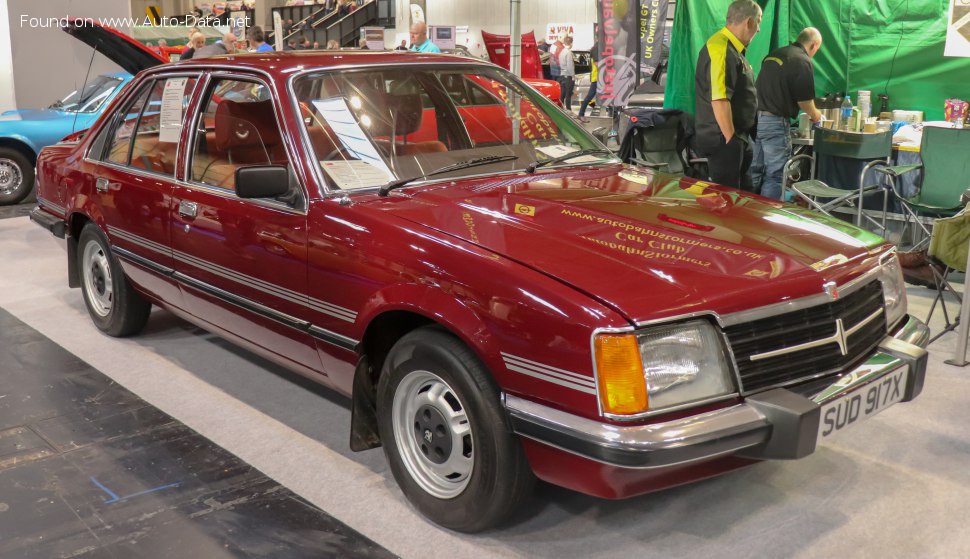
The Vauxhall Viceroy was a full-size, rear-wheel-drive sedan produced by Vauxhall, the British arm of General Motors, between 1978 and 1982. Positioned as a more luxurious and spacious alternative to the smaller Vauxhall Carlton, the Viceroy aimed to capture a segment of the British market desiring a comfortable and well-appointed family car. While not officially sold in the United States, understanding the Viceroy provides insight into the automotive landscape of late 1970s and early 1980s Britain, and the influence of American design and engineering on British manufacturers during that period. The 2500 V6 model, powered by a 2.5-liter engine producing 115 horsepower, represents a significant variant within the Viceroy lineup.
Vauxhall Viceroy 2500 V6: A Detailed Overview
The Viceroy was essentially a rebadged and slightly modified Holden Commodore VB, an Australian-designed vehicle also produced under GM ownership. This strategic move allowed Vauxhall to quickly enter the executive car market without the extensive development costs associated with a completely new model. The Viceroy filled a gap left by the discontinuation of the larger Vauxhall Crest and Velox models, offering a modern, albeit imported, alternative.
Engine & Performance
The heart of the Viceroy 2500 V6 was a naturally aspirated 2.5-liter (2490 cm3 / 151.95 cu. in.) V6 engine. This engine produced 115 horsepower at 5200 rpm and 179 Nm (132.02 lb.-ft.) of torque at 3800 rpm. While not a performance powerhouse by modern standards, the engine provided adequate power for comfortable cruising and overtaking. The power-to-weight ratio stood at 93.5 horsepower per tonne, and the torque-to-weight ratio was 145.5 Nm per tonne. The engine’s specific output was 46.2 horsepower per liter, a respectable figure for the era. Power was delivered to the rear wheels via a four-speed manual transmission. The Viceroy’s drivetrain configuration was a conventional rear-wheel-drive setup, common for larger cars of the time. The weight-to-power ratio of 10.7 kg/Hp indicated a relatively heavy vehicle, typical of full-size sedans of the period.
Design & Features
The Vauxhall Viceroy 2500 V6 was a four-door sedan with a traditional three-box design. Its styling reflected the influence of Australian design trends, with a relatively boxy silhouette and prominent chrome trim. The interior was designed with comfort in mind, offering seating for four passengers. Features included cloth upholstery, a woodgrain dashboard trim, and basic instrumentation. Safety features were limited by the standards of the time, consisting primarily of seatbelts. The Viceroy’s appeal lay in its spaciousness and comfortable ride, rather than cutting-edge technology or sporty handling. The car’s dimensions – 4770 mm (187.8 in.) in length, 1720 mm (67.72 in.) in width, and 1361 mm (53.58 in.) in height – positioned it as a large family vehicle. The wheelbase measured 2667 mm (105 in.), contributing to a stable ride. The minimum turning circle was 10 meters (32.81 ft.).
Suspension and Brakes
The Viceroy employed an independent McPherson strut front suspension with coil springs and an anti-roll bar, providing a reasonable level of ride comfort and handling. The rear suspension utilized a traditional live axle setup with leaf springs. Braking was handled by ventilated discs at the front and drum brakes at the rear. While adequate for the car’s weight and performance, the braking system lacked the sophistication of more modern setups.
Technical Specifications
| Brand | Vauxhall |
| Model | Viceroy |
| Generation | Viceroy |
| Type (Engine) | 2500 V6 (115 Hp) |
| Start of production | 1978 |
| End of production | 1982 |
| Powertrain Architecture | Internal Combustion engine |
| Body type | Sedan |
| Seats | 4 |
| Doors | 4 |
| Fuel Type | Petrol (Gasoline) |
| Weight-to-power ratio | 10.7 kg/Hp |
| Hp/tonne | 93.5 Hp/tonne |
| Weight-to-torque ratio | 6.9 kg/Nm |
| Nm/tonne | 145.5 Nm/tonne |
| Power | 115 Hp @ 5200 rpm |
| Power per litre | 46.2 Hp/l |
| Torque | 179 Nm @ 3800 rpm / 132.02 lb.-ft. @ 3800 rpm |
| Engine displacement | 2490 cm3 / 151.95 cu. in. |
| Number of cylinders | 6 |
| Engine configuration | V-engine |
| Engine aspiration | Naturally aspirated engine |
| Kerb Weight | 1230 kg / 2711.69 lbs |
| Max. weight | 1740 kg / 3836.04 lbs |
| Max load | 510 kg / 1124.36 lbs |
| Fuel tank capacity | 65 l / 17.17 US gal | 14.3 UK gal |
| Length | 4770 mm / 187.8 in |
| Width | 1720 mm / 67.72 in |
| Height | 1361 mm / 53.58 in |
| Wheelbase | 2667 mm / 105 in |
| Minimum turning circle | 10 m / 32.81 ft |
| Drivetrain Architecture | Rear wheel drive, Internal Combustion engine |
| Drive wheel | Rear wheel drive |
| Number of gears | 4 gears, manual transmission |
| Front suspension | Independent, type McPherson with coil spring and anti-roll bar |
| Front brakes | Ventilated discs |
| Rear brakes | Drum |
The Vauxhall Viceroy 2500 V6, while not a groundbreaking vehicle, represents a significant chapter in British automotive history. Its origins as a rebadged Holden Commodore highlight the globalized nature of the automotive industry and the influence of GM’s international operations. The Viceroy offered British buyers a spacious and comfortable sedan, albeit one with limited technological innovation. Its production run, though relatively short, cemented its place as a distinctive model within the Vauxhall lineup.
