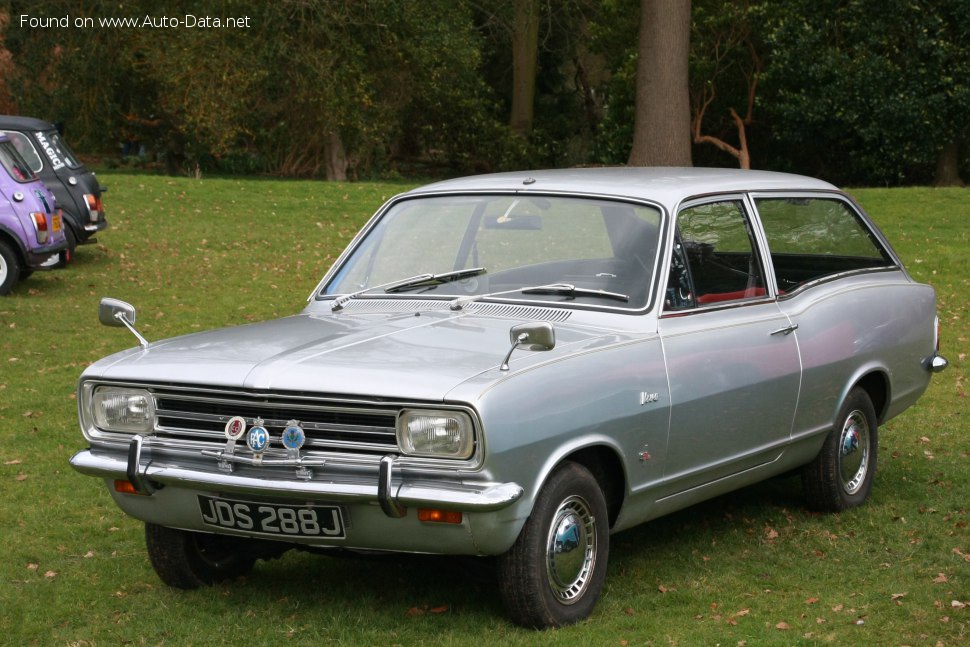
The Vauxhall Viva HB Estate 1100, produced between 1966 and 1970, represents a significant iteration of Vauxhall’s popular supermini. Part of the broader Viva HB range, the Estate (station wagon) variant offered increased practicality for families and those requiring additional cargo space. While the Viva was a mainstay of British roads, it wasn’t officially sold in the United States. However, understanding its place in the UK market provides insight into the automotive landscape of the 1960s, a period defined by increasing affordability and a growing demand for compact, efficient vehicles. The HB series, launched in 1966, was a substantial improvement over the original Viva, offering a more refined driving experience and a more modern aesthetic.
Vauxhall Viva HB Estate 1100: A British Compact
The Viva HB Estate 1100 occupied a crucial segment of the British automotive market – the small family car. It competed with vehicles like the Ford Anglia Estate and the Hillman Minx Estate, offering a blend of affordability, practicality, and relatively modern features. The Estate body style, with its extended roofline and larger rear opening, was particularly popular with those needing to transport goods or larger items. The ‘1100’ designation refers to the engine displacement, a key indicator of the vehicle’s performance capabilities. The Viva HB represented Vauxhall’s attempt to modernize and broaden the appeal of their small car offerings, and the Estate version further enhanced its versatility.
Engine & Performance
The Vauxhall Viva HB Estate 1100 was powered by a 1.2-liter (1159 cm3 or 70.73 cu. in.) inline four-cylinder engine. This engine produced 48 horsepower (Hp) at 5200 rpm and 84 Newton-meters (Nm) of torque at 2800 rpm, equating to 61.96 lb.-ft. The engine utilized a single carburetor for fuel delivery and featured an overhead valve (OHV) valvetrain. While not a powerhouse, the engine provided adequate performance for everyday driving, particularly considering the vehicle’s relatively light weight. The weight-to-power ratio stood at 17.7 kg/Hp, or 56.4 Hp/tonne, and the weight-to-torque ratio was 10.1 kg/Nm, or 98.7 Nm/tonne. Power per litre was 41.4 Hp/l. Power was delivered to the rear wheels via a four-speed manual transmission. The rear-wheel-drive configuration was typical for British cars of this era, offering a relatively simple and robust drivetrain.
Design & Features
The Viva HB Estate was a three-door station wagon with seating for five passengers. Its body style was characterized by clean lines and a relatively boxy shape, typical of 1960s automotive design. The extended roofline of the Estate provided ample headroom for rear passengers and a generous cargo area. The interior was functional and utilitarian, reflecting the car’s affordable price point. Features were relatively basic by modern standards, but included comfortable seating, a steering wheel, and basic instrumentation. Safety features were limited, as was common for cars of this period, with seatbelts being a notable addition. The steering employed a rack and pinion system, providing reasonably precise handling for a vehicle in its class. The overall design prioritized practicality and affordability, making it a popular choice for families and those seeking a reliable and economical mode of transportation.
Technical Specifications
| Brand | Vauxhall |
| Model | Viva |
| Generation | Viva HB Estate |
| Type (Engine) | 1100 (48 Hp) |
| Start of production | 1966 |
| End of production | 1970 |
| Powertrain Architecture | Internal Combustion engine |
| Body type | Station wagon (estate) |
| Seats | 5 |
| Doors | 3 |
| Fuel Type | Petrol (Gasoline) |
| Weight-to-power ratio | 17.7 kg/Hp |
| Weight-to-torque ratio | 10.1 kg/Nm |
| Power | 48 Hp @ 5200 rpm |
| Power per litre | 41.4 Hp/l |
| Torque | 84 Nm @ 2800 rpm |
| Torque (lb.-ft.) | 61.96 lb.-ft. @ 2800 rpm |
| Engine displacement | 1159 cm3 |
| Engine displacement (cu. in.) | 70.73 cu. in. |
| Number of cylinders | 4 |
| Engine configuration | Inline |
| Cylinder Bore | 77.7 mm |
| Cylinder Bore (in.) | 3.06 in. |
| Piston Stroke | 61 mm |
| Piston Stroke (in.) | 2.4 in. |
| Compression ratio | 8.5:1 |
| Fuel injection system | Carburettor |
| Engine aspiration | Naturally aspirated engine |
| Valvetrain | OHV |
| Kerb Weight | 851 kg |
| Kerb Weight (lbs.) | 1876.13 lbs. |
| Max. weight | 1279 kg |
| Max. weight (lbs.) | 2819.71 lbs. |
| Max load | 428 kg |
| Max load (lbs.) | 943.58 lbs. |
| Fuel tank capacity | 36.37 l |
| Fuel tank capacity (US gal) | 9.61 US gal |
| Fuel tank capacity (UK gal) | 8 UK gal |
| Length | 4104 mm |
| Length (in.) | 161.57 in. |
| Width | 1600 mm |
| Width (in.) | 62.99 in. |
| Height | 1349 mm |
| Height (in.) | 53.11 in. |
| Wheelbase | 2433 mm |
| Wheelbase (in.) | 95.79 in. |
| Front track | 1295 mm |
| Front track (in.) | 50.98 in. |
| Rear track | 1295 mm |
| Rear track (in.) | 50.98 in. |
| Drivetrain Architecture | Rear wheel drive |
| Number of gears | 4 |
| Gearbox type | Manual transmission |
| Steering type | Steering rack and pinion |
The Vauxhall Viva HB Estate 1100, while not a performance car, offered a practical and affordable transportation solution for British families in the late 1960s. Its enduring appeal lies in its simplicity, reliability, and the versatility offered by the estate body style. It remains a fondly remembered vehicle for those who grew up with it, representing a bygone era of British motoring.