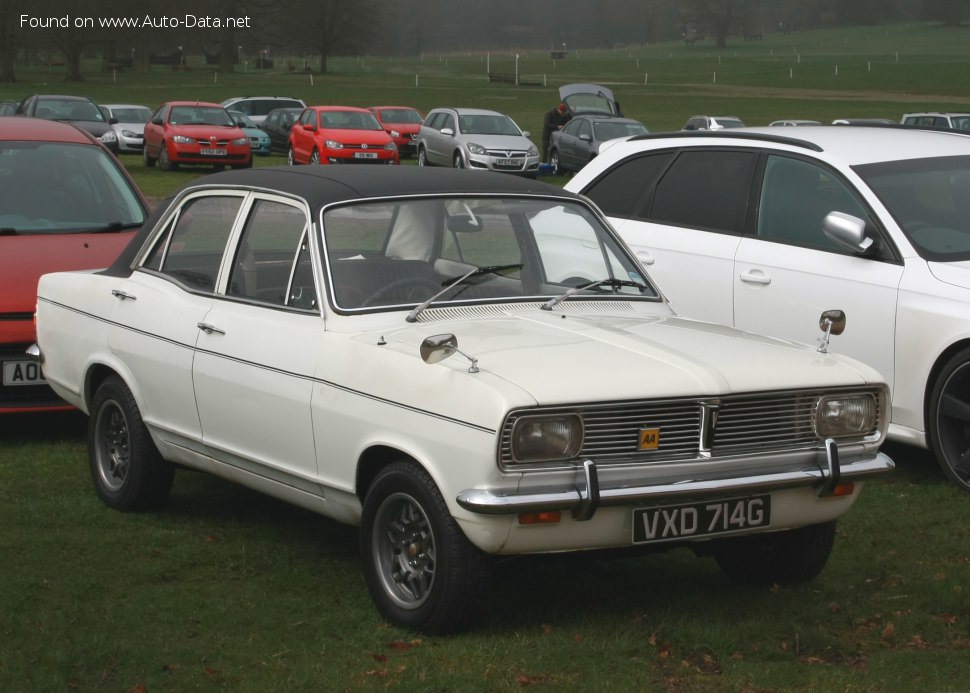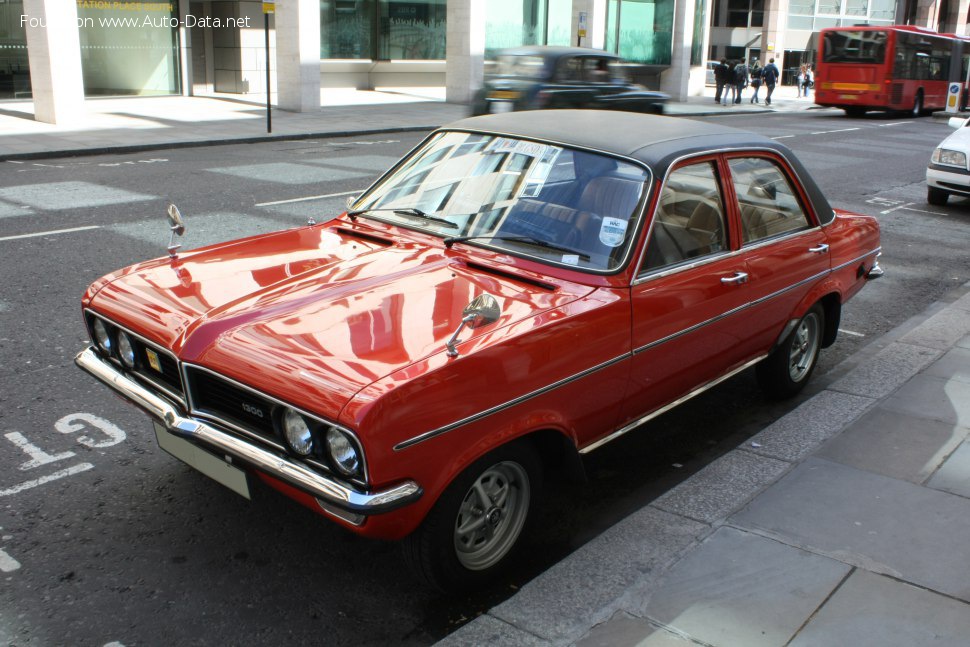
The Vauxhall Viva HC 1100 SL90 was a small family car produced by Vauxhall from 1971 to 1972. Part of the HC series, it represented a significant update to the Viva range, offering improved styling, comfort, and mechanical refinement over its predecessors. The Viva HC was primarily marketed in the United Kingdom and other European markets, serving as a competitor to vehicles like the Ford Escort and Hillman Imp. While not officially sold in the United States, understanding its specifications and place within the British automotive landscape provides insight into the era’s small car design and engineering.
Vauxhall Viva HC: An Overview
The Viva HC was Vauxhall’s attempt to modernize their small car offering. The HC designation signified a complete redesign, moving away from the more utilitarian styling of the earlier Viva models. The 1100 SL90 trim level, powered by an 1.1-liter engine producing 60 horsepower, was a popular choice, balancing affordability with reasonable performance for everyday driving. The car was available in both two-door and four-door body styles, catering to a wider range of customer needs. It was a key model for Vauxhall during a period of significant change in the British automotive industry.
Engine & Performance
The heart of the Viva HC 1100 SL90 was an inline-four cylinder, 1159 cc (70.73 cubic inches) petrol engine. This engine, equipped with a single carburetor, produced 60 horsepower at 5500 rpm and 92 Nm (67.86 lb.-ft.) of torque at 3000 rpm. While not a performance car by modern standards, the engine provided adequate power for typical urban and rural driving conditions of the early 1970s. The power-to-weight ratio was approximately 13.6 kg/Hp, and the engine delivered 51.8 horsepower per liter. Acceleration from 0 to 60 mph took around 21.4 seconds, and it could reach a maximum speed of 129 km/h (80.16 mph). The drivetrain consisted of a rear-wheel drive configuration coupled with a four-speed manual transmission. The naturally aspirated engine and OHV valvetrain were typical for the period, prioritizing reliability and simplicity over outright performance.
Design & Features
The Viva HC featured a more contemporary design than previous Viva models, with a lower roofline and a more streamlined body. Available as a two or four-door sedan, the car offered seating for four passengers. The interior, while basic by today’s standards, was designed for practicality and durability. Features included a heater, basic instrumentation, and vinyl upholstery. Safety features were limited by the standards of the time, but the car did offer basic seatbelts. The trunk (boot) space was a respectable 346/566 liters (12.22/19.99 cubic feet), providing ample room for luggage or everyday items. The car’s relatively compact dimensions – 4138 mm (162.91 inches) in length and 1643 mm (64.69 inches) in width – made it easy to maneuver in urban environments. The ride height was 127 mm (5 inches), and the minimum turning circle was 9.62 meters (31.56 feet).
Technical Specifications
| Brand | Vauxhall |
| Model | Viva |
| Generation | Viva HC |
| Type (Engine) | 1100 SL90 (60 Hp) |
| Start of production | 1971 |
| End of production | 1972 |
| Powertrain Architecture | Internal Combustion engine |
| Body type | Sedan |
| Seats | 4 |
| Doors | 2-4 |
| Fuel Type | Petrol (Gasoline) |
| Acceleration 0 – 100 km/h | 22.5 sec |
| Acceleration 0 – 62 mph | 22.5 sec |
| Acceleration 0 – 60 mph | 21.4 sec |
| Maximum speed | 129 km/h (80.16 mph) |
| Weight-to-power ratio | 13.6 kg/Hp |
| Weight-to-torque ratio | 8.9 kg/Nm |
| Power | 60 Hp @ 5500 rpm |
| Power per litre | 51.8 Hp/l |
| Torque | 92 Nm @ 3000 rpm (67.86 lb.-ft. @ 3000 rpm) |
| Engine displacement | 1159 cm3 (70.73 cu. in.) |
| Number of cylinders | 4 |
| Engine configuration | Inline |
| Cylinder Bore | 77.7 mm (3.06 in.) |
| Piston Stroke | 60.96 mm (2.4 in.) |
| Compression ratio | 8.5:1 |
| Fuel injection system | Carburettor |
| Engine aspiration | Naturally aspirated engine |
| Valvetrain | OHV |
| Engine oil capacity | 2.8 l (2.96 US qt | 2.46 UK qt) |
| Kerb Weight | 817-941 kg (1801.18 – 2074.55 lbs.) |
| Max. weight | 1243-1445 kg (2740.35 – 3185.68 lbs.) |
| Max load | 426-504 kg (939.17 – 1111.13 lbs.) |
| Trunk (boot) space – maximum | 346/566 l (12.22 cu. ft.) |
| Fuel tank capacity | 36 l (9.51 US gal | 7.92 UK gal) |
| Length | 4138 mm (162.91 in.) |
| Width | 1643 mm (64.69 in.) |
| Height | 1348 mm (53.07 in.) |
| Wheelbase | 2461 mm (96.89 in.) |
| Front track | 1306 mm (51.42 in.) |
| Rear (Back) track | 1308 mm (51.5 in.) |
| Ride height (ground clearance) | 127 mm (5 in.) |
| Minimum turning circle (turning diameter) | 9.62 m (31.56 ft.) |
| Drivetrain Architecture | Rear wheel drive |
| Number of gears and type of gearbox | 4 gears, manual transmission |
The Vauxhall Viva HC 1100 SL90, while a relatively modest vehicle, played an important role in providing affordable transportation to British families during the early 1970s. Its blend of practicality, reliability, and improved styling made it a popular choice in a competitive market. Though largely forgotten outside of the UK, the Viva HC represents a significant chapter in Vauxhall’s history and the evolution of the British small car.