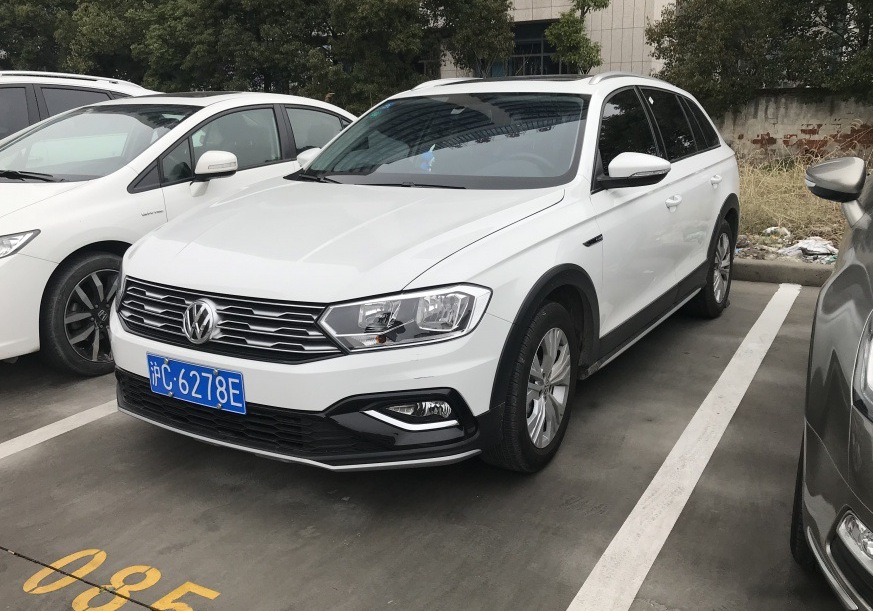
The Volkswagen Bora III C-Trek 1.4 230TSI, produced exclusively for the Chinese market between 2015 and 2018, represents a unique iteration of Volkswagen’s compact estate car. Positioned as a practical and relatively efficient option within the Bora lineup, this variant combined a turbocharged 1.4-liter gasoline engine with a seven-speed dual-clutch transmission (DSG). The C-Trek designation signifies the wagon body style, offering increased cargo capacity compared to the sedan versions of the Bora sold elsewhere. This model is based on the A5 platform, also known as the PQ35 platform, which underpinned several Volkswagen Group vehicles of the era.
Technical Specifications
| Brand | Volkswagen |
| Model | Bora |
| Generation | Bora III C-Trek (China) |
| Type (Engine) | 1.4 230TSI (131 Hp) DSG |
| Start of production | 2015 |
| End of production | 2018 |
| Powertrain Architecture | Internal Combustion engine |
| Body type | Station wagon (estate) |
| Seats | 5 |
| Doors | 5 |
| Fuel consumption (economy) – extra urban | 4.7 l/100 km (50 US mpg, 60.1 UK mpg, 21.3 km/l) |
| Fuel consumption (economy) – combined | 5.6 l/100 km (42 US mpg, 50.4 UK mpg, 17.9 km/l) |
| Fuel Type | Petrol (Gasoline) |
| Acceleration 0 – 100 km/h | 9.3 sec |
| Acceleration 0 – 62 mph | 9.3 sec |
| Acceleration 0 – 60 mph | 8.8 sec |
| Maximum speed | 200 km/h (124.27 mph) |
| Weight-to-power ratio | 10.3 kg/Hp, 96.7 Hp/tonne |
| Weight-to-torque ratio | 6 kg/Nm, 166.1 Nm/tonne |
| Power | 131 Hp @ 5000 rpm |
| Power per litre | 93.9 Hp/l |
| Torque | 225 Nm @ 1400-3500 rpm (165.95 lb.-ft. @ 1400-3500 rpm) |
| Engine Model/Code | EA211 |
| Engine displacement | 1395 cm3 (85.13 cu. in.) |
| Number of cylinders | 4 |
| Engine configuration | Inline |
| Number of valves per cylinder | 4 |
| Fuel injection system | Direct injection |
| Engine aspiration | Turbocharger, Intercooler |
| Kerb Weight | 1355 kg (2987.26 lbs) |
| Trunk (boot) space – minimum | 589 l (20.8 cu. ft.) |
| Trunk (boot) space – maximum | 1507 l (53.22 cu. ft.) |
| Fuel tank capacity | 55 l (14.53 US gal, 12.1 UK gal) |
| Length | 4559 mm (179.49 in.) |
| Width | 1793 mm (70.59 in.) |
| Height | 1487 mm (58.54 in.) |
| Wheelbase | 2614 mm (102.91 in.) |
| Ride height (ground clearance) | 132 mm (5.2 in.) |
| Minimum turning circle | 11.1 m (36.42 ft.) |
| Drivetrain Architecture | Front wheel drive, Internal Combustion engine (ICE) |
| Number of gears and type of gearbox | 7 gears, automatic transmission DSG |
| Front suspension | Independent type McPherson |
| Rear suspension | Semi-independent, coil spring |
| Front brakes | Ventilated discs |
| Rear brakes | Ventilated discs |
| Assisting systems | ABS (Anti-lock braking system) |
| Steering type | Steering rack and pinion |
| Power steering | Electric Steering |
| Wheel rims size | 17 |
Powertrain & Engine Architecture
The heart of the Bora III C-Trek 1.4 230TSI is the EA211 engine, a 1.4-liter inline-four cylinder gasoline engine. This engine utilizes direct fuel injection and is coupled with a turbocharger and intercooler to boost power output. The EA211 family is known for its modular design and relatively lightweight construction. The 230TSI designation indicates a specific tuning of the engine, producing 131 horsepower at 5000 rpm and 225 Nm (165.95 lb-ft) of torque between 1400 and 3500 rpm. This broad torque curve is a key characteristic of turbocharged engines, providing good responsiveness in everyday driving situations. The engine is paired with a seven-speed dual-clutch transmission (DSG), which offers quick and smooth gear changes, contributing to both performance and fuel efficiency. The DSG transmission is a significant upgrade over traditional automatic transmissions, providing a more engaging driving experience.
Driving Characteristics
The 1.4 230TSI engine, while not exceptionally powerful, provides adequate performance for typical driving conditions. Acceleration from 0 to 100 km/h (0-62 mph) takes approximately 9.3 seconds. The DSG transmission helps to maximize the available power, offering quick shifts and keeping the engine within its optimal power band. Compared to higher-output versions of the Bora, such as those equipped with larger engines, this variant prioritizes fuel economy and refinement over outright speed. The relatively low weight of the 1.4-liter engine contributes to balanced handling, although it doesn’t offer the same level of dynamic performance as sportier Bora models. The DSG transmission’s programming is geared towards efficiency, with taller gear ratios to reduce engine speed at highway cruising speeds.
Equipment & Trim Levels
The C-Trek 1.4 230TSI typically came with a reasonable level of standard equipment, reflecting its position as a mid-range offering in the Chinese market. Standard features generally included air conditioning, power windows and mirrors, a basic audio system, and ABS brakes. Higher trim levels offered options such as alloy wheels, a more advanced infotainment system with touchscreen display, rear parking sensors, and automatic climate control. Interior upholstery was typically cloth, with the option of leather upgrades. The dashboard layout was consistent with other Bora models of the period, featuring a functional and straightforward design.
Chassis & Braking
The Bora III C-Trek utilized a McPherson strut front suspension and a semi-independent coil spring rear suspension. This setup provided a comfortable ride quality, suitable for everyday use. The front brakes were ventilated discs, while the rear brakes were also ventilated discs, offering adequate stopping power for the vehicle’s weight and performance. Electric power steering was standard, providing light and easy steering feel. Stabilizer bars were fitted to both the front and rear axles to reduce body roll during cornering.
Market Reception & Comparison
In the Chinese market, the Bora C-Trek 1.4 230TSI was generally well-received as a practical and affordable estate car. Critics praised its fuel efficiency and comfortable ride. Compared to other Bora variants, the 1.4 230TSI offered a good balance between performance and economy. It was often seen as a sensible choice for families or individuals who needed a spacious and versatile vehicle without the higher running costs of larger-engined models. The DSG transmission was a selling point, offering a more modern and refined driving experience than traditional automatic transmissions.
Legacy
The Volkswagen Bora III C-Trek 1.4 230TSI, while not a globally significant model, represents an interesting chapter in Volkswagen’s history in China. The EA211 engine has proven to be a reliable and durable unit, and the DSG transmission, while requiring periodic maintenance, is generally considered to be a robust design. On the used car market, these Boras are often sought after for their practicality and relatively low running costs. The combination of a turbocharged engine and a dual-clutch transmission continues to be a popular choice in modern vehicles, demonstrating the enduring appeal of this powertrain configuration.