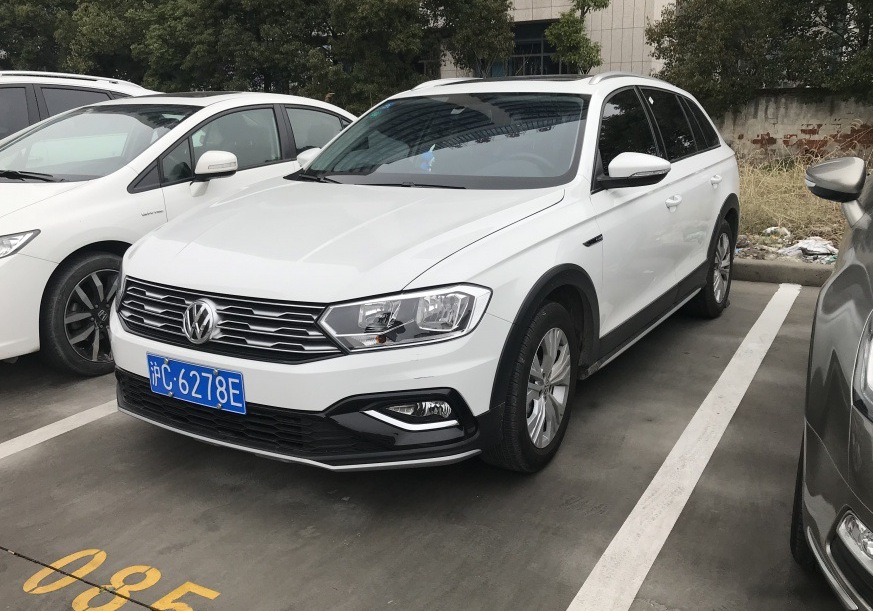
The Volkswagen Bora III C-Trek 1.6, produced exclusively for the Chinese market between 2015 and 2017, represents a unique iteration of Volkswagen’s compact estate car. Positioned as an affordable and practical option within the Bora lineup, this variant offered a balance between fuel efficiency and usability, catering to families and individuals seeking a spacious vehicle. The C-Trek designation signifies its estate (wagon) body style, differentiating it from the sedan versions also available. It was built on the A5 platform, a derivative of the older A4 platform, and served as a budget-friendly alternative to more modern Volkswagen models.
Technical Specifications
| Brand | Volkswagen |
| Model | Bora |
| Generation | Bora III C-Trek (China) |
| Type (Engine) | 1.6 (110 Hp) |
| Start of production | 2015 |
| End of production | 2017 |
| Powertrain Architecture | Internal Combustion engine |
| Body type | Station wagon (estate) |
| Seats | 5 |
| Doors | 5 |
| Fuel consumption (economy) – extra urban | 4.9 l/100 km (48 US mpg, 57.6 UK mpg, 20.4 km/l) |
| Fuel consumption (economy) – combined | 6.3 l/100 km (37.3 US mpg, 44.8 UK mpg, 15.9 km/l) |
| Fuel Type | Petrol (Gasoline) |
| Acceleration 0 – 100 km/h | 11.9 sec |
| Acceleration 0 – 62 mph | 11.9 sec |
| Acceleration 0 – 60 mph | 11.3 sec |
| Maximum speed | 185 km/h (114.95 mph) |
| Weight-to-power ratio | 11.7 kg/Hp, 85.6 Hp/tonne |
| Weight-to-torque ratio | 8.3 kg/Nm, 120.6 Nm/tonne |
| Power | 110 Hp @ 5800 rpm |
| Power per litre | 68.8 Hp/l |
| Torque | 155 Nm @ 3800 rpm (114.32 lb.-ft. @ 3800 rpm) |
| Engine layout | Front, Transverse |
| Engine Model/Code | EA211 |
| Engine displacement | 1598 cm3 (97.52 cu. in.) |
| Number of cylinders | 4 |
| Engine configuration | Inline |
| Number of valves per cylinder | 4 |
| Engine aspiration | Naturally aspirated engine |
| Kerb Weight | 1285 kg (2832.94 lbs) |
| Trunk (boot) space – minimum | 589 l (20.8 cu. ft.) |
| Trunk (boot) space – maximum | 1507 l (53.22 cu. ft.) |
| Fuel tank capacity | 55 l (14.53 US gal | 12.1 UK gal) |
| Length | 4559 mm (179.49 in) |
| Width | 1793 mm (70.59 in) |
| Height | 1487 mm (58.54 in) |
| Wheelbase | 2614 mm (102.91 in) |
| Ride height (ground clearance) | 132 mm (5.2 in) |
| Minimum turning circle | 11.1 m (36.42 ft) |
| Drivetrain Architecture | The Internal combustion engine (ICE) drives the front wheels of the vehicle. |
| Drive wheel | Front wheel drive |
| Number of gears and type of gearbox | 5 gears, manual transmission |
| Front suspension | Independent type McPherson |
| Rear suspension | Semi-independent, coil spring |
| Front brakes | Ventilated discs |
| Rear brakes | Ventilated discs |
| Assisting systems | ABS (Anti-lock braking system) |
| Steering type | Steering rack and pinion |
| Power steering | Electric Steering |
| Wheel rims size | 16; 17 |
Powertrain & Engine Architecture
The Bora III C-Trek 1.6 utilized the EA211 engine family, a modern, naturally aspirated 1.6-liter inline-four cylinder engine. This engine, a common sight in entry-level Volkswagen models globally, was chosen for its fuel efficiency and relatively low production cost. The EA211 featured a timing chain instead of a belt, intended to reduce maintenance intervals. Fuel delivery was managed by multi-point fuel injection, and the engine employed four valves per cylinder for improved breathing. The 110 horsepower output was achieved at 5800 rpm, with peak torque of 155 Nm (114 lb-ft) arriving at 3800 rpm. The engine was paired with a standard five-speed manual transmission, optimized for fuel economy rather than outright performance. An automatic transmission was not offered on this specific variant in the Chinese market.
Driving Characteristics
The 1.6-liter engine and five-speed manual gearbox combination resulted in a driving experience focused on practicality and economy. Acceleration was modest, taking approximately 11.9 seconds to reach 100 km/h (62 mph). The engine felt somewhat strained when pushed hard, particularly when fully loaded. The gear ratios were spaced to prioritize fuel efficiency, meaning frequent downshifts were necessary for overtaking or climbing hills. Compared to higher-spec Bora models equipped with larger engines (like the 1.4 TSI turbo), the 1.6 felt noticeably less powerful. However, the lighter engine weight contributed to a more balanced feel in corners. The manual transmission offered a direct connection to the engine, providing a more engaging driving experience than an automatic would have.
Equipment & Trim Levels
The C-Trek 1.6 was generally offered in a relatively basic trim level, reflecting its position as an entry-level model. Standard equipment typically included air conditioning, power windows, central locking, and an audio system with MP3 compatibility. Safety features included ABS (Anti-lock Braking System) and dual front airbags. Interior upholstery was typically cloth, and the dashboard featured a simple, functional design. Optional extras, such as alloy wheels, a more advanced audio system, and parking sensors, were available at an additional cost. The interior space was a key selling point, with the estate body style providing a generous 589 liters of boot space (expanding to 1507 liters with the rear seats folded down).
Chassis & Braking
The Bora C-Trek 1.6 utilized a MacPherson strut front suspension and a semi-independent coil spring rear suspension. This setup provided a comfortable ride quality, suitable for everyday driving conditions. The front brakes were ventilated discs, offering adequate stopping power, while the rear brakes were also ventilated discs. The steering was rack and pinion with electric power assistance, providing light and precise steering feel. The suspension was tuned for comfort rather than sporty handling, prioritizing ride quality over cornering performance. Stabilizer bars were present at both the front and rear to reduce body roll.
Market Reception & Comparison
In the Chinese market, the Bora C-Trek 1.6 was viewed as a sensible and affordable option for families and individuals seeking a practical estate car. Critics praised its spacious interior, fuel efficiency, and relatively low price point. However, the engine’s lack of power was a common criticism. Compared to other compact estate cars available in China at the time, the Bora offered a good balance of features and value. Compared to higher-trim Bora models, the 1.6 offered significantly better fuel economy but lacked the performance and refinement of the more powerful engines. The 1.6 was often seen as a direct competitor to locally produced Chinese estate cars, offering the perceived quality and reliability of the Volkswagen brand.
Legacy
The Volkswagen Bora III C-Trek 1.6, while not a performance icon, represents a significant model in Volkswagen’s strategy for the Chinese market. The EA211 engine proved to be a reliable and durable unit, and examples of this powertrain continue to be found in good working order today. On the used car market, the C-Trek 1.6 is often sought after for its affordability and practicality. Maintenance costs are generally reasonable, and spare parts are readily available. While it may not offer the excitement of more powerful vehicles, the Bora C-Trek 1.6 remains a capable and dependable estate car, offering a comfortable and economical driving experience.