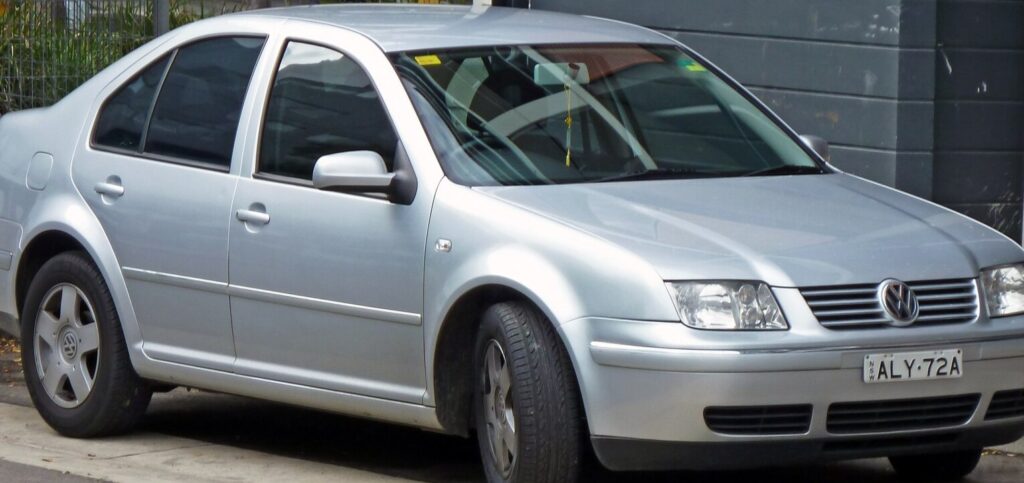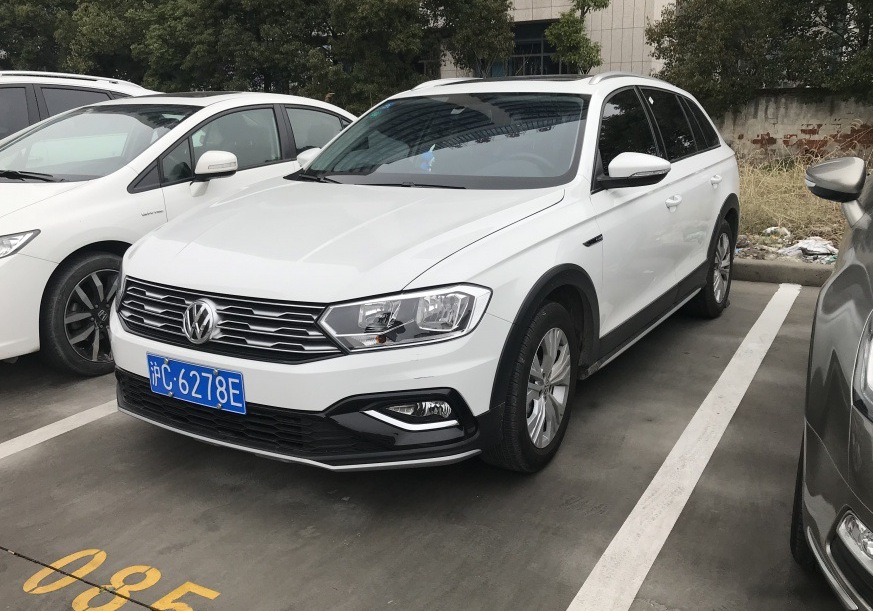
The Volkswagen Bora III C-Trek 1.6 (110 hp) Automatic, produced between 2015 and 2017, was a China-market specific variant of the Bora, itself a saloon and estate car derived from the Volkswagen Golf Mk4. Positioned as a practical and affordable option within the Bora lineup, the C-Trek offered a spacious estate body style combined with a fuel-efficient, albeit modestly powered, 1.6-liter engine and a six-speed automatic transmission. This configuration aimed to appeal to families and drivers prioritizing comfort and economy over outright performance. The C-Trek represented Volkswagen’s continued adaptation to the specific demands of the Chinese automotive market, offering a blend of European engineering and localized production.
Technical Specifications
| Brand | Volkswagen |
| Model | Bora |
| Generation | Bora III C-Trek (China) |
| Type (Engine) | 1.6 (110 Hp) Automatic |
| Start of production | 2015 |
| End of production | 2017 |
| Powertrain Architecture | Internal Combustion engine |
| Body type | Station wagon (estate) |
| Seats | 5 |
| Doors | 5 |
| Fuel consumption (economy) – extra urban | 4.9 l/100 km (48 US mpg, 57.6 UK mpg, 20.4 km/l) |
| Fuel consumption (economy) – combined | 6.4 l/100 km (36.8 US mpg, 44.1 UK mpg, 15.6 km/l) |
| Fuel Type | Petrol (Gasoline) |
| Acceleration 0 – 100 km/h | 13.3 sec |
| Acceleration 0 – 62 mph | 13.3 sec |
| Acceleration 0 – 60 mph | 12.6 sec |
| Maximum speed | 180 km/h (111.85 mph) |
| Weight-to-power ratio | 12 kg/Hp, 83 Hp/tonne |
| Weight-to-torque ratio | 8.5 kg/Nm, 117 Nm/tonne |
| Power | 110 Hp @ 5800 rpm |
| Power per litre | 68.8 Hp/l |
| Torque | 155 Nm @ 3800 rpm (114.32 lb.-ft. @ 3800 rpm) |
| Engine layout | Front, Transverse |
| Engine Model/Code | EA211 |
| Engine displacement | 1598 cm3 (97.52 cu. in.) |
| Number of cylinders | 4 |
| Engine configuration | Inline |
| Number of valves per cylinder | 4 |
| Engine aspiration | Naturally aspirated engine |
| Kerb Weight | 1325 kg (2921.12 lbs) |
| Trunk (boot) space – minimum | 589 l (20.8 cu. ft.) |
| Trunk (boot) space – maximum | 1507 l (53.22 cu. ft.) |
| Fuel tank capacity | 55 l (14.53 US gal, 12.1 UK gal) |
| Length | 4559 mm (179.49 in.) |
| Width | 1793 mm (70.59 in.) |
| Height | 1487 mm (58.54 in.) |
| Wheelbase | 2614 mm (102.91 in.) |
| Ride height (ground clearance) | 132 mm (5.2 in.) |
| Minimum turning circle | 11.1 m (36.42 ft.) |
| Drivetrain Architecture | The Internal combustion engine (ICE) drives the front wheels of the vehicle. |
| Drive wheel | Front wheel drive |
| Number of gears and type of gearbox | 6 gears, automatic transmission |
| Front suspension | Independent type McPherson |
| Rear suspension | Semi-independent, coil spring |
| Front brakes | Ventilated discs |
| Rear brakes | Ventilated discs |
| Assisting systems | ABS (Anti-lock braking system) |
| Steering type | Steering rack and pinion |
| Power steering | Electric Steering |
| Wheel rims size | 16; 17 |
Powertrain & Engine Architecture
The Bora III C-Trek 1.6 Automatic utilized the Volkswagen EA211 engine family, a modern and efficient engine designed for a wide range of applications. The 1.6-liter inline-four engine produced 110 horsepower at 5800 rpm and 155 Nm (114 lb-ft) of torque at 3800 rpm. This engine featured multi-point fuel injection and four valves per cylinder, contributing to its relatively good fuel efficiency. The EA211 engine block was constructed from aluminum, reducing weight. Paired with the engine was a six-speed automatic transmission, offering smooth shifts but prioritizing fuel economy over rapid acceleration. This transmission was a common choice for Volkswagen vehicles of this era, known for its reliability and ease of use. The engine’s transverse mounting and front-wheel-drive configuration were standard for vehicles in this class.
Driving Characteristics
The 1.6-liter engine and automatic transmission combination in the C-Trek resulted in a driving experience focused on comfort and ease of use. Acceleration was modest, with a 0-60 mph time of around 12.6 seconds. The automatic transmission, while smooth, lacked the responsiveness of a manual gearbox, and the engine often felt strained during overtaking maneuvers or when climbing hills. The gear ratios were tuned for fuel efficiency, meaning the engine didn’t rev as high as it could, sacrificing some performance. Compared to other Bora variants, such as those equipped with larger engines, the 1.6 Automatic was noticeably slower. However, it offered a more relaxed and forgiving driving experience, particularly in urban environments.
Equipment & Trim Levels
The C-Trek 1.6 Automatic typically came with a reasonable level of standard equipment. This included air conditioning, power windows, power door locks, and a basic audio system. Interior upholstery was typically cloth, with a functional and durable design. Higher trim levels, if available, might have added features such as alloy wheels, a more advanced audio system, and upgraded interior trim. Optional extras could include a sunroof, parking sensors, and a navigation system. The dashboard layout was typical of Volkswagen vehicles of the period, with a clear and straightforward design.
Chassis & Braking
The Bora C-Trek featured a McPherson strut front suspension and a semi-independent coil spring rear suspension. This setup provided a comfortable ride, although it wasn’t particularly sporty. The front brakes were ventilated discs, while the rear brakes were also ventilated discs, providing adequate stopping power for the vehicle’s weight and performance. An Anti-lock Braking System (ABS) was standard, enhancing safety. The steering was rack and pinion with electric power assistance, offering light and precise steering feel.
Market Reception & Comparison
The Bora C-Trek 1.6 Automatic was generally well-received in the Chinese market as a practical and affordable family car. Critics noted its spacious interior, comfortable ride, and good fuel economy. However, the engine’s lack of power was a common criticism. Compared to other Bora trims, the 1.6 Automatic offered the lowest price point but also the lowest performance. It competed with other compact estate cars in the Chinese market, such as the Skoda Octavia Combi and various offerings from domestic manufacturers. Fuel economy was a key selling point, with the C-Trek achieving around 36.8 US mpg in combined driving.
Legacy
The Volkswagen Bora C-Trek 1.6 Automatic, while not a performance icon, represents a significant example of Volkswagen’s adaptation to the Chinese automotive market. The EA211 engine proved to be a reliable and durable unit, and the six-speed automatic transmission generally held up well over time. In the used car market, these vehicles are often sought after for their affordability and practicality. Maintenance costs are relatively low, and parts availability is generally good. While not as desirable as some of the higher-performance Bora variants, the 1.6 Automatic remains a viable option for buyers seeking a spacious, comfortable, and fuel-efficient estate car.