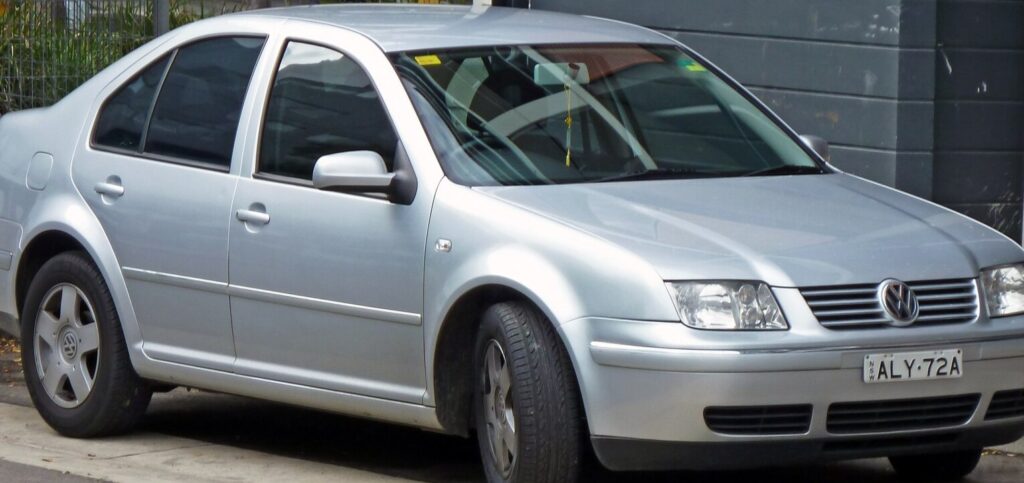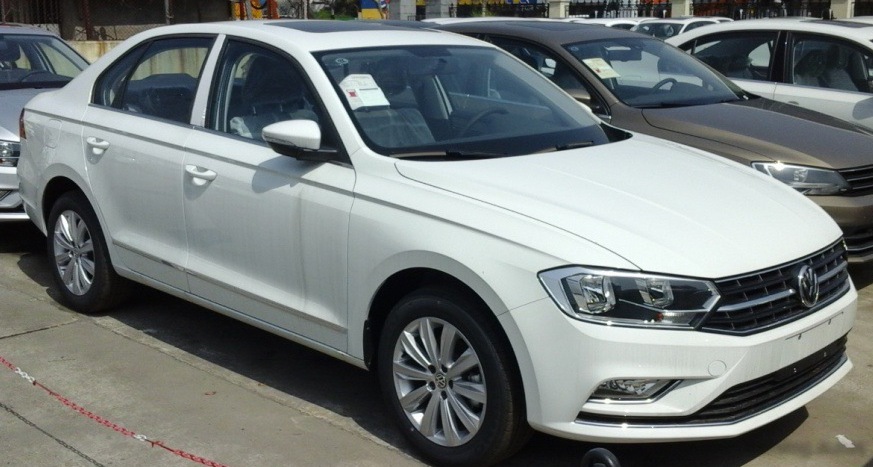
The Volkswagen Bora III (China) 1.4 230TSI, produced from 2015 to 2018, represents a specific iteration of the Bora sedan tailored for the Chinese automotive market. Positioned as a mid-range offering within the broader Bora III lineup, this variant combined a turbocharged 1.4-liter engine with a five-speed manual transmission. It was designed to appeal to buyers seeking a balance between fuel efficiency, reasonable performance, and modern features. The Bora itself was a significant model for Volkswagen in China, offering a locally produced sedan that catered to the growing middle class. This generation, the III, built upon the success of previous Boras, offering updated styling and technology.
Technical Specifications
| Brand | Volkswagen |
| Model | Bora |
| Generation | Bora III (China) |
| Type (Engine) | 1.4 230TSI (131 Hp) |
| Start of production | 2015 |
| End of production | 2018 |
| Powertrain Architecture | Internal Combustion engine |
| Body type | Sedan |
| Seats | 5 |
| Doors | 4 |
| Fuel consumption (economy) – extra urban | 4.7 l/100 km (50 US mpg, 60.1 UK mpg, 21.3 km/l) |
| Fuel consumption (economy) – combined | 5.6 l/100 km (42 US mpg, 50.4 UK mpg, 17.9 km/l) |
| Fuel Type | Petrol (Gasoline) |
| Acceleration 0 – 100 km/h | 9.7 sec |
| Acceleration 0 – 62 mph | 9.7 sec |
| Acceleration 0 – 60 mph | 9.2 sec |
| Maximum speed | 200 km/h (124.27 mph) |
| Weight-to-power ratio | 9.8 kg/Hp, 101.9 Hp/tonne |
| Weight-to-torque ratio | 5.7 kg/Nm, 175.1 Nm/tonne |
| Power | 131 Hp @ 5000 rpm |
| Power per litre | 93.9 Hp/l |
| Torque | 225 Nm @ 1400-3500 rpm (165.95 lb.-ft. @ 1400-3500 rpm) |
| Engine layout | Front, Transverse |
| Engine Model/Code | EA211 |
| Engine displacement | 1395 cm3 (85.13 cu. in.) |
| Number of cylinders | 4 |
| Engine configuration | Inline |
| Number of valves per cylinder | 4 |
| Fuel injection system | Direct injection |
| Engine aspiration | Turbocharger, Intercooler |
| Kerb Weight | 1285 kg (2832.94 lbs.) |
| Trunk (boot) space – minimum | 490 l (17.3 cu. ft.) |
| Fuel tank capacity | 55 l (14.53 US gal | 12.1 UK gal) |
| Length | 4562 mm (179.61 in.) |
| Width | 1793 mm (70.59 in.) |
| Height | 1468 mm (57.8 in.) |
| Wheelbase | 2614 mm (102.91 in.) |
| Ride height (ground clearance) | 122 mm (4.8 in.) |
| Minimum turning circle (turning diameter) | 10.6 m (34.78 ft.) |
| Drivetrain Architecture | The Internal combustion engine (ICE) drives the front wheels of the vehicle. |
| Drive wheel | Front wheel drive |
| Number of gears and type of gearbox | 5 gears, manual transmission |
| Front suspension | Independent type McPherson |
| Rear suspension | Semi-independent, coil spring |
| Front brakes | Ventilated discs |
| Rear brakes | Ventilated discs |
| Assisting systems | ABS (Anti-lock braking system) |
| Steering type | Steering rack and pinion |
| Power steering | Electric Steering |
| Wheel rims size | 16 |
Powertrain & Engine Architecture
The heart of the Bora III 1.4 230TSI is the EA211 engine, a 1.4-liter inline-four cylinder gasoline engine. This engine utilizes direct fuel injection and is coupled with a turbocharger and intercooler to boost power output. The EA211 is a modular engine family, known for its compact design and efficiency. The 230TSI designation indicates a specific tuning of the EA211, delivering 131 horsepower at 5000 rpm and 225 Nm (165.95 lb-ft) of torque between 1400 and 3500 rpm. This broad torque curve is a key characteristic of turbocharged engines, providing good responsiveness in everyday driving situations. The engine’s direct injection system precisely meters fuel into the cylinders, optimizing combustion and improving fuel economy. The five-speed manual transmission was the standard offering for this variant, providing drivers with full control over gear selection.
Driving Characteristics
The 1.4 230TSI with a manual transmission offered a reasonably engaging driving experience. While not a performance-oriented model, the turbocharger provided a noticeable boost in acceleration, making overtaking maneuvers and merging onto highways manageable. The five-speed gearbox was well-matched to the engine’s powerband, allowing drivers to keep the engine in its optimal torque range. Compared to higher-output versions of the Bora, such as those equipped with larger engines, the 1.4 TSI felt less powerful, particularly at higher speeds. However, it excelled in urban driving conditions, where its fuel efficiency and nimble handling were appreciated. The gear ratios were tuned for economy, meaning highway cruising required slightly higher engine speeds compared to a longer-geared transmission.
Equipment & Trim Levels
The Bora III 1.4 230TSI typically came equipped with a standard set of features designed to appeal to a broad range of buyers. These included air conditioning, power windows, power door locks, and a basic audio system. Interior upholstery was typically cloth, with a straightforward dashboard layout. Optional extras included alloy wheels, a more advanced audio system with touchscreen display, rear parking sensors, and upgraded interior trim materials. Safety features such as ABS (Anti-lock Braking System) were standard. The trim level generally sat in the middle of the Bora range, offering a step up from the base models in terms of features and refinement, but falling short of the more luxurious trims.
Chassis & Braking
The Bora III utilized a McPherson strut front suspension and a semi-independent coil spring rear suspension. This setup provided a comfortable ride quality, suitable for the often-challenging road conditions found in China. The front brakes were ventilated discs, offering good stopping power, while the rear brakes were also ventilated discs. The steering system was a rack and pinion type with electric power steering, providing light and precise steering feel. The chassis was designed to balance comfort and handling, prioritizing ride quality over outright sportiness. Stabilizer bars were included to reduce body roll during cornering.
Market Reception & Comparison
The Bora III 1.4 230TSI was generally well-received in the Chinese market as a practical and affordable sedan. Critics praised its fuel efficiency and comfortable ride, but some noted that its performance was not as exciting as some of its competitors. Compared to other trims in the Bora lineup, the 1.4 TSI offered a more economical option, appealing to buyers who prioritized fuel savings over outright power. Its fuel economy of 5.6 l/100 km (42 US mpg) was a significant selling point. Compared to larger-engined Boras, maintenance costs were generally lower due to the smaller engine size and simpler mechanicals.
Legacy
The Volkswagen Bora III 1.4 230TSI, while not a particularly rare or collectible model, represents a significant example of Volkswagen’s commitment to the Chinese market. The EA211 engine family has proven to be remarkably reliable, and well-maintained examples of this Bora variant continue to be found on the used car market today. Common issues are generally related to routine maintenance items such as spark plugs, oil leaks, and turbocharger wear, but major engine failures are relatively uncommon. The 1.4 TSI engine’s fuel efficiency and reasonable performance have ensured its continued popularity among budget-conscious buyers seeking a dependable and practical sedan.