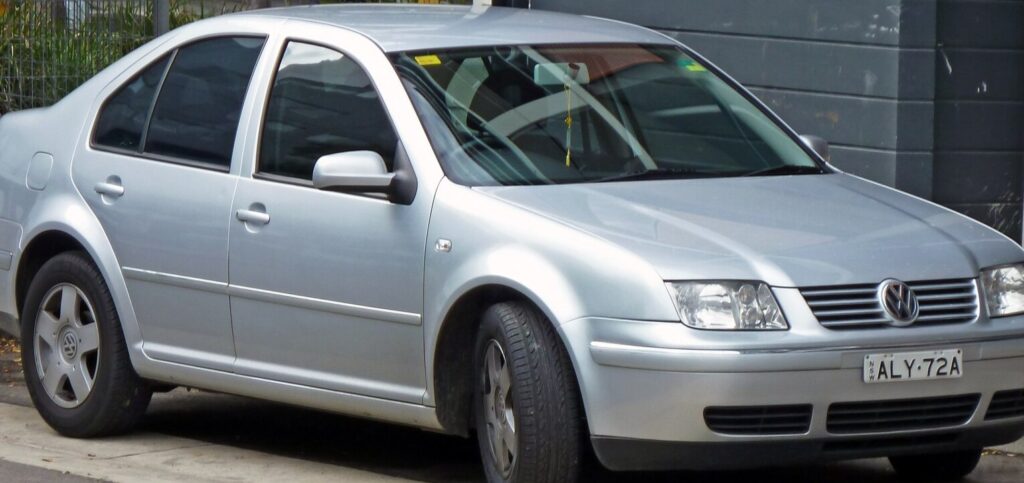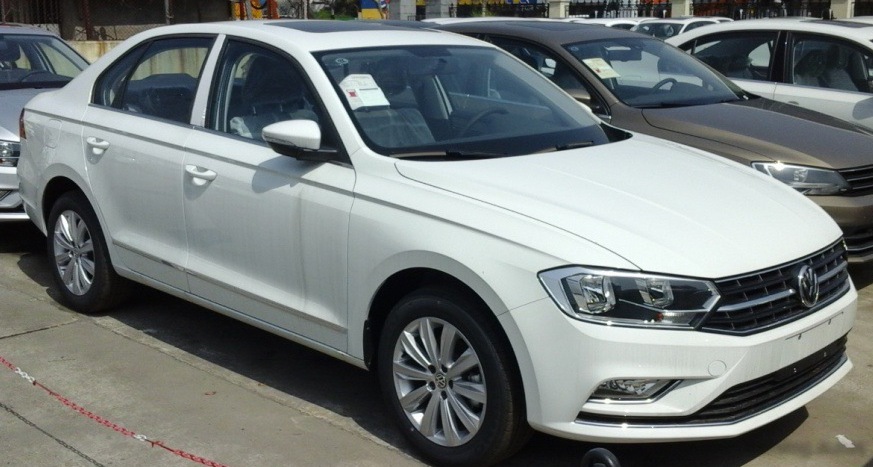
The Volkswagen Bora III 1.6, produced specifically for the Chinese market between 2015 and 2017, represents a continuation of the Bora lineage – a compact sedan based on the Volkswagen Golf Mk5 platform (internally designated the 1HX0/A3). While the Bora nameplate had been discontinued in Europe by 2004, it continued to be manufactured and sold in China by Shanghai Volkswagen as a more affordable alternative to the larger Passat and Magotan. The 1.6-liter variant occupied the entry-level position in the Bora III lineup, offering a balance of practicality and economy for Chinese consumers. This model aimed to provide a comfortable and reliable sedan experience, catering to families and individuals seeking a dependable daily driver.
Technical Specifications
| Brand | Volkswagen |
| Model | Bora |
| Generation | Bora III (China) |
| Type (Engine) | 1.6 (110 Hp) |
| Start of production | 2015 year |
| End of production | 2017 year |
| Powertrain Architecture | Internal Combustion engine |
| Body type | Sedan |
| Seats | 5 |
| Doors | 4 |
| Fuel consumption (economy) – extra urban | 5.3 l/100 km (44.4 US mpg, 53.3 UK mpg, 18.9 km/l) |
| Fuel consumption (economy) – combined | 6.2 l/100 km (37.9 US mpg, 45.6 UK mpg, 16.1 km/l) |
| Fuel Type | Petrol (Gasoline) |
| Acceleration 0 – 100 km/h | 11.7 sec |
| Acceleration 0 – 62 mph | 11.7 sec |
| Acceleration 0 – 60 mph | 11.1 sec |
| Maximum speed | 185 km/h (114.95 mph) |
| Weight-to-power ratio | 11.1 kg/Hp, 90.2 Hp/tonne |
| Weight-to-torque ratio | 7.9 kg/Nm, 127 Nm/tonne |
| Power | 110 Hp @ 5800 rpm |
| Power per litre | 68.8 Hp/l |
| Torque | 155 Nm @ 3800 rpm (114.32 lb.-ft. @ 3800 rpm) |
| Engine layout | Front, Transverse |
| Engine Model/Code | EA211 |
| Engine displacement | 1598 cm3 (97.52 cu. in.) |
| Number of cylinders | 4 |
| Engine configuration | Inline |
| Number of valves per cylinder | 4 |
| Engine aspiration | Naturally aspirated engine |
| Kerb Weight | 1220 kg (2689.64 lbs) |
| Trunk (boot) space – minimum | 490 l (17.3 cu. ft.) |
| Fuel tank capacity | 55 l (14.53 US gal | 12.1 UK gal) |
| Length | 4562 mm (179.61 in) |
| Width | 1793 mm (70.59 in) |
| Height | 1468 mm (57.8 in) |
| Wheelbase | 2614 mm (102.91 in) |
| Ride height (ground clearance) | 122 mm (4.8 in) |
| Minimum turning circle (turning diameter) | 10.6 m (34.78 ft) |
| Drivetrain Architecture | The Internal combustion engine (ICE) drives the front wheels of the vehicle. |
| Drive wheel | Front wheel drive |
| Number of gears and type of gearbox | 5 gears, manual transmission |
| Front suspension | Independent type McPherson |
| Rear suspension | Semi-independent, coil spring |
| Front brakes | Ventilated discs |
| Rear brakes | Ventilated discs |
| Assisting systems | ABS (Anti-lock braking system) |
| Steering type | Steering rack and pinion |
| Power steering | Electric Steering |
| Wheel rims size | 15; 16 |
Powertrain & Engine Architecture
The Bora III 1.6 utilized the EA211 engine family, a modern and efficient engine designed for Volkswagen’s global platforms. This 1.6-liter inline-four engine featured a naturally aspirated configuration, producing 110 horsepower at 5800 rpm and 155 Nm (114 lb-ft) of torque at 3800 rpm. The EA211 incorporated features like a lightweight aluminum engine block, variable valve timing, and a multi-point fuel injection system to optimize fuel efficiency and reduce emissions. The engine was transversely mounted, driving the front wheels. The standard transmission was a five-speed manual gearbox, chosen for its affordability and simplicity. While an automatic transmission was offered on higher trim levels, it wasn’t typically paired with the base 1.6-liter engine.
Driving Characteristics
The 1.6-liter engine, coupled with the five-speed manual transmission, provided adequate, though not exhilarating, performance. Acceleration from 0 to 100 km/h (0-62 mph) took approximately 11.7 seconds, and the top speed was rated at 185 km/h (115 mph). The gear ratios were tuned for fuel economy and everyday drivability rather than outright speed. The engine felt responsive enough for city driving and highway cruising, but overtaking maneuvers required careful planning. Compared to the more powerful 1.4 TSI turbocharged engine available on higher trims, the 1.6-liter felt noticeably less potent. However, the manual transmission allowed drivers to maximize the available power and maintain control in various driving conditions.
Equipment & Trim Levels
The base 1.6-liter Bora III typically came with a modest level of standard equipment. This included power windows, central locking, air conditioning, and an audio system with MP3 compatibility. Safety features such as ABS and dual front airbags were also standard. Interior upholstery was typically cloth, and the dashboard featured a functional, if somewhat basic, design. Optional extras included alloy wheels, a sunroof, and upgraded audio systems. The trim level was generally positioned as the entry point to the Bora III range, appealing to budget-conscious buyers.
Chassis & Braking
The Bora III utilized a MacPherson strut front suspension and a semi-independent coil spring rear suspension. This setup provided a comfortable ride quality, suitable for the often-challenging road conditions in China. The front brakes were ventilated discs, while the rear brakes were also ventilated discs, offering adequate stopping power for the vehicle’s weight and performance. Electric power steering was standard, providing light and easy steering feel. The chassis was designed to prioritize comfort and stability over sporty handling.
Market Reception & Comparison
The Bora III 1.6 was well-received in the Chinese market as an affordable and reliable sedan. Critics praised its fuel efficiency and practicality, but noted its lack of performance compared to more expensive rivals. Compared to the higher-trim Bora models with the 1.4 TSI engine, the 1.6-liter offered significantly lower running costs but sacrificed acceleration and overall driving enjoyment. The 1.6-liter variant was primarily targeted at first-time car buyers and families seeking a dependable and economical vehicle.
Legacy
The Volkswagen Bora III 1.6, while not a performance icon, represents a significant chapter in Volkswagen’s presence in the Chinese market. The EA211 engine proved to be a reliable and durable powerplant, and many examples of the Bora III 1.6 are still on the road today. In the used car market, these models are valued for their affordability, fuel efficiency, and relatively low maintenance costs. While not highly sought after by enthusiasts, the Bora III 1.6 remains a practical and dependable choice for those seeking a budget-friendly compact sedan.