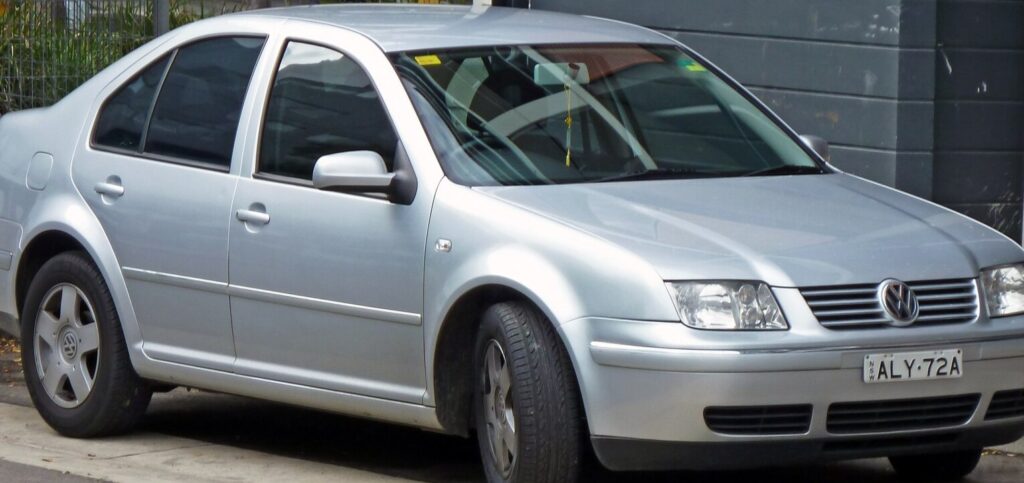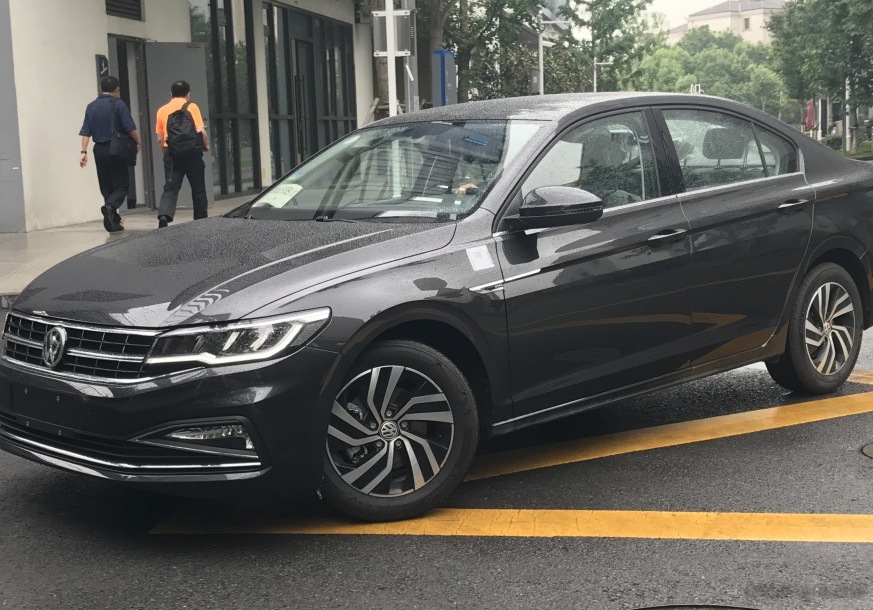
The Volkswagen Bora IV 1.5 (116 hp) Automatic, produced specifically for the Chinese market starting in 2018, represents a significant iteration of Volkswagen’s compact sedan. Positioned as a mainstream offering within the Bora IV range, this variant aimed to provide a balance of affordability, fuel efficiency, and modern convenience. It’s built on the A3 platform, also known as the PQ35 platform, which underpinned several Volkswagen Group vehicles of the era. The Bora, known as the Jetta in North America, served as a crucial model for Volkswagen in China, catering to a growing middle class seeking reliable and reasonably priced transportation. This particular 1.5-liter automatic configuration was designed to appeal to buyers prioritizing ease of driving over outright performance.
Technical Specifications
| Brand | Volkswagen |
| Model | Bora |
| Generation | Bora IV (China) |
| Type (Engine) | 1.5 (116 Hp) Automatic |
| Start of production | 2018 |
| Powertrain Architecture | Internal Combustion engine |
| Body type | Sedan |
| Seats | 5 |
| Doors | 4 |
| Fuel consumption (combined) | 5.5 l/100 km (42.8 US mpg, 51.4 UK mpg, 18.2 km/l) |
| Fuel Type | Petrol (Gasoline) |
| Acceleration 0 – 100 km/h | 12.6 sec |
| Acceleration 0 – 62 mph | 12.6 sec |
| Acceleration 0 – 60 mph | 12 sec |
| Maximum speed | 185 km/h (114.95 mph) |
| Weight-to-power ratio | 10.9 kg/Hp, 91.3 Hp/tonne |
| Weight-to-torque ratio | 8.5 kg/Nm, 118.1 Nm/tonne |
| Power | 116 Hp @ 6000 rpm |
| Power per litre | 77.4 Hp/l |
| Torque | 150 Nm @ 4000 rpm (110.63 lb.-ft. @ 4000 rpm) |
| Engine layout | Front, Transverse |
| Engine Model/Code | DJM |
| Engine displacement | 1498 cm3 (91.41 cu. in.) |
| Number of cylinders | 4 |
| Engine configuration | Inline |
| Number of valves per cylinder | 4 |
| Engine aspiration | Naturally aspirated engine |
| Engine systems | Particulate filter |
| Kerb Weight | 1270 kg (2799.87 lbs.) |
| Trunk (boot) space – minimum | 506 l (17.87 cu. ft.) |
| Fuel tank capacity | 50 l (13.21 US gal | 11 UK gal) |
| Length | 4663 mm (183.58 in.) |
| Width | 1815 mm (71.46 in.) |
| Height | 1462 mm (57.56 in.) |
| Wheelbase | 2688 mm (105.83 in.) |
| Ride height (ground clearance) | 126 mm (4.96 in.) |
| Minimum turning circle | 10.6 m (34.78 ft.) |
| Drivetrain Architecture | The Internal combustion engine (ICE) drives the front wheels of the vehicle. |
| Drive wheel | Front wheel drive |
| Number of gears and type of gearbox | 6 gears, automatic transmission |
| Front suspension | Independent type McPherson |
| Rear suspension | Semi-independent, coil spring |
| Front brakes | Ventilated discs |
| Rear brakes | Disc |
| Assisting systems | ABS (Anti-lock braking system) |
| Steering type | Steering rack and pinion |
| Power steering | Electric Steering |
| Wheel rims size | 15; 16 |
Powertrain & Engine Architecture
The heart of the Bora IV 1.5 Automatic is the DJM engine code, a 1.5-liter inline-four cylinder naturally aspirated gasoline engine. This engine is part of Volkswagen’s EA211 family, known for its compact design and focus on fuel efficiency. It utilizes multi-point fuel injection and a dual overhead camshaft (DOHC) valvetrain with four valves per cylinder. The engine’s relatively small displacement and modest output are achieved through a focus on thermal efficiency and reduced internal friction. Paired with this engine is a six-speed automatic transmission, providing smooth and convenient gear changes. This transmission is a conventional torque-converter automatic, prioritizing comfort over sporty responsiveness. The inclusion of a particulate filter demonstrates Volkswagen’s efforts to meet increasingly stringent emissions standards in the Chinese market.
Driving Characteristics
The 116 hp output and 150 Nm (110.63 lb-ft) of torque translate to a comfortable, but not particularly brisk, driving experience. Acceleration from 0-100 km/h takes 12.6 seconds, making it suitable for urban and highway driving, but not for enthusiastic performance. The six-speed automatic transmission is tuned for fuel economy, with relatively tall gear ratios. This results in a relaxed cruising experience but can require more aggressive throttle input for overtaking maneuvers. Compared to the more powerful 1.6L or even the diesel options available in the Bora IV lineup, this variant prioritizes fuel efficiency and affordability over outright performance. The automatic transmission, while convenient, lacks the engagement and control offered by a manual gearbox.
Equipment & Trim Levels
The 1.5 Automatic trim typically included standard features such as air conditioning, power windows, power door locks, and a basic audio system with USB connectivity. Interior upholstery was generally cloth, with a functional and durable design. Higher trim levels within the Bora IV range offered upgrades like alloy wheels, a touchscreen infotainment system, and automatic climate control, but the 1.5 Automatic served as the entry point to the model line. Optional extras could include a sunroof, rear parking sensors, and upgraded audio systems. Safety features typically included ABS and airbags, but advanced driver-assistance systems were generally reserved for higher-spec models.
Chassis & Braking
The Bora IV 1.5 Automatic utilizes a McPherson strut front suspension and a semi-independent coil spring rear suspension. This setup provides a comfortable ride quality, well-suited for the often-challenging road conditions in China. Braking duties are handled by ventilated discs at the front and solid discs at the rear, providing adequate stopping power for the vehicle’s weight and performance. Electric power steering offers light and easy steering feel, making it convenient for maneuvering in urban environments. Stabilizer bars are present at both the front and rear to reduce body roll during cornering, but the suspension is tuned more for comfort than sporty handling.
Market Reception & Comparison
The Bora IV 1.5 Automatic was generally well-received in the Chinese market as a practical and affordable family sedan. Critics praised its fuel efficiency and comfortable ride, but noted its lack of outright performance. Compared to other trims in the Bora IV lineup, such as the 1.6L variants, the 1.5 Automatic offered a lower price point but sacrificed some power and responsiveness. Against competitors like the Toyota Corolla and Honda Civic, the Bora IV 1.5 Automatic offered a comparable level of features and fuel economy, often at a slightly lower price. Its reliability was generally considered good, consistent with Volkswagen’s reputation in the Chinese market.
Legacy
The Volkswagen Bora IV 1.5 Automatic, while not a performance icon, represents a significant offering in Volkswagen’s Chinese market strategy. The DJM engine, while not known for exceptional longevity, has proven to be reasonably reliable with proper maintenance. In the used car market, these vehicles are often sought after for their affordability and fuel efficiency. The Bora IV, as a whole, played a crucial role in establishing Volkswagen as a major player in the Chinese automotive industry, and the 1.5 Automatic variant provided a crucial entry point for many buyers into the Volkswagen brand. Its focus on practicality and value continues to resonate with buyers seeking a dependable and economical sedan.