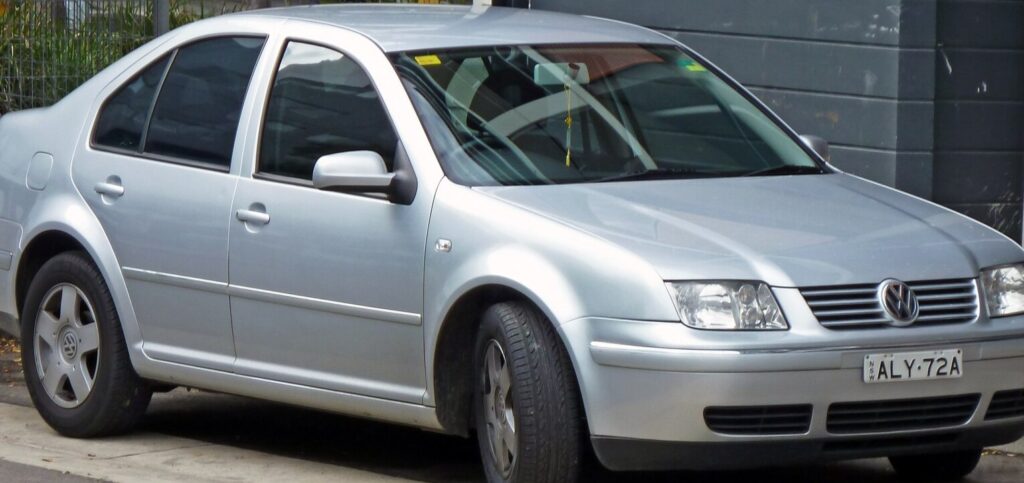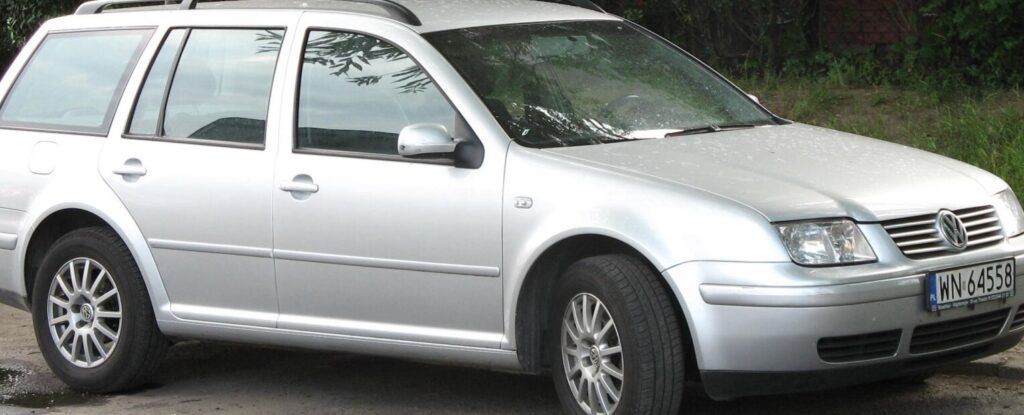
The Volkswagen Bora Variant 1.8 Turbo 20V, produced between 1998 and 2005, represents a significant offering within the Bora (Jetta in North America) lineup. Based on the Volkswagen Group’s A4 platform (1HX0/A3 internally), the Bora Variant – a station wagon or estate body style – aimed to provide a practical and refined alternative to traditional sedans. This particular 1.8 Turbo 20V configuration occupied a middle ground in the Bora Variant range, offering a balance between performance, fuel economy, and affordability. It was positioned above the base 1.6-liter models and below the more potent 2.0-liter and VR6 variants.
Technical Specifications
| Brand | Volkswagen |
| Model | Bora |
| Generation | Bora Variant (1J6) |
| Type (Engine) | 1.8 Turbo 20V (150 Hp) |
| Start of production | 1998 |
| End of production | 2005 |
| Powertrain Architecture | Internal Combustion engine |
| Body type | Station wagon (estate) |
| Seats | 5 |
| Doors | 5 |
| Fuel consumption (urban) | 10.8 l/100 km (21.8 US mpg) |
| Fuel consumption (extra urban) | 6.3 l/100 km (37.3 US mpg) |
| Fuel consumption (combined) | 7.4 l/100 km (31.8 US mpg) |
| Fuel Type | Petrol (Gasoline) |
| Acceleration 0 – 100 km/h | 9.2 sec |
| Acceleration 0 – 62 mph | 9.2 sec |
| Acceleration 0 – 60 mph | 8.7 sec |
| Maximum speed | 216 km/h (134.22 mph) |
| Weight-to-power ratio | 9.1 kg/Hp |
| Weight-to-torque ratio | 6.5 kg/Nm |
| Power | 150 Hp @ 5700 rpm |
| Torque | 210 Nm @ 1750 rpm (154.89 lb.-ft. @ 1750 rpm) |
| Engine layout | Front, Transverse |
| Engine Model/Code | AGU, AUM |
| Engine displacement | 1781 cm3 (108.68 cu. in.) |
| Number of cylinders | 4 |
| Engine configuration | Inline |
| Cylinder Bore | 81 mm (3.19 in.) |
| Piston Stroke | 86.4 mm (3.4 in.) |
| Compression ratio | 9.5:1 |
| Number of valves per cylinder | 5 |
| Fuel injection system | Multi-port manifold injection |
| Engine aspiration | Turbocharger |
| Valvetrain | DOHC |
| Engine oil capacity | 4.5 l (4.76 US qt | 3.96 UK qt) |
| Coolant capacity | 5 l (5.28 US qt | 4.4 UK qt) |
| Kerb Weight | 1360 kg (2998.29 lbs.) |
| Max. weight | 1870 kg (4122.64 lbs.) |
| Max load | 510 kg (1124.36 lbs.) |
| Trunk (boot) space – minimum | 460 l (16.24 cu. ft.) |
| Trunk (boot) space – maximum | 1470 l (51.91 cu. ft.) |
| Fuel tank capacity | 55 l (14.53 US gal | 12.1 UK gal) |
| Length | 4409 mm (173.58 in.) |
| Width | 1735 mm (68.31 in.) |
| Height | 1485 mm (58.46 in.) |
| Wheelbase | 2515 mm (99.02 in.) |
| Front track | 1513 mm (59.57 in.) |
| Rear track | 1494 mm (58.82 in.) |
| Drivetrain Architecture | Front wheel drive |
| Number of gears | 5 |
| Gearbox type | Manual transmission |
| Front suspension | Independent, McPherson with coil spring and anti-roll bar |
| Rear suspension | Semi-independent, coil spring |
| Front brakes | Ventilated discs |
| Rear brakes | Disc |
| Assisting systems | ABS (Anti-lock braking system) |
| Steering type | Steering rack and pinion |
| Power steering | Hydraulic |
| Tires size | 195/65 R15 |
| Wheel rims size | 15 |
Powertrain & Engine Architecture
The heart of the Bora Variant 1.8 Turbo 20V is the 1781cc inline-four cylinder engine, typically identified by engine codes AGU or AUM. These engines feature a cast iron block with an aluminum cylinder head, incorporating a sophisticated 20-valve (five valves per cylinder) dual overhead camshaft (DOHC) design. The key element, of course, is the turbocharger, a Garrett T25 or similar unit, providing forced induction. Fuel delivery is managed by a Bosch Motronic multi-port fuel injection system. The AGU engine, generally found in earlier models, utilized a slightly different turbocharger and ECU calibration compared to the AUM. The engine’s turbocharging system provides a noticeable boost in power and torque compared to naturally aspirated engines of similar displacement. The five-speed manual transmission was the standard offering, known for its relatively precise shift feel.
Driving Characteristics
The 150 horsepower and 155 lb-ft of torque produced by the 1.8 Turbo 20V engine provided the Bora Variant with respectable, though not blistering, performance. Acceleration from 0-60 mph took around 8.7 to 9.2 seconds, depending on testing conditions and specific engine code. The turbocharger’s boost wasn’t immediate, resulting in some turbo lag at lower RPMs, but once spooled up, it delivered a strong surge of power. The five-speed manual transmission allowed drivers to keep the engine in its optimal power band. Compared to the higher-output VR6 models, the 1.8 Turbo offered a more economical driving experience, but lacked the VR6’s effortless power and refined engine note. Against the diesel variants (like the 1.9 TDI), the 1.8 Turbo traded fuel economy for a more responsive and engaging driving experience.
Equipment & Trim Levels
The Bora Variant 1.8 Turbo 20V typically came equipped with a reasonable level of standard features. These included power windows and locks, central locking, air conditioning, and an AM/FM radio. Higher trim levels, often denoted by specific packages, added features like alloy wheels, upgraded interior upholstery (often cloth or partial leather), a multi-function steering wheel, and a sunroof. Optional extras included a CD changer, upgraded sound systems, and automatic climate control. Interior trim levels varied, with base models featuring simpler plastics and fabrics, while higher trims offered more refined materials and finishes.
Chassis & Braking
The Bora Variant’s chassis utilized an independent McPherson strut suspension in the front and a semi-independent torsion beam suspension in the rear. This setup provided a good balance between ride comfort and handling. Front brakes were ventilated discs, while rear brakes were solid discs. Anti-lock Braking System (ABS) was standard. The suspension tuning was generally geared towards comfort, making the Bora Variant a pleasant long-distance cruiser. Stabilizer bars were fitted front and rear to reduce body roll during cornering.
Market Reception & Comparison
The Bora Variant 1.8 Turbo 20V was generally well-received by automotive critics. It was praised for its practicality, comfortable ride, and decent performance. Fuel economy was considered good for a turbocharged gasoline engine, averaging around 32 mpg combined. However, some critics noted the turbo lag and the relatively basic interior appointments of lower trim levels. Compared to the 1.6-liter models, the 1.8 Turbo offered a significant performance upgrade. Compared to the 2.0-liter and VR6 variants, it represented a more affordable option with acceptable performance for most drivers. The 1.9 TDI diesel offered superior fuel economy but lacked the 1.8 Turbo’s responsiveness.
Legacy
The Volkswagen Bora Variant 1.8 Turbo 20V has proven to be a relatively reliable vehicle, although age and mileage are now significant factors. The AGU and AUM engines, while generally robust, can be susceptible to issues such as turbocharger failure, vacuum leaks, and coil pack problems. Proper maintenance, including regular oil changes and timely replacement of wear items, is crucial for long-term reliability. Today, the Bora Variant 1.8 Turbo 20V can be found on the used car market at relatively affordable prices, making it an attractive option for those seeking a practical and reasonably efficient station wagon. Its blend of practicality, performance, and affordability has ensured its continued presence on roads today.