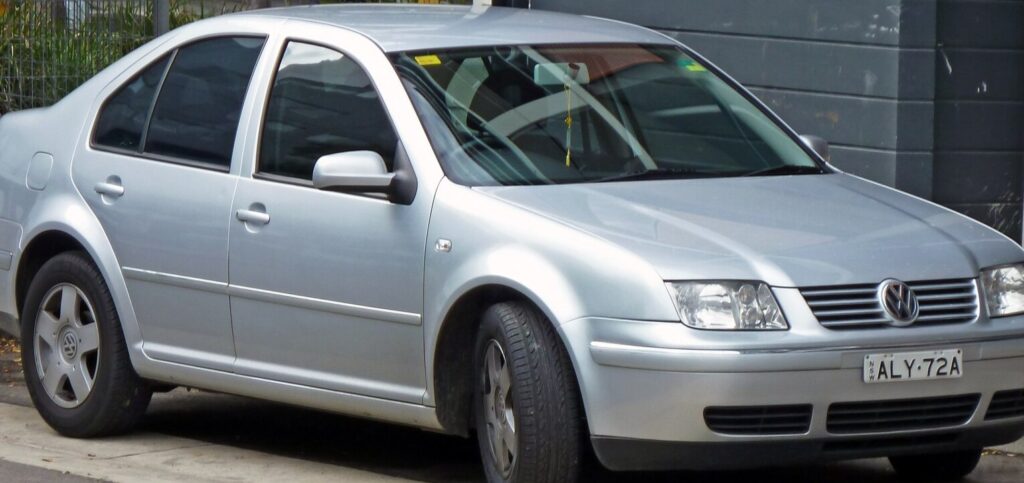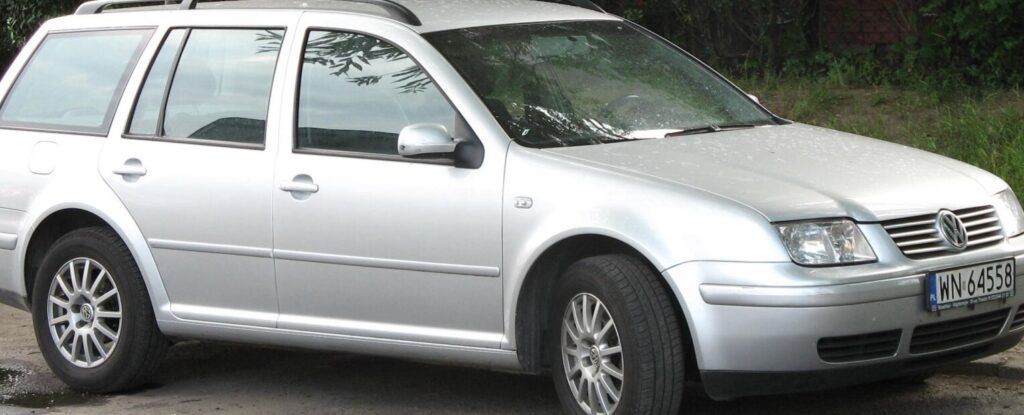
The Volkswagen Bora Variant 1.9 TDI (100 hp) represents a practical and fuel-efficient offering within the Bora (Jetta in North America) lineup, produced between 2000 and 2005. Positioned as a mid-range trim, particularly in European markets, this variant combined the versatility of a station wagon (estate) body style with the renowned economy and durability of Volkswagen’s diesel engine technology. It was part of the 1J6 series, built on the Golf Mk4 platform, and aimed at buyers seeking a spacious, economical family vehicle. This model filled a niche between the base petrol engines and the more powerful, often higher-specification TDI variants.
Technical Specifications
| Brand | Volkswagen |
| Model | Bora |
| Generation | Bora Variant (1J6) |
| Type (Engine) | 1.9 TDI (100 Hp) |
| Start of production | 2000 year |
| End of production | 2005 year |
| Powertrain Architecture | Internal Combustion engine |
| Body type | Station wagon (estate) |
| Seats | 5 |
| Doors | 5 |
| Fuel consumption (economy) – urban | 6.5 l/100 km (36.2 US mpg, 43.5 UK mpg, 15.4 km/l) |
| Fuel consumption (economy) – extra urban | 4 l/100 km (58.8 US mpg, 70.6 UK mpg, 25 km/l) |
| Fuel consumption (economy) – combined | 6 l/100 km (39.2 US mpg, 47.1 UK mpg, 16.7 km/l) |
| Fuel Type | Diesel |
| Acceleration 0 – 100 km/h | 12.8 sec |
| Acceleration 0 – 62 mph | 12.8 sec |
| Acceleration 0 – 60 mph | 12.2 sec |
| Maximum speed | 188 km/h (116.82 mph) |
| Emission standard | Euro 3 |
| Weight-to-power ratio | 14.3 kg/Hp, 69.7 Hp/tonne |
| Weight-to-torque ratio | 6 kg/Nm, 167.4 Nm/tonne |
| Power | 100 Hp @ 4000 rpm |
| Power per litre | 52.7 Hp/l |
| Torque | 240 Nm @ 1800 rpm (177.01 lb.-ft. @ 1800 rpm) |
| Engine layout | Front, Transverse |
| Engine Model/Code | ATD, AXR, BEW |
| Engine displacement | 1896 cm3 (115.7 cu. in.) |
| Number of cylinders | 4 |
| Engine configuration | Inline |
| Cylinder Bore | 79.5 mm (3.13 in.) |
| Piston Stroke | 95.5 mm (3.76 in.) |
| Compression ratio | 19.5:1 |
| Number of valves per cylinder | 2 |
| Fuel injection system | Pump-nozzle (Unit Injector) |
| Engine aspiration | Turbocharger, Intercooler |
| Valvetrain | SOHC |
| Engine oil capacity | 4.5 l (4.76 US qt | 3.96 UK qt) |
| Coolant | 6 l (6.34 US qt | 5.28 UK qt) |
| Kerb Weight | 1434 kg (3161.43 lbs.) |
| Max. weight | 1900 kg (4188.78 lbs.) |
| Max load | 466 kg (1027.35 lbs.) |
| Trunk (boot) space – minimum | 460 l (16.24 cu. ft.) |
| Trunk (boot) space – maximum | 1470 l (51.91 cu. ft.) |
| Fuel tank capacity | 55 l (14.53 US gal | 12.1 UK gal) |
| Length | 4409 mm (173.58 in.) |
| Width | 1735 mm (68.31 in.) |
| Height | 1485 mm (58.46 in.) |
| Wheelbase | 2515 mm (99.02 in.) |
| Front track | 1513 mm (59.57 in.) |
| Rear (Back) track | 1494 mm (58.82 in.) |
| Drivetrain Architecture | The Internal combustion engine (ICE) drives the front wheels of the vehicle. |
| Drive wheel | Front wheel drive |
| Number of gears and type of gearbox | 5 gears, manual transmission |
| Front suspension | Independent, type McPherson with coil spring and anti-roll bar |
| Rear suspension | Semi-independent, coil spring |
| Front brakes | Ventilated discs |
| Rear brakes | Disc |
| Assisting systems | ABS (Anti-lock braking system) |
| Steering type | Steering rack and pinion |
| Power steering | Hydraulic Steering |
| Tires size | 195/65 R15 |
| Wheel rims size | 6J x 15 |
Powertrain & Engine Architecture
The heart of the Bora Variant 1.9 TDI was the 1.9-liter, four-cylinder diesel engine, available with several engine codes including ATD, AXR, and BEW. These engines were direct injection diesels utilizing the pump-nozzle (Unit Injector) technology developed by Bosch. This system allowed for precise fuel delivery and contributed to the engine’s efficiency and relatively low emissions for its time. The engine featured a single overhead camshaft (SOHC) valvetrain operating two valves per cylinder. A turbocharger with an intercooler was standard, boosting power output to 100 horsepower and 177 lb-ft of torque. The torque curve was notably flat, providing good pulling power from low engine speeds. The engine was transversely mounted in the front of the vehicle. The five-speed manual transmission was the standard offering, providing a balance between fuel economy and drivability.
Driving Characteristics
The 1.9 TDI 100 hp engine in the Bora Variant offered a practical and economical driving experience. Acceleration was adequate, with a 0-60 mph time of around 12.2 seconds, but it wasn’t designed for outright performance. The strength of this powertrain lay in its mid-range torque, making it well-suited for everyday driving and hauling loads. The manual transmission’s gear ratios were geared towards fuel efficiency, with a relatively long fifth gear for highway cruising. Compared to the more powerful TDI variants (like the 130 hp or 150 hp versions), this engine felt less stressed and offered better fuel economy. It also provided a more relaxed driving experience, prioritizing usability over sporty performance. Compared to the gasoline engines, the diesel offered significantly better fuel economy and a more robust feel.
Equipment & Trim Levels
The Bora Variant 1.9 TDI (100 hp) typically came with a reasonable level of standard equipment. This included power windows, central locking, power steering, and an ABS anti-lock braking system. Interior upholstery was usually cloth, with a functional, if somewhat basic, dashboard layout. Optional extras included alloy wheels, a sunroof, air conditioning, and a radio/CD player. Higher trim levels added features like upgraded upholstery, automatic climate control, and parking sensors. The Variant (wagon) body style itself added to the practicality with a spacious cargo area, making it a popular choice for families.
Chassis & Braking
The Bora Variant’s chassis featured an independent McPherson strut suspension at the front and a semi-independent coil spring suspension at the rear. This setup provided a comfortable ride, although it wasn’t particularly sporty. The front brakes were ventilated discs, while the rear brakes were solid discs. The steering was a hydraulic power-assisted rack and pinion system, offering reasonable precision. Stabilizer bars were fitted to both the front and rear axles to reduce body roll. The suspension was tuned to prioritize comfort and stability, rather than aggressive handling.
Market Reception & Comparison
The Bora Variant 1.9 TDI (100 hp) was well-received in European markets as a practical and economical family car. Critics praised its fuel efficiency, spacious interior, and robust build quality. However, some noted that the engine lacked the outright performance of its more powerful siblings. Compared to the petrol-powered Bora variants, the TDI offered significantly better fuel economy and lower running costs. Against competitors like the Ford Focus Estate and Opel/Vauxhall Astra Estate, the Bora Variant offered a compelling combination of practicality, economy, and build quality.
Legacy
The 1.9 TDI engine, in its various iterations, has earned a reputation for exceptional reliability and longevity. The Bora Variant 1.9 TDI (100 hp) is no exception. Well-maintained examples continue to be found on the used car market today, often with high mileage. Common issues include wear and tear on suspension components, turbocharger failure (particularly if not properly maintained), and potential problems with the fuel injection pump. However, the engine itself is generally considered very durable. The Bora Variant 1.9 TDI remains a popular choice for those seeking a practical, economical, and reliable estate car, and its reputation for dependability has ensured its continued presence on roads today.