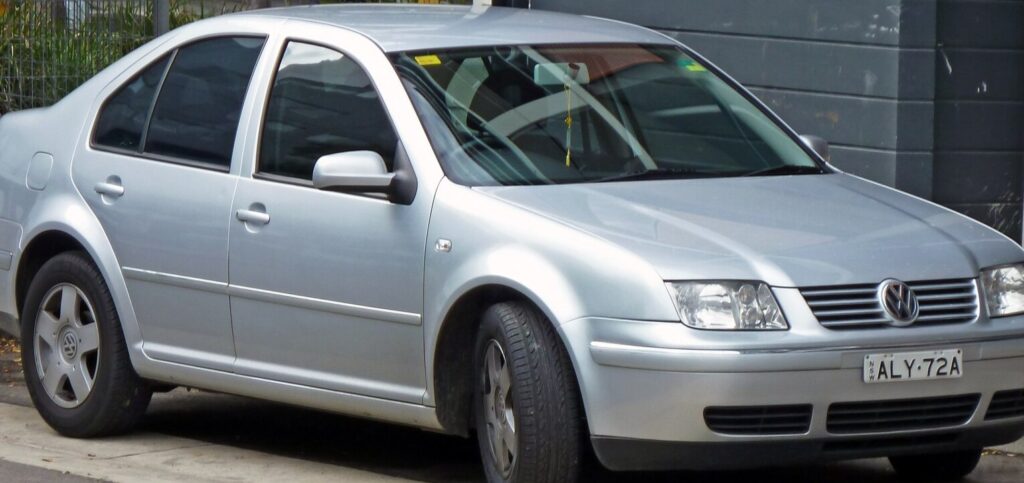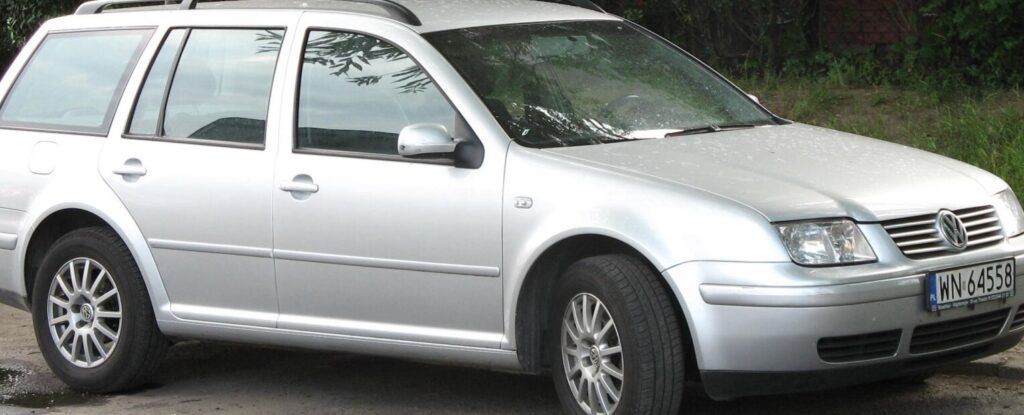
The Volkswagen Bora Variant 2.0, produced between 1999 and 2005, represented a practical and versatile offering within the Bora (Jetta in North America) lineup. Based on the Golf Mk4’s 1J platform, the Bora Variant – Volkswagen’s designation for the station wagon body style – aimed to provide family-oriented buyers with a blend of comfort, space, and Volkswagen’s typically solid build quality. The 2.0-liter, 115 horsepower engine option positioned itself as a mid-range choice, offering a balance between affordability and performance within the broader Bora Variant range, which also included smaller displacement engines and a more powerful 1.8T turbocharged variant. This model was primarily sold in Europe and other markets outside of North America, where the Jetta sedan was the preferred choice.
Technical Specifications
| Brand | Volkswagen |
| Model | Bora |
| Generation | Bora Variant (1J6) |
| Type (Engine) | 2.0 (115 Hp) |
| Start of production | 1999 |
| End of production | 2005 |
| Powertrain Architecture | Internal Combustion engine |
| Body type | Station wagon (estate) |
| Seats | 5 |
| Doors | 5 |
| Fuel consumption (urban) | 11 l/100 km (21.4 US mpg) |
| Fuel consumption (extra urban) | 6.2 l/100 km (37.9 US mpg) |
| Fuel consumption (combined) | 8 l/100 km (29.4 US mpg) |
| Fuel Type | Petrol (Gasoline) |
| Acceleration 0 – 100 km/h | 11 sec |
| Acceleration 0 – 62 mph | 11 sec |
| Acceleration 0 – 60 mph | 10.5 sec |
| Maximum speed | 195 km/h (121.17 mph) |
| Weight-to-power ratio | 11.2 kg/Hp |
| Weight-to-torque ratio | 7.6 kg/Nm |
| Power | 115 Hp @ 5200 rpm |
| Torque | 170 Nm @ 2400 rpm (125.39 lb.-ft. @ 2400 rpm) |
| Engine layout | Front, Transverse |
| Engine Model/Code | APK, AQY |
| Engine displacement | 1984 cm3 (121.07 cu. in.) |
| Number of cylinders | 4 |
| Engine configuration | Inline |
| Cylinder Bore | 82.5 mm (3.25 in.) |
| Piston Stroke | 92.8 mm (3.65 in.) |
| Compression ratio | 10.5:1 |
| Number of valves per cylinder | 2 |
| Fuel injection system | Multi-port manifold injection |
| Engine aspiration | Naturally aspirated engine |
| Valvetrain | OHC |
| Engine oil capacity | 4 l (4.23 US qt | 3.52 UK qt) |
| Coolant capacity | 5 l (5.28 US qt | 4.4 UK qt) |
| Kerb Weight | 1292 kg (2848.37 lbs.) |
| Max. weight | 1800 kg (3968.32 lbs.) |
| Max load | 508 kg (1119.95 lbs.) |
| Trunk (boot) space – minimum | 460 l (16.24 cu. ft.) |
| Trunk (boot) space – maximum | 1470 l (51.91 cu. ft.) |
| Fuel tank capacity | 55 l (14.53 US gal | 12.1 UK gal) |
| Length | 4409 mm (173.58 in.) |
| Width | 1735 mm (68.31 in.) |
| Height | 1485 mm (58.46 in.) |
| Wheelbase | 2515 mm (99.02 in.) |
| Front track | 1513 mm (59.57 in.) |
| Rear track | 1494 mm (58.82 in.) |
| Drivetrain Architecture | Front wheel drive |
| Number of gears | 5 |
| Gearbox type | Manual transmission |
| Front suspension | Independent, McPherson with coil spring and anti-roll bar |
| Rear suspension | Semi-independent, coil spring |
| Front brakes | Ventilated discs |
| Rear brakes | Disc |
| Assisting systems | ABS (Anti-lock braking system) |
| Steering type | Steering rack and pinion |
| Power steering | Hydraulic |
| Tires size | 195/65 R15 |
| Wheel rims size | 6J x 15 |
Powertrain & Engine Architecture
The Bora Variant 2.0 utilized the Volkswagen Group’s APK or AQY engine code, a naturally aspirated, 1984cc inline-four cylinder gasoline engine. This engine was a relatively common sight in various VW and Audi models of the period. It featured a cast iron block and an aluminum cylinder head, employing a single overhead camshaft (OHC) design with two valves per cylinder. Fuel delivery was managed by a multi-port fuel injection system, providing adequate, though not exceptional, performance. The engine’s 10.5:1 compression ratio contributed to its efficiency, but also meant it required premium unleaded fuel in some markets. The five-speed manual transmission was the standard offering, known for its relatively smooth shifts and durability. This engine wasn’t known for being particularly high-tech, but it was a reliable and well-proven design.
Driving Characteristics
The 115 horsepower output of the 2.0-liter engine in the Bora Variant translated to adequate, but not sporty, performance. Acceleration from 0-60 mph took around 10.5 to 11 seconds, making it suitable for everyday driving and highway cruising. The five-speed manual transmission allowed drivers to keep the engine in its optimal power band, but the engine lacked the low-end torque of larger displacement or turbocharged alternatives. Compared to the 1.8T models, the 2.0 felt noticeably less responsive, particularly during overtaking maneuvers. However, the 2.0 offered a more linear power delivery, making it easier to modulate for less experienced drivers. The wagon body style added weight compared to the sedan, slightly impacting acceleration and handling.
Equipment & Trim Levels
The Bora Variant 2.0 typically came with a reasonable level of standard equipment. This included power windows, central locking, power steering, and an ABS anti-lock braking system. Interior upholstery was generally cloth, with options for upgraded materials available. Trim levels varied by market, but common options included alloy wheels, a sunroof, and a CD stereo system. Air conditioning was often a standard feature, but sometimes offered as an optional extra. The dashboard layout was typical of the Mk4 Golf/Bora generation, characterized by a functional and ergonomic design. The wagon’s rear seats could be folded down to increase cargo capacity, making it a practical choice for families.
Chassis & Braking
The Bora Variant 2.0 utilized a McPherson strut front suspension and a semi-independent coil spring rear suspension. This setup provided a comfortable ride, but wasn’t particularly sporty. The front brakes were ventilated discs, offering good stopping power, while the rear brakes were solid discs. The steering was rack and pinion with hydraulic power assistance, providing a reasonably direct feel. Stabilizer bars were fitted to both the front and rear axles to reduce body roll during cornering. The suspension tuning was geared towards comfort and practicality rather than outright performance.
Market Reception & Comparison
The Bora Variant 2.0 was generally well-received as a practical and affordable family car. Critics praised its spacious interior, comfortable ride, and solid build quality. However, the 2.0-liter engine was often criticized for being underpowered, particularly when compared to the more potent 1.8T turbocharged engine. Fuel economy was respectable, averaging around 29.4 US mpg in combined driving. The 2.0-liter variant was often seen as the entry-level choice for buyers who prioritized practicality and affordability over performance. The 1.8T offered a significant performance upgrade, but came at a higher price point. The diesel variants, such as the 1.9 TDI, provided even better fuel economy but lacked the refinement of the gasoline engines.
Legacy
The Volkswagen Bora Variant 2.0 has proven to be a relatively reliable car, with many examples still on the road today. The 2.0-liter engine is known for its durability, although regular maintenance is essential to prevent issues such as oil leaks and timing belt failure. The car’s simple mechanical design makes it relatively easy to repair and maintain. In the used car market, the Bora Variant 2.0 represents a good value proposition for buyers seeking a practical and affordable station wagon. While it may not offer the performance or features of more modern cars, its solid build quality and spacious interior make it a compelling choice for those on a budget.