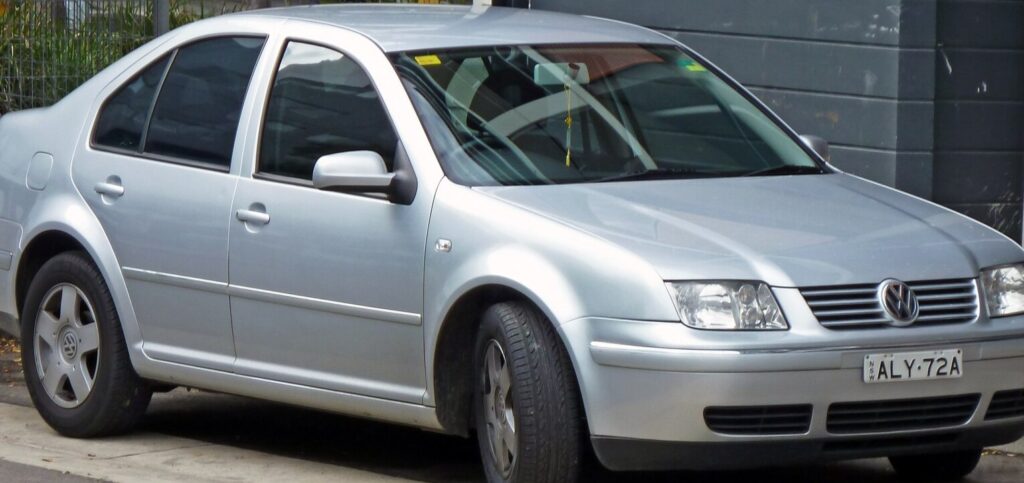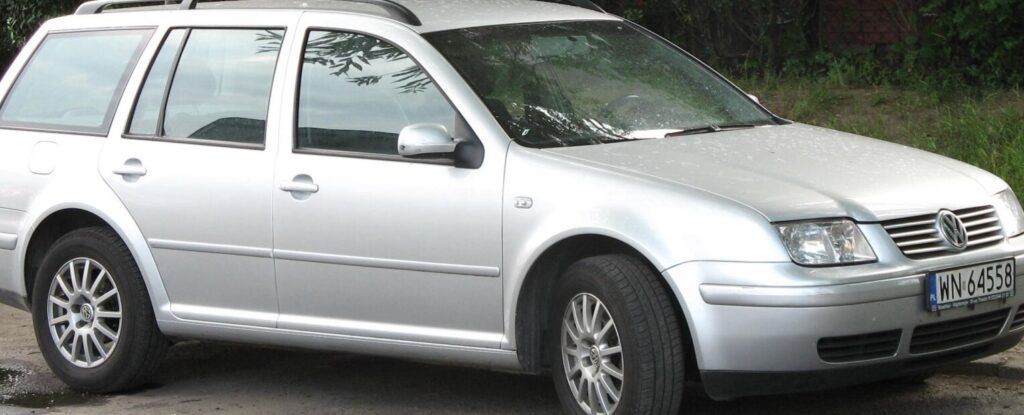
The Volkswagen Bora Variant 2.0 (115 hp) 4MOTION, produced between 1999 and 2005, represents a practical and capable offering within the Bora (Jetta in North America) range. Based on the Golf Mk4’s 1J platform, the Bora Variant – Volkswagen’s designation for the station wagon body style – aimed to provide a more spacious and versatile alternative to the standard sedan. This particular variant, equipped with the 2.0-liter inline-four engine and a four-wheel-drive system, occupied a mid-range position in the lineup, appealing to buyers seeking enhanced traction and practicality without the expense of the higher-performance models. It was primarily marketed in Europe, where the demand for station wagons remained strong.
Technical Specifications
| Brand | Volkswagen |
| Model | Bora |
| Generation | Bora Variant (1J6) |
| Type (Engine) | 2.0 (115 Hp) 4MOTION |
| Start of production | 1999 |
| End of production | 2005 |
| Powertrain Architecture | Internal Combustion engine |
| Body type | Station wagon (estate) |
| Seats | 5 |
| Doors | 5 |
| Fuel consumption (urban) | 11.7 l/100 km (20.1 US mpg) |
| Fuel consumption (extra urban) | 7 l/100 km (33.6 US mpg) |
| Fuel Type | Petrol (Gasoline) |
| Acceleration 0 – 100 km/h | 12 sec |
| Acceleration 0 – 62 mph | 12 sec |
| Acceleration 0 – 60 mph | 11.4 sec |
| Maximum speed | 192 km/h (119.3 mph) |
| Weight-to-power ratio | 12.4 kg/Hp |
| Weight-to-torque ratio | 8.6 kg/Nm |
| Power | 115 Hp @ 5400 rpm |
| Torque | 166 Nm @ 3600 rpm (122.44 lb.-ft. @ 3600 rpm) |
| Engine layout | Front, Transverse |
| Engine Model/Code | APK, AQY |
| Engine displacement | 1984 cm3 (121.07 cu. in.) |
| Number of cylinders | 4 |
| Engine configuration | Inline |
| Cylinder Bore | 82.5 mm (3.25 in.) |
| Piston Stroke | 92.8 mm (3.65 in.) |
| Compression ratio | 10:1 |
| Number of valves per cylinder | 2 |
| Fuel injection system | Multi-port manifold injection |
| Engine aspiration | Naturally aspirated engine |
| Valvetrain | OHC |
| Engine oil capacity | 4 l (4.23 US qt | 3.52 UK qt) |
| Coolant capacity | 5 l (5.28 US qt | 4.4 UK qt) |
| Kerb Weight | 1430 kg (3152.61 lbs.) |
| Max. weight | 1960 kg (4321.06 lbs.) |
| Max load | 530 kg (1168.45 lbs.) |
| Trunk (boot) space – minimum | 360 l (12.71 cu. ft.) |
| Trunk (boot) space – maximum | 1370 l (48.38 cu. ft.) |
| Fuel tank capacity | 62 l (16.38 US gal | 13.64 UK gal) |
| Length | 4409 mm (173.58 in.) |
| Width | 1735 mm (68.31 in.) |
| Height | 1485 mm (58.46 in.) |
| Wheelbase | 2515 mm (99.02 in.) |
| Front track | 1513 mm (59.57 in.) |
| Rear track | 1494 mm (58.82 in.) |
| Drive wheel | All wheel drive (4×4) |
| Number of gears | 5 |
| Gearbox type | Manual transmission |
| Front suspension | Independent, McPherson with coil spring and anti-roll bar |
| Rear suspension | Semi-independent, coil spring |
| Front brakes | Ventilated discs |
| Rear brakes | Disc |
| Assisting systems | ABS (Anti-lock braking system) |
| Steering type | Steering rack and pinion |
| Power steering | Hydraulic |
| Tires size | 195/65 R15 |
| Wheel rims size | 15 |
Powertrain & Engine Architecture
The Bora Variant 2.0 4MOTION utilized the Volkswagen Group’s APK or AQY engine code, a 1.984-liter (121.07 cubic inches) inline-four cylinder gasoline engine. This engine featured a cast iron block and an aluminum cylinder head, employing a single overhead camshaft (OHC) design with two valves per cylinder. Fuel delivery was managed by a multi-port fuel injection system, providing adequate, though not exceptional, performance. The engine produced 115 horsepower at 5400 rpm and 166 Nm (122.44 lb-ft) of torque at 3600 rpm. The 4MOTION all-wheel-drive system employed a viscous coupling, distributing power between the front and rear axles as needed, enhancing traction in slippery conditions. The five-speed manual transmission was the standard offering, providing a balance between fuel efficiency and driver control.
Driving Characteristics
The 2.0-liter engine, paired with the manual transmission, delivered respectable, if not exhilarating, performance. Acceleration from 0 to 60 mph took approximately 11.4 seconds, and the top speed was around 119.3 mph. Compared to the more powerful 1.8T turbocharged engine or the diesel variants, the 2.0-liter felt less responsive, particularly during overtaking maneuvers. However, the 4MOTION system provided significantly improved grip, especially on wet or loose surfaces. The gear ratios were tuned for everyday usability, prioritizing fuel economy and smooth cruising over outright performance. The steering was precise, and the suspension offered a comfortable ride, making it a suitable vehicle for long journeys.
Equipment & Trim Levels
The Bora Variant 2.0 4MOTION typically came equipped with features such as power windows, central locking, and an anti-lock braking system (ABS). Interior upholstery was generally cloth, with options for upgraded materials available. Depending on the market and optional packages, features like air conditioning, a radio/cassette player (later CD player), and alloy wheels could be added. Trim levels varied by country, but generally, this variant represented a mid-range offering, positioned above the base models but below the more luxurious or performance-oriented trims.
Chassis & Braking
The Bora Variant featured an independent McPherson strut suspension at the front and a semi-independent coil spring suspension at the rear. This setup provided a good balance between ride comfort and handling. Brakes consisted of ventilated discs at the front and solid discs at the rear, providing adequate stopping power for the vehicle’s weight and performance. The 4MOTION system added to the overall weight of the vehicle, but the enhanced traction compensated for this.
Market Reception & Comparison
The Bora Variant 2.0 4MOTION was generally well-received by automotive critics as a practical and capable family car. It offered a good level of space, comfort, and safety, combined with the added security of all-wheel drive. Compared to the front-wheel-drive versions, the 4MOTION model commanded a premium price. Fuel economy was reasonable, though not class-leading, and reliability was generally good, typical of Volkswagen products of that era. The 1.8T engine offered more power and a more engaging driving experience, while the diesel variants provided superior fuel economy, making the 2.0 4MOTION a compromise between performance and efficiency.
Legacy
The Volkswagen Bora Variant 2.0 4MOTION has proven to be a relatively durable and reliable vehicle. Well-maintained examples are still found on the used car market today, often appreciated for their practicality and all-weather capability. The 2.0-liter engine is known for its robustness, although regular maintenance is essential to prevent issues such as oil leaks and timing chain wear. The 4MOTION system remains a desirable feature, particularly in regions with harsh winters or challenging road conditions. While not a particularly collectible model, the Bora Variant 2.0 4MOTION represents a solid and dependable choice for buyers seeking a practical and versatile station wagon.