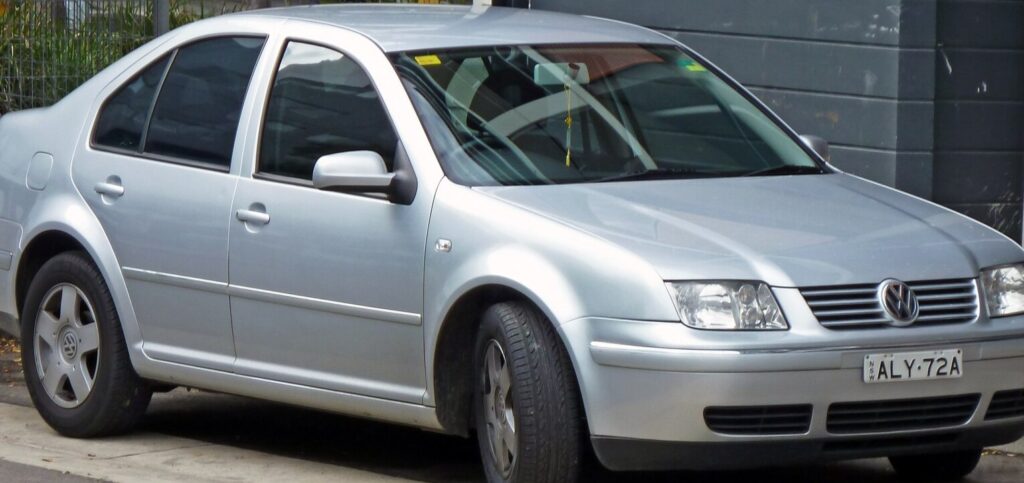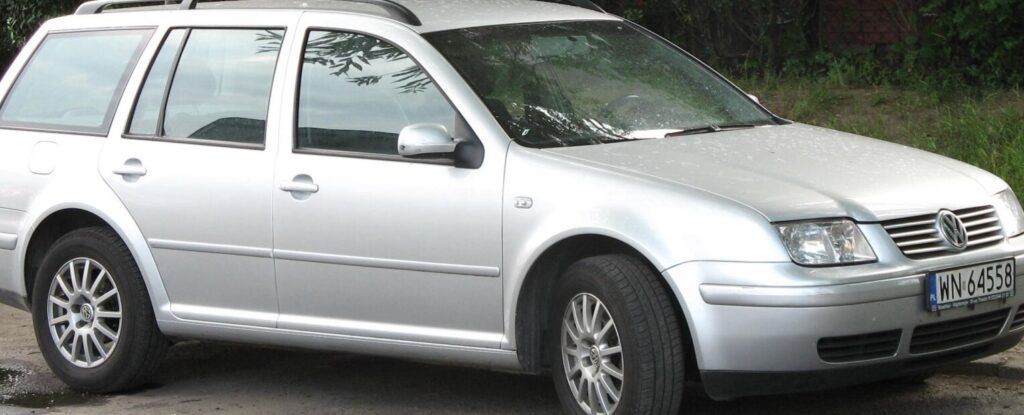
The Volkswagen Bora Variant 2.3 VR5 (170 hp), produced between 2000 and 2005, represents a unique offering within the Bora (Jetta in North America) lineup. Based on the Golf Mk4’s 1J platform – specifically the 1J6 designation for the Variant (estate/wagon) – this model aimed to provide a more practical and upscale alternative to the standard Bora sedan. Positioned as a mid-range to premium trim, it combined the versatility of a station wagon with Volkswagen’s distinctive VR5 engine technology. The Bora Variant itself was primarily a European market vehicle, designed to compete with other compact estates like the Ford Focus Estate and Opel/Vauxhall Astra Estate.
Technical Specifications
| Brand | Volkswagen |
| Model | Bora |
| Generation | Bora Variant (1J6) |
| Type (Engine) | 2.3 VR5 (170 Hp) |
| Start of production | 2000 year |
| End of production | 2005 year |
| Powertrain Architecture | Internal Combustion engine |
| Body type | Station wagon (estate) |
| Seats | 5 |
| Doors | 5 |
| Fuel consumption (economy) – urban | 12.5 l/100 km (18.8 US mpg, 22.6 UK mpg, 8 km/l) |
| Fuel consumption (economy) – extra urban | 6.7 l/100 km (35.1 US mpg, 42.2 UK mpg, 14.9 km/l) |
| Fuel consumption (economy) – combined | 8.8 l/100 km (26.7 US mpg, 32.1 UK mpg, 11.4 km/l) |
| Fuel Type | Petrol (Gasoline) |
| Acceleration 0 – 100 km/h | 8.9 sec |
| Acceleration 0 – 62 mph | 8.9 sec |
| Acceleration 0 – 60 mph | 8.5 sec |
| Maximum speed | 224 km/h (139.19 mph) |
| Weight-to-power ratio | 8.1 kg/Hp, 123.2 Hp/tonne |
| Weight-to-torque ratio | 6.3 kg/Nm, 159.4 Nm/tonne |
| Power | 170 Hp @ 6200 rpm |
| Power per litre | 73.1 Hp/l |
| Torque | 220 Nm @ 3300 rpm (162.26 lb.-ft. @ 3300 rpm) |
| Engine layout | Front, Transverse |
| Engine Model/Code | AQN |
| Engine displacement | 2324 cm3 (141.82 cu. in.) |
| Number of cylinders | 5 |
| Engine configuration | V-engine |
| Cylinder Bore | 81 mm (3.19 in.) |
| Piston Stroke | 90.2 mm (3.55 in.) |
| Compression ratio | 10.8:1 |
| Number of valves per cylinder | 4 |
| Fuel injection system | Multi-port manifold injection |
| Engine aspiration | Naturally aspirated engine |
| Valvetrain | SOHC |
| Engine oil capacity | 4.5 l (4.76 US qt | 3.96 UK qt) |
| Coolant | 9 l (9.51 US qt | 7.92 UK qt) |
| Kerb Weight | 1380 kg (3042.38 lbs.) |
| Max. weight | 1870 kg (4122.64 lbs.) |
| Max load | 490 kg (1080.27 lbs.) |
| Trunk (boot) space – minimum | 460 l (16.24 cu. ft.) |
| Trunk (boot) space – maximum | 1470 l (51.91 cu. ft.) |
| Fuel tank capacity | 55 l (14.53 US gal | 12.1 UK gal) |
| Length | 4409 mm (173.58 in.) |
| Width | 1735 mm (68.31 in.) |
| Height | 1485 mm (58.46 in.) |
| Wheelbase | 2515 mm (99.02 in.) |
| Front track | 1513 mm (59.57 in.) |
| Rear (Back) track | 1494 mm (58.82 in.) |
| Drivetrain Architecture | The Internal combustion engine (ICE) drives the front wheels of the vehicle. |
| Drive wheel | Front wheel drive |
| Number of gears and type of gearbox | 5 gears, manual transmission |
| Front suspension | Independent, type McPherson with coil spring and anti-roll bar |
| Rear suspension | Semi-independent, coil spring |
| Front brakes | Ventilated discs |
| Rear brakes | Disc |
| Assisting systems | ABS (Anti-lock braking system) |
| Steering type | Steering rack and pinion |
| Power steering | Hydraulic Steering |
| Tires size | 205/55 R16 |
| Wheel rims size | 16 |
Powertrain & Engine Architecture
The heart of the Bora Variant 2.3 VR5 is the AQN engine code, a 2.3-liter naturally aspirated V5 engine. This engine is notable for its narrow-angle V configuration (15 degrees between cylinder banks), which allows it to be relatively compact while offering a smoother power delivery than an inline-five. The engine utilizes a single overhead camshaft (SOHC) design with four valves per cylinder. Fuel delivery is managed by a multi-port fuel injection system. The VR5 engine was designed to bridge the gap between four-cylinder and V6 engines, offering a unique blend of refinement and performance. The 170 horsepower and 220 Nm (162 lb-ft) of torque were considered respectable for its time, providing adequate acceleration and cruising ability. The engine is paired with a 5-speed manual transmission as standard, offering precise gear changes and driver engagement. An optional 4-speed automatic transmission was also available, though it impacted performance and fuel economy.
Driving Characteristics
The 2.3 VR5 automatic Bora Variant offered a comfortable and refined driving experience. While not overtly sporty, the engine provided sufficient power for everyday driving and highway cruising. The automatic transmission, while smooth, did detract from the engine’s potential, resulting in slightly slower acceleration compared to the manual version. Gear ratios were tuned for fuel efficiency and comfort rather than outright performance. The front-wheel-drive configuration provided predictable handling, although it lacked the all-weather capability of an all-wheel-drive system. The suspension, tuned for comfort, absorbed bumps and imperfections in the road well, making it a pleasant long-distance cruiser. Compared to the base 1.6 or 1.8 liter four-cylinder models, the VR5 offered a significant performance upgrade, but it wasn’t as sharp or engaging as the higher-performance Golf GTI or R32.
Equipment & Trim Levels
The Bora Variant 2.3 VR5 typically came well-equipped, reflecting its mid-range to premium positioning. Standard features often included air conditioning, power windows and mirrors, central locking, and an upgraded audio system. Interior upholstery was typically cloth, with leather options available. Dashboard trim could vary, with woodgrain or metallic accents. Optional extras included a sunroof, alloy wheels, heated seats, and a more advanced audio system with a CD changer. Safety features such as ABS and front airbags were standard. The level of equipment varied slightly depending on the specific market and optional packages selected.
Chassis & Braking
The Bora Variant’s chassis featured an independent McPherson strut suspension at the front and a semi-independent coil spring suspension at the rear. This setup provided a good balance between comfort and handling. Braking duties were handled by ventilated discs at the front and solid discs at the rear. ABS (Anti-lock Braking System) was standard, enhancing safety and control during emergency braking. The steering utilized a hydraulic power steering system, providing light and precise steering feel. Stabilizer bars were fitted front and rear to reduce body roll during cornering.
Market Reception & Comparison
The Bora Variant 2.3 VR5 was generally well-received by automotive critics. It was praised for its comfortable ride, spacious interior, and distinctive engine. However, some critics noted that the automatic transmission dulled the engine’s performance and that the price was relatively high compared to other compact estates. Compared to the 1.8-liter turbocharged versions, the VR5 offered a different character – less peaky power delivery but a more refined and smoother overall experience. The 1.9 TDI diesel variant offered superior fuel economy but lacked the VR5’s smoothness and refinement. Reliability was generally good, although the VR5 engine could be more complex and potentially more expensive to maintain than the simpler four-cylinder engines.
Legacy
The Volkswagen Bora Variant 2.3 VR5 has developed a following among enthusiasts who appreciate its unique engine and practical wagon body style. The VR5 engine, while not as common as other Volkswagen engines, is known for its durability and distinctive sound. In the used car market, these models are often sought after by those looking for a comfortable, well-equipped, and relatively rare European wagon. Maintenance costs can be higher than for more common models due to the engine’s complexity and the potential need for specialized parts. However, with proper care, the Bora Variant 2.3 VR5 can provide many years of reliable service, offering a unique and enjoyable driving experience.