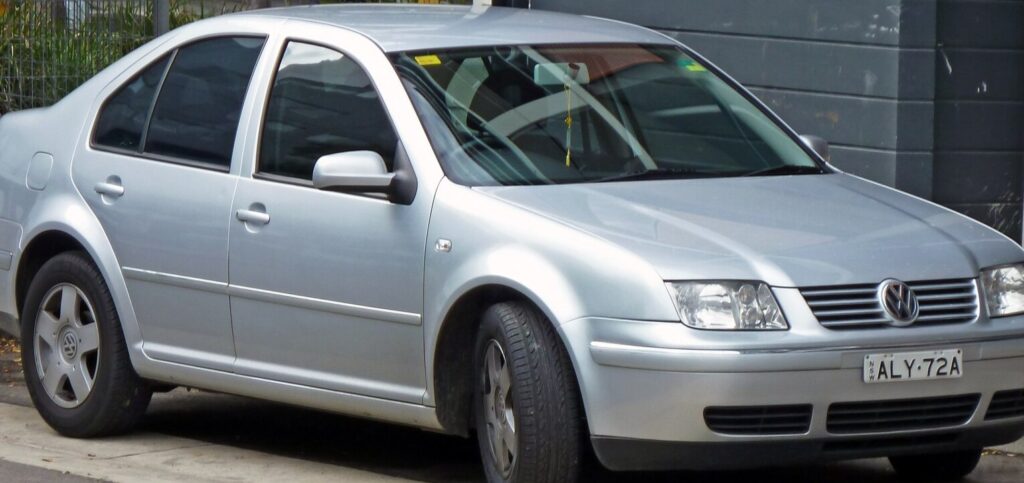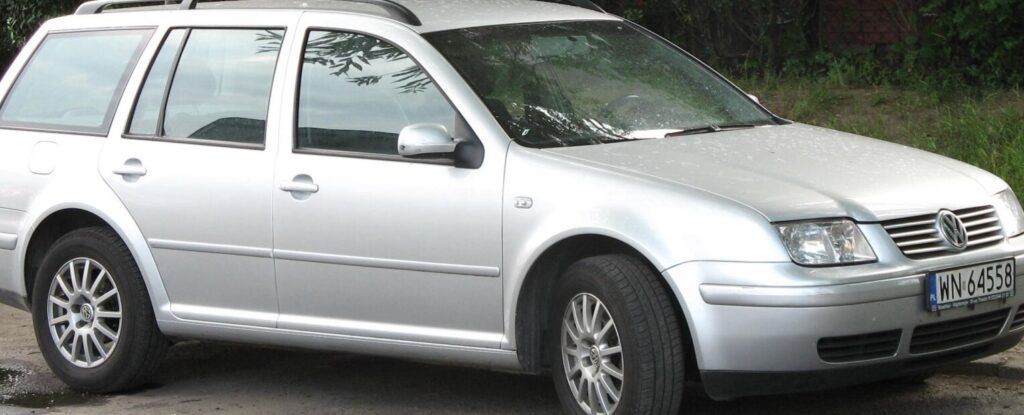
The Volkswagen Bora Variant 2.8 V6 4MOTION, produced between 1999 and 2005, represents a compelling blend of practicality and performance within the Bora (Jetta in North America) lineup. Based on the Golf Mk4’s 1J platform, the Bora Variant – Volkswagen’s designation for the station wagon body style – aimed to offer a more versatile alternative to the standard sedan. This particular variant, equipped with the 2.8-liter V6 engine and Volkswagen’s 4MOTION all-wheel-drive system, occupied the upper echelon of the Bora range, positioned as a premium offering for buyers seeking enhanced capability and driving enjoyment. It was primarily marketed in Europe, where the station wagon body style held significant appeal.
Technical Specifications
| Brand | Volkswagen |
| Model | Bora |
| Generation | Bora Variant (1J6) |
| Type (Engine) | 2.8 V6 (204 Hp) 4MOTION |
| Start of production | 1999 |
| End of production | 2005 |
| Powertrain Architecture | Internal Combustion engine |
| Body type | Station wagon (estate) |
| Seats | 5 |
| Doors | 5 |
| Fuel consumption (urban) | 15 l/100 km (15.7 US mpg, 18.8 UK mpg, 6.7 km/l) |
| Fuel consumption (extra urban) | 8.2 l/100 km (28.7 US mpg, 34.4 UK mpg, 12.2 km/l) |
| Fuel consumption (combined) | 9.9 l/100 km (23.8 US mpg, 28.5 UK mpg, 10.1 km/l) |
| Fuel Type | Petrol (Gasoline) |
| Acceleration 0 – 100 km/h | 7.6 sec |
| Acceleration 0 – 62 mph | 7.6 sec |
| Acceleration 0 – 60 mph | 7.2 sec |
| Maximum speed | 235 km/h (146.02 mph) |
| Weight-to-power ratio | 7.5 kg/Hp, 134.2 Hp/tonne |
| Weight-to-torque ratio | 5.6 kg/Nm, 177.6 Nm/tonne |
| Power | 204 Hp @ 6200 rpm |
| Power per litre | 73.1 Hp/l |
| Torque | 270 Nm @ 3200 rpm (199.14 lb.-ft. @ 3200 rpm) |
| Engine layout | Front, Transverse |
| Engine Model/Code | AQP |
| Engine displacement | 2792 cm3 (170.38 cu. in.) |
| Number of cylinders | 6 |
| Engine configuration | V-engine |
| Cylinder Bore | 81 mm (3.19 in.) |
| Piston Stroke | 90.3 mm (3.56 in.) |
| Compression ratio | 10:1 |
| Number of valves per cylinder | 4 |
| Fuel injection system | Multi-port manifold injection |
| Engine aspiration | Naturally aspirated engine |
| Valvetrain | SOHC |
| Engine oil capacity | 5.5 l (5.81 US qt | 4.84 UK qt) |
| Coolant | 11 l (11.62 US qt | 9.68 UK qt) |
| Kerb Weight | 1520 kg (3351.03 lbs.) |
| Max. weight | 1995 kg (4398.22 lbs.) |
| Max load | 475 kg (1047.2 lbs.) |
| Trunk (boot) space – minimum | 360 l (12.71 cu. ft.) |
| Trunk (boot) space – maximum | 1370 l (48.38 cu. ft.) |
| Fuel tank capacity | 62 l (16.38 US gal | 13.64 UK gal) |
| Length | 4409 mm (173.58 in.) |
| Width | 1735 mm (68.31 in.) |
| Height | 1485 mm (58.46 in.) |
| Wheelbase | 2515 mm (99.02 in.) |
| Front track | 1513 mm (59.57 in.) |
| Rear (Back) track | 1494 mm (58.82 in.) |
| Drive wheel | All wheel drive (4×4) |
| Number of gears and type of gearbox | 6 gears, manual transmission |
| Front suspension | Independent, type McPherson with coil spring and anti-roll bar |
| Rear suspension | Semi-independent, coil spring |
| Front brakes | Ventilated discs |
| Rear brakes | Disc |
| Assisting systems | ABS (Anti-lock braking system) |
| Steering type | Steering rack and pinion |
| Power steering | Hydraulic Steering |
| Tires size | 205/55 R16 |
| Wheel rims size | 6.5J x 16 |
Powertrain & Engine Architecture
The heart of the Bora Variant 2.8 V6 4MOTION is the AQP engine, a 2.8-liter naturally aspirated V6. This engine, part of Volkswagen’s VR6 family, features a narrow-angle V configuration (15 degrees between cylinder banks) which allows it to be packaged more compactly than a traditional V6. The AQP utilizes multi-port fuel injection and a single overhead camshaft (SOHC) valvetrain. The engine’s 2792 cc displacement, combined with a 10:1 compression ratio, produces 204 horsepower at 6200 rpm and 270 Nm (199 lb-ft) of torque at 3200 rpm. The six-speed manual transmission was standard, providing well-spaced gear ratios to maximize the engine’s performance. The 4MOTION system is a viscous coupling-based all-wheel-drive system, providing a variable distribution of torque between the front and rear axles, enhancing traction in adverse conditions.
Driving Characteristics
The 2.8 V6 4MOTION Bora Variant offered a noticeably more spirited driving experience compared to the lower-powered variants. The V6 engine delivered smooth, linear power throughout the rev range, making it well-suited for both everyday driving and longer journeys. The six-speed manual transmission allowed drivers to keep the engine in its optimal power band. While not a sports car, the combination of the V6 engine and 4MOTION all-wheel drive provided confident handling and stability, particularly on wet or slippery roads. Acceleration from 0 to 60 mph was achieved in approximately 7.2 seconds, and the car had a top speed of 146 mph. Compared to the 1.8-liter turbocharged or diesel variants, the V6 offered significantly more power and torque, but at the expense of fuel economy.
Equipment & Trim Levels
The 2.8 V6 4MOTION Bora Variant typically came well-equipped, reflecting its position as a premium trim level. Standard features often included air conditioning, power windows and mirrors, central locking, an upgraded audio system, and alloy wheels. Interior upholstery was typically cloth or leather, with options for different color schemes. Optional extras could include a sunroof, heated seats, automatic climate control, and a navigation system. The dashboard layout was typical of the Mk4 Golf/Bora, with a functional and ergonomic design.
Chassis & Braking
The Bora Variant’s chassis featured independent McPherson strut suspension at the front and a semi-independent coil spring suspension at the rear. The 2.8 V6 models often benefited from slightly stiffer suspension components and thicker anti-roll bars compared to the lower-powered variants, improving handling and reducing body roll. Braking was handled by ventilated discs at the front and solid discs at the rear, with ABS (Anti-lock Braking System) as standard. The 4MOTION system added to the car’s stability during braking, particularly on loose surfaces.
Market Reception & Comparison
The Bora Variant 2.8 V6 4MOTION was generally well-received by automotive critics, who praised its performance, handling, and practicality. However, its relatively high price and fuel consumption were often cited as drawbacks. Compared to the 1.8T and TDI variants, the V6 offered a more refined and powerful driving experience, but it was less fuel-efficient and more expensive to maintain. The V6 also provided a noticeable performance advantage over the base 1.6-liter models. The 4MOTION system was seen as a valuable asset for drivers living in regions with harsh winter weather.
Legacy
The Volkswagen Bora Variant 2.8 V6 4MOTION remains a desirable used car today, particularly among enthusiasts who appreciate its combination of performance, practicality, and all-wheel-drive capability. The AQP V6 engine is generally considered to be reliable, although regular maintenance is essential. Common issues can include oil leaks and occasional sensor failures. The 4MOTION system is also generally robust, but it requires periodic servicing to ensure optimal performance. Finding well-maintained examples can be challenging, but the Bora Variant 2.8 V6 4MOTION offers a unique and rewarding driving experience for those willing to invest the time and effort.