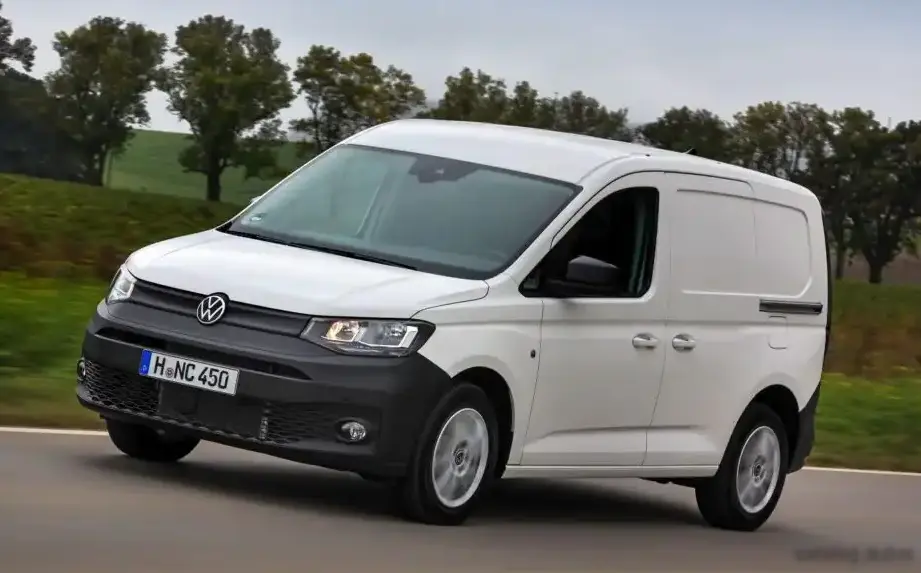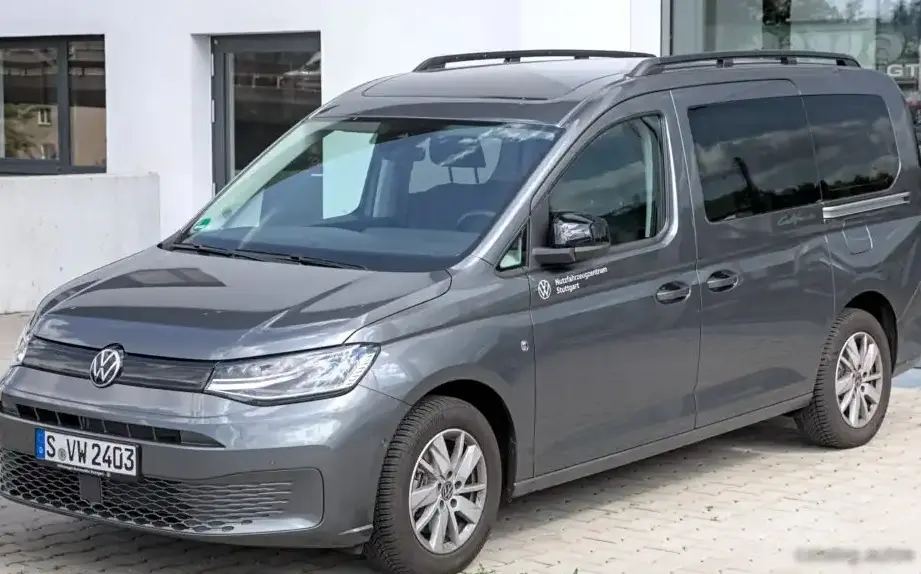
The Volkswagen Caddy Maxi V 1.5 TGI (131 hp) CNG, produced from 2022 to 2023, represents a specific variant within the fifth generation of the Caddy Maxi line. This model is distinguished by its bi-fuel capability, running on both gasoline and Compressed Natural Gas (CNG), and positioned as an eco-conscious option within the Caddy range. It falls into the minivan/leisure activity vehicle segment, offering a practical and versatile solution for families and commercial users alike. The Caddy Maxi V series, built on the MQB platform, aimed to provide increased space and functionality compared to the standard Caddy, catering to those needing more passenger or cargo volume.
Technical Specifications
| Brand | Volkswagen |
| Model | Caddy |
| Generation | Caddy Maxi V |
| Type (Engine) | 1.5 TGI (131 Hp) CNG |
| Start of production | 2022 |
| End of production | 2023 |
| Powertrain Architecture | Internal Combustion engine |
| Body type | Minivan |
| Seats | 5-7 |
| Doors | 4-5 |
| Fuel consumption at Low speed (WLTP) (CNG) | 6-6.2 kg/100 km |
| Fuel consumption at Medium speed (WLTP) (CNG) | 4.5-4.7 kg/100 km |
| Fuel consumption at high speed (WLTP) (CNG) | 3.9-4.1 kg/100 km |
| Fuel consumption at very high speed (WLTP) (CNG) | 4.5-4.9 kg/100 km |
| Combined fuel consumption (WLTP) (CNG) | 4.5-4.8 kg/100 km |
| CO2 emissions (CNG) (WLTP) | 124-131 g/km |
| Fuel Type | Petrol / CNG |
| Acceleration 0 – 100 km/h | 13 sec |
| Acceleration 0 – 62 mph | 13 sec |
| Acceleration 0 – 60 mph | 12.4 sec |
| Maximum speed | 190 km/h (118.06 mph) |
| Emission standard | Euro 6d-ISC-FCM |
| Weight-to-power ratio | 13.4 kg/Hp, 74.4 Hp/tonne |
| Weight-to-torque ratio | 8.8 kg/Nm, 113.6 Nm/tonne |
| Power | 131 Hp @ 5000-6000 rpm |
| Power per litre | 87.4 Hp/l |
| Torque | 200 Nm @ 1400-4000 rpm (147.51 lb.-ft. @ 1400-4000 rpm) |
| Engine layout | Front, Transverse |
| Engine Model/Code | EA211 evo / DHFA |
| Engine displacement | 1498 cm3 (91.41 cu. in.) |
| Number of cylinders | 4 |
| Engine configuration | Inline |
| Cylinder Bore | 74.5 mm (2.93 in.) |
| Piston Stroke | 85.9 mm (3.38 in.) |
| Compression ratio | 12.5:1 |
| Number of valves per cylinder | 4 |
| Fuel injection system | Direct injection and Multi-port manifold injection |
| Engine aspiration | Turbocharger, Intercooler |
| Valvetrain | DOHC |
| Engine oil capacity | 4.3 l (4.54 US qt | 3.78 UK qt) |
| Kerb Weight | 1760-1844 kg (3880.14 – 4065.32 lbs.) |
| Max. weight | 2425-2500 kg (5346.21 – 5511.56 lbs.) |
| Max load | 656-665 kg (1446.23 – 1466.07 lbs.) |
| Trunk (boot) space – minimum | 446 l (15.75 cu. ft.) |
| Trunk (boot) space – maximum | 3105 l (109.65 cu. ft.) |
| Fuel tank capacity | 8.25 l (2.18 US gal | 1.81 UK gal) |
| CNG cylinder capacity | 21.1 kg |
| Max. roof load | 100 kg (220.46 lbs.) |
| Permitted trailer load with brakes (12%) | 1400 kg (3086.47 lbs.) |
| Permitted trailer load without brakes | 750 kg (1653.47 lbs.) |
| Permitted towbar download | 75 kg (165.35 lbs.) |
| Length | 4853 mm (191.06 in.) |
| Width | 1855 mm (73.03 in.) |
| Width including mirrors | 2100 mm (82.68 in.) |
| Height | 1836 mm (72.28 in.) |
| Wheelbase | 2970 mm (116.93 in.) |
| Front overhang | 890 mm (35.04 in.) |
| Rear overhang | 993 mm (39.09 in.) |
| Ride height (ground clearance) | 143 mm (5.63 in.) |
| Minimum turning circle | 12.1 m (39.7 ft.) |
| Front suspension | Independent, type McPherson with coil spring and anti-roll bar |
| Rear suspension | Rigid axle suspension, Trailing arm, Coil spring |
| Front brakes | Ventilated discs, 312×25 mm |
| Rear brakes | Disc, 272×10 mm |
| Steering type | Steering rack and pinion |
| Power steering | Electric Steering |
| Tires size | 205/60 R16; 215/55 R17 |
| Wheel rims size | 6.5J x 16; 6.5J x 17 |
Powertrain & Engine Architecture
The heart of the Caddy Maxi V 1.5 TGI is the EA211 evo series 1.5-liter inline-four cylinder engine, specifically coded DHFA. This engine utilizes a combination of direct injection and multi-port manifold injection, optimizing both power delivery and fuel efficiency. The turbocharger with intercooler further enhances performance. The engine produces 131 horsepower at 5000-6000 rpm and 200 Nm (147.51 lb-ft) of torque between 1400-4000 rpm. The engine is designed to run primarily on CNG, with the gasoline tank serving as a reserve fuel source. The engine’s 12.5:1 compression ratio is optimized for CNG combustion. The engine is transversely mounted at the front of the vehicle. The powertrain is paired with a 6-speed manual transmission, delivering power to the front wheels.
Driving Characteristics
The 131 hp output, combined with the front-wheel-drive configuration and manual transmission, results in a 0-62 mph (0-100 km/h) acceleration time of approximately 13 seconds. While not a performance-oriented vehicle, the 1.5 TGI offers adequate power for everyday driving and highway cruising. The torque curve is relatively flat, providing usable power across a wide rpm range. Compared to higher-output gasoline versions of the Caddy Maxi V, this variant prioritizes fuel economy and lower emissions over outright speed. The manual transmission allows for driver engagement, but the gear ratios are tuned for efficiency rather than sporty acceleration. The CNG operation provides a distinct engine note and a slightly different driving feel compared to gasoline operation.
Equipment & Trim Levels
The Caddy Maxi V 1.5 TGI typically came equipped with a respectable level of standard features, including air conditioning, power windows, central locking, and an infotainment system with Bluetooth connectivity. Higher trim levels offered options such as navigation, parking sensors, cruise control, and upgraded upholstery. Interior materials were generally durable and practical, reflecting the Caddy’s utilitarian nature. The Maxi version offered flexible seating configurations, with options for five or seven passengers. Safety features included ABS, electronic stability control, and multiple airbags.
Chassis & Braking
The Caddy Maxi V utilizes an independent McPherson strut suspension at the front and a rigid axle suspension with trailing arms at the rear. This setup provides a reasonable balance between ride comfort and handling. The front brakes are ventilated discs, while the rear brakes are solid discs. The steering is electrically assisted, providing light and precise control. The suspension is tuned for comfort and practicality, prioritizing a stable and predictable ride over sporty handling. Stabilizer bars are included to reduce body roll during cornering.
Market Reception & Comparison
The Caddy Maxi V 1.5 TGI was generally well-received as a practical and economical option for those seeking a versatile family vehicle or light commercial van. Critics praised its fuel efficiency when running on CNG, as well as its spacious interior and flexible seating configurations. Compared to the gasoline-powered Caddy Maxi V variants, the 1.5 TGI offered lower running costs, particularly for drivers with access to affordable CNG fuel. However, the lower power output and slower acceleration were noted as drawbacks for some drivers. Compared to diesel variants, the CNG model offered a cleaner emissions profile, but potentially a slightly higher fuel cost depending on local CNG pricing.
Legacy
The Volkswagen Caddy Maxi V 1.5 TGI represents a significant step towards alternative fuel vehicles in the compact van segment. While CNG infrastructure remains limited in some regions, the 1.5 TGI offered a viable option for environmentally conscious buyers. The EA211 evo engine family has proven to be relatively reliable, and the Caddy Maxi V is generally considered a durable and well-built vehicle. On the used car market, these models are sought after by those looking for an economical and practical vehicle with a reduced environmental impact. Maintenance costs are generally comparable to other Caddy Maxi V variants, with the added consideration of maintaining the CNG fuel system.