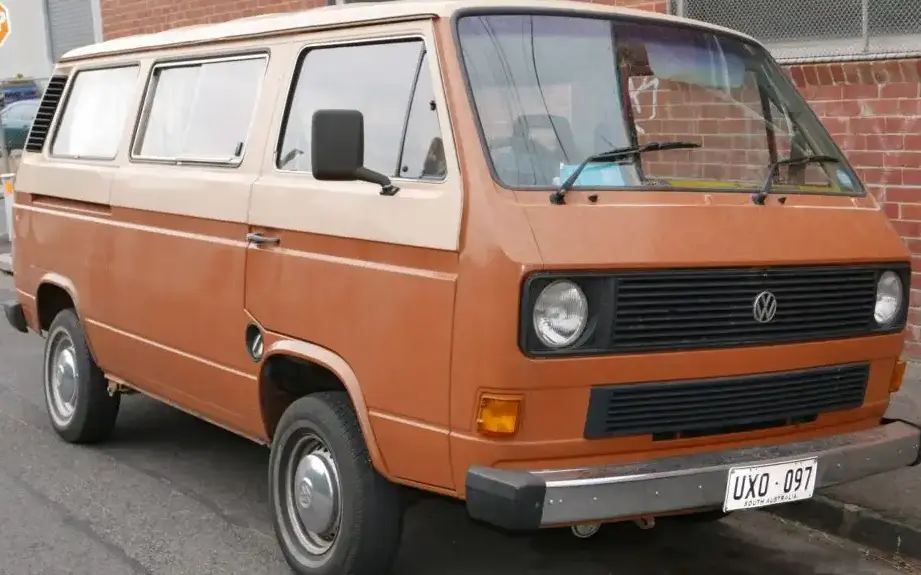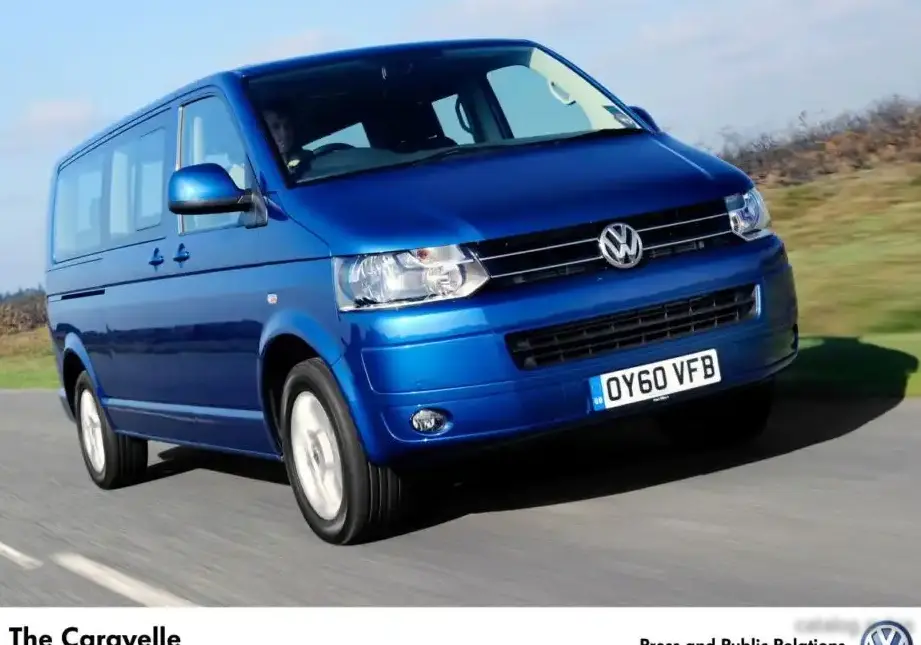
The Volkswagen Caravelle (T5, facelift 2009) Long 2.0 TDI BMT (180 hp) DSG represents a significant iteration within the fifth generation of Volkswagen’s popular multi-purpose vehicle (MPV), the Caravelle. Produced from 2012 to 2015, this variant occupied a middle-ground position in the T5 facelift range, offering a balance between performance, fuel efficiency, and practicality. It was primarily marketed in Europe as a versatile vehicle for families, businesses, and shuttle services, capitalizing on the T5’s reputation for reliability and spaciousness. The “Long” designation indicates an extended wheelbase, providing increased interior volume and passenger comfort. This model is part of the larger Volkswagen Transporter family, sharing its core platform with the Transporter, Multivan, and California.
Technical Specifications
| Brand | Volkswagen |
| Model | Caravelle |
| Generation | Caravelle (T5, facelift 2009) Long |
| Type (Engine) | 2.0 TDI BMT (180 Hp) DSG |
| Start of production | 2012 |
| End of production | 2015 |
| Powertrain Architecture | Internal Combustion engine |
| Body type | Van |
| Seats | 4-9 |
| Doors | 4-5 |
| Fuel consumption (economy) – urban (NEDC) | 8.8 l/100 km (26.7 US mpg, 32.1 UK mpg, 11.4 km/l) |
| Fuel consumption (economy) – extra urban (NEDC) | 6.9 l/100 km (34.1 US mpg, 40.9 UK mpg, 14.5 km/l) |
| Fuel consumption (economy) – combined (NEDC) | 7.6 l/100 km (30.9 US mpg, 37.2 UK mpg, 13.2 km/l) |
| CO2 emissions (NEDC) | 199 g/km |
| Fuel Type | Diesel |
| Acceleration 0 – 100 km/h | 11.3 sec |
| Acceleration 0 – 62 mph | 11.3 sec |
| Acceleration 0 – 60 mph | 10.7 sec |
| Maximum speed | 191 km/h (118.68 mph) |
| Emission standard | Euro 5 |
| Weight-to-power ratio | 11.5 kg/Hp, 87.2 Hp/tonne |
| Weight-to-torque ratio | 5.2 kg/Nm, 193.7 Nm/tonne |
| Power | 180 Hp @ 4000 rpm |
| Power per litre | 91.5 Hp/l |
| Torque | 400 Nm @ 1500-2000 rpm (295.02 lb.-ft. @ 1500-2000 rpm) |
| Engine layout | Front, Transverse |
| Engine Model/Code | EA189 / CFCA |
| Engine displacement | 1968 cm3 (120.09 cu. in.) |
| Number of cylinders | 4 |
| Engine configuration | Inline |
| Cylinder Bore | 81 mm (3.19 in.) |
| Piston Stroke | 95.5 mm (3.76 in.) |
| Compression ratio | 16.5:1 |
| Number of valves per cylinder | 4 |
| Fuel injection system | Diesel Commonrail |
| Engine aspiration | BiTurbo, Intercooler |
| Valvetrain | DOHC |
| Engine oil capacity | 7 l (7.4 US qt | 6.16 UK qt) |
| Coolant | 11 l (11.62 US qt | 9.68 UK qt) |
| Kerb Weight | 2065 kg (4552.55 lbs.) |
| Max. weight | 3000-3200 kg (6613.87 – 7054.79 lbs.) |
| Max load | 935-1135 kg (2061.32 – 2502.25 lbs.) |
| Trunk (boot) space – maximum | 6700 l (236.61 cu. ft.) |
| Fuel tank capacity | 80 l (21.13 US gal | 17.6 UK gal) |
| Max. roof load | 100 kg (220.46 lbs.) |
| Permitted trailer load with brakes (12%) | 2500 kg (5511.56 lbs.) |
| Permitted trailer load without brakes | 750 kg (1653.47 lbs.) |
| Permitted towbar download | 100 kg (220.46 lbs.) |
| Length | 5292 mm (208.35 in.) |
| Width | 1904 mm (74.96 in.) |
| Width including mirrors | 2283 mm (89.88 in.) |
| Height | 1990 mm (78.35 in.) |
| Wheelbase | 3400 mm (133.86 in.) |
| Front overhang | 896 mm (35.28 in.) |
| Rear overhang | 996 mm (39.21 in.) |
| Ride height (ground clearance) | 201 mm (7.91 in.) |
| Minimum turning circle (turning diameter) | 13.2 m (43.31 ft.) |
| Approach angle | 21° |
| Departure angle | 17° |
| Ramp-over (brakeover) angle | 12° |
| Drivetrain Architecture | The Internal combustion engine (ICE) drives the front wheels of the vehicle. |
| Drive wheel | Front wheel drive |
| Number of gears and type of gearbox | 7 gears, automatic transmission DSG |
| Front suspension | Independent, type McPherson with coil spring and anti-roll bar |
| Rear suspension | Independent coil spring, Transverse stabilizer, Trailing arm |
| Front brakes | Ventilated discs, 340×32.5 mm |
| Rear brakes | Ventilated discs, 294×22 mm |
| Assisting systems | ABS (Anti-lock braking system) |
| Steering type | Steering rack and pinion |
| Power steering | Hydraulic Steering |
| Tires size | 235/55 R17; 255/45 R18 |
| Wheel rims size | 7J x 17; 8J x 18 |
Powertrain & Engine Architecture
The Caravelle 2.0 TDI BMT utilizes the EA189 engine family, specifically the CFCA code. This 2.0-liter inline-four diesel engine is characterized by its common rail direct injection system and, crucially, a bi-turbocharger setup. The two turbochargers – a low-pressure and a high-pressure unit – work in sequence to provide a broad torque curve and minimize turbo lag. The BMT (BlueMotion Technology) designation indicates the inclusion of fuel-saving technologies such as start-stop functionality and optimized engine mapping. The engine produces 180 horsepower at 4000 rpm and 400 Nm (295 lb-ft) of torque between 1500 and 2000 rpm. This power is delivered to the front wheels via a seven-speed dual-clutch transmission (DSG). The DSG gearbox offers quick and smooth gear changes, contributing to both performance and fuel efficiency.
Driving Characteristics
The 180 hp 2.0 TDI BMT with the DSG transmission provides a competent, if not exhilarating, driving experience. Acceleration from 0-60 mph takes around 10.7 seconds, and top speed is rated at 118.68 mph. The DSG gearbox is well-matched to the engine’s torque characteristics, providing responsive shifts and keeping the engine within its optimal power band. Compared to the more powerful TDI variants (like the 140 hp version), this engine offers a noticeable improvement in performance, particularly when fully loaded or tackling inclines. However, it doesn’t possess the outright punch of higher-output TDI engines. The long wheelbase contributes to a comfortable ride, but it also makes the Caravelle feel large and less agile in tight corners.
Equipment & Trim Levels
The Caravelle, even in this mid-range configuration, typically came well-equipped. Standard features included air conditioning, power windows, central locking, and an audio system. The interior generally featured cloth upholstery, although leather options were available. Trim levels varied by market, but common options included upgraded infotainment systems, parking sensors, alloy wheels, and a sunroof. The “Long” wheelbase version prioritized passenger space, offering ample legroom in the second and third rows.
Chassis & Braking
The Caravelle T5 utilizes an independent suspension setup, with McPherson struts at the front and a multi-link arrangement at the rear. This provides a reasonable balance between ride comfort and handling. The braking system consists of ventilated discs on all four wheels, providing adequate stopping power for the vehicle’s weight. ABS (Anti-lock Braking System) is standard. The Caravelle’s weight distribution and suspension tuning are geared towards maximizing comfort and stability rather than sporty handling.
Market Reception & Comparison
The Caravelle 2.0 TDI BMT DSG was generally well-received by automotive critics. It was praised for its fuel efficiency, spacious interior, and comfortable ride. However, some reviewers noted that the engine could feel strained when fully loaded or driving uphill. Compared to the 140 hp TDI version, the 180 hp variant offered a worthwhile performance upgrade, justifying the higher price. Against competitors like the Mercedes-Benz V-Class and the Ford Galaxy, the Caravelle offered a compelling combination of practicality, reliability, and value.
Legacy
The EA189 engine family, while generally reliable, has been subject to scrutiny regarding emissions compliance. The 2.0 TDI BMT engine, in particular, was affected by the Volkswagen emissions scandal, requiring software updates to meet regulatory standards. Despite this, the engine has proven to be durable when properly maintained. Today, used Caravelle T5s with this powertrain are relatively common and represent a good value for those seeking a spacious and practical MPV. Regular maintenance, including oil changes and timing belt replacements, is crucial to ensure long-term reliability.