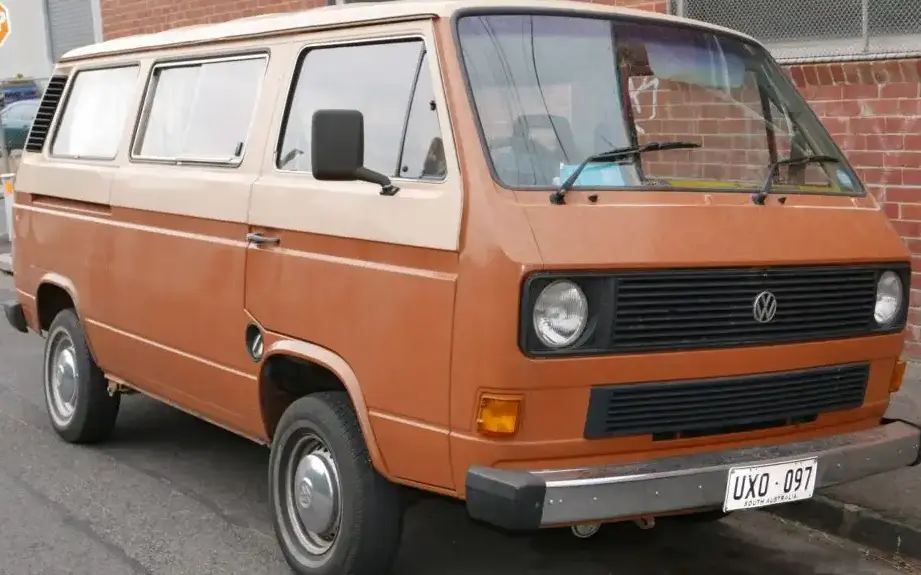
The Volkswagen Caravelle (T5) Long 2.0, producing 116 horsepower, was a popular variant of the fifth-generation Caravelle, manufactured between 2003 and 2009. Positioned as a mid-range option within the T5 lineup, it catered to families and businesses needing a versatile and spacious passenger vehicle. Built on the Volkswagen Group’s 1HX0/A3 platform – shared with the Volkswagen Transporter, Multivan, and other commercial vehicles – the Caravelle T5 Long 2.0 offered a balance between practicality, comfort, and affordability. This version was primarily sold in Europe and other international markets, offering a step up in refinement from the base models while remaining more accessible than the higher-specification trims.
Technical Specifications
| Brand | Volkswagen |
| Model | Caravelle |
| Generation | Caravelle (T5) Long |
| Type (Engine) | 2.0 (116 Hp) |
| Start of production | 2003 |
| End of production | 2009 |
| Powertrain Architecture | Internal Combustion engine |
| Body type | Van |
| Seats | 5-9 |
| Doors | 4-5 |
| Fuel consumption (economy) – urban (NEDC) | 13.6-13.8 l/100 km (17.3 – 17 US mpg, 20.8 – 20.5 UK mpg, 7.4 – 7.2 km/l) |
| Fuel consumption (economy) – extra urban (NEDC) | 8.4-8.6 l/100 km (28 – 27.4 US mpg, 33.6 – 32.8 UK mpg, 11.9 – 11.6 km/l) |
| Fuel consumption (economy) – combined (NEDC) | 10.4-10.6 l/100 km (22.6 – 22.2 US mpg, 27.2 – 26.6 UK mpg, 9.6 – 9.4 km/l) |
| CO2 emissions (NEDC) | 250-254 g/km |
| Fuel Type | Petrol (Gasoline) |
| Acceleration 0 – 100 km/h | 17.8 sec |
| Acceleration 0 – 62 mph | 17.8 sec |
| Acceleration 0 – 60 mph | 16.9 sec |
| Maximum speed | 163 km/h (101.28 mph) |
| Emission standard | Euro 4 |
| Weight-to-power ratio | 16.3 kg/Hp, 61.4 Hp/tonne |
| Weight-to-torque ratio | 11.1 kg/Nm, 89.9 Nm/tonne |
| Power | 116 Hp @ 5200 rpm |
| Power per litre | 58.5 Hp/l |
| Torque | 170 Nm @ 2700-4700 rpm (125.39 lb.-ft. @ 2700-4700 rpm) |
| Engine layout | Front, Transverse |
| Engine Model/Code | EA113 / AXA |
| Engine displacement | 1984 cm3 (121.07 cu. in.) |
| Number of cylinders | 4 |
| Engine configuration | Inline |
| Cylinder Bore | 82.5 mm (3.25 in.) |
| Piston Stroke | 92.8 mm (3.65 in.) |
| Compression ratio | 10.5:1 |
| Number of valves per cylinder | 2 |
| Fuel injection system | Multi-port manifold injection |
| Engine aspiration | Naturally aspirated engine |
| Valvetrain | SOHC |
| Engine oil capacity | 5 l (5.28 US qt | 4.4 UK qt) |
| Coolant | 7.1 l (7.5 US qt | 6.25 UK qt) |
| Kerb Weight | 1890-2110 kg (4166.74 – 4651.75 lbs.) |
| Max. weight | 2850 kg (6283.17 lbs.) |
| Max load | 740-960 kg (1631.42 – 2116.44 lbs.) |
| Trunk (boot) space – maximum | 6700 l (236.61 cu. ft.) |
| Fuel tank capacity | 80 l (21.13 US gal | 17.6 UK gal) |
| Max. roof load | 100 kg (220.46 lbs.) |
| Permitted trailer load with brakes (12%) | 2000 kg (4409.25 lbs.) |
| Permitted trailer load without brakes | 750 kg (1653.47 lbs.) |
| Permitted towbar download | 100 kg (220.46 lbs.) |
| Length | 5290 mm (208.27 in.) |
| Width | 1904 mm (74.96 in.) |
| Width including mirrors | 2242 mm (88.27 in.) |
| Height | 1959 mm (77.13 in.) |
| Wheelbase | 3400 mm (133.86 in.) |
| Front track | 1628 mm (64.09 in.) |
| Rear (Back) track | 1628 mm (64.09 in.) |
| Front overhang | 894 mm (35.2 in.) |
| Rear overhang | 996 mm (39.21 in.) |
| Ride height (ground clearance) | 165 mm (6.5 in.) |
| Minimum turning circle (turning diameter) | 13.2 m (43.31 ft.) |
| Drivetrain Architecture | The Internal combustion engine (ICE) drives the front wheels of the vehicle. |
| Drive wheel | Front wheel drive |
| Number of gears and type of gearbox | 5 gears, manual transmission |
| Front suspension | Independent, type McPherson with coil spring and anti-roll bar |
| Rear suspension | Independent coil spring, Transverse stabilizer, Trailing arm |
| Front brakes | Ventilated discs, 308×29.5 mm |
| Rear brakes | Ventilated discs, 294×22 mm |
| Assisting systems | ABS (Anti-lock braking system) |
| Steering type | Steering rack and pinion |
| Power steering | Hydraulic Steering |
| Tires size | 205/65 R16; 215/65 R16 |
| Wheel rims size | 6.5J x 16 |
Powertrain & Engine Architecture
The Caravelle T5 Long 2.0 utilized the EA113 engine family, specifically the AXA engine code. This 1.984-liter inline-four cylinder engine featured a naturally aspirated configuration and a 10.5:1 compression ratio. Fuel delivery was managed by a multi-port fuel injection system, providing adequate, though not exceptional, performance. The single overhead camshaft (SOHC) valvetrain operated two valves per cylinder. The engine produced 116 horsepower at 5200 rpm and 170 Nm (125 lb-ft) of torque between 2700 and 4700 rpm. The engine was transversely mounted in the front of the vehicle. The standard transmission was a five-speed manual gearbox, although an optional four-speed automatic transmission was available, impacting performance and fuel economy.
Driving Characteristics
The 2.0-liter engine with 116 hp in the Caravelle T5 Long, particularly when paired with the automatic transmission, offered a comfortable but unhurried driving experience. Acceleration was modest, taking approximately 17.8 seconds to reach 100 km/h (62 mph). The automatic transmission, while providing convenience, resulted in noticeable power loss compared to the manual version. Gear ratios were optimized for fuel efficiency rather than outright performance. The Caravelle was best suited for relaxed cruising and carrying passengers or cargo, rather than spirited driving. Compared to the more powerful 2.5-liter TDI diesel or the 2.0-liter turbocharged petrol variants, the 1.8L offered significantly less power and torque, but also benefited from simpler mechanics and potentially lower maintenance costs.
Equipment & Trim Levels
The Caravelle T5 Long 2.0 typically came equipped with features such as power windows, central locking, and air conditioning. Interior upholstery was generally cloth, with options for upgraded materials. The dashboard layout was functional and straightforward, prioritizing practicality over luxury. Optional extras included a sunroof, upgraded audio system, parking sensors, and alloy wheels. Higher trim levels added features like cruise control, heated seats, and more sophisticated infotainment systems. The Caravelle’s modular seating arrangement allowed for configurations ranging from five to nine passengers, making it adaptable to various needs.
Chassis & Braking
The Caravelle T5 Long featured an independent suspension setup, with McPherson struts at the front and a trailing arm arrangement at the rear, incorporating a transverse stabilizer bar. This provided a reasonable level of ride comfort, although the vehicle’s weight and size meant it wasn’t particularly agile. Braking duties were handled by ventilated discs on all four wheels, assisted by an Anti-lock Braking System (ABS). The braking system was adequate for the vehicle’s weight and performance, but not exceptionally powerful. Steering was rack and pinion, with hydraulic power assistance.
Market Reception & Comparison
The Caravelle T5 Long 2.0 was generally well-received as a practical and versatile family vehicle. Critics noted its spacious interior, comfortable ride, and reasonable fuel economy (around 22.6 mpg combined). However, the 116 hp engine was often criticized for being underpowered, especially when fully loaded. Compared to the diesel variants, the petrol engine offered less torque and higher fuel consumption. The automatic transmission further diminished performance. Despite these drawbacks, the 2.0-liter Caravelle remained a popular choice for those seeking a comfortable and affordable people carrier.
Legacy
The EA113 engine, while not known for being exceptionally durable, proved to be reasonably reliable with proper maintenance. Common issues included oil leaks and occasional problems with the cooling system. The Caravelle T5 Long 2.0 remains a relatively affordable option in the used car market today. Its simplicity and relatively low running costs make it appealing to budget-conscious buyers. However, potential buyers should be aware of the engine’s limitations and the potential for age-related wear and tear. The T5 Caravelle, in general, has gained a reputation as a robust and practical vehicle, and the 2.0-liter variant continues to serve as a dependable workhorse for many families and businesses.