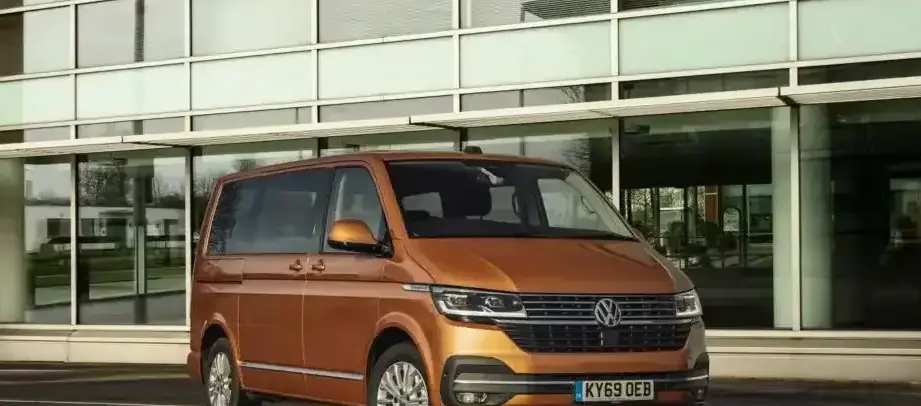
The Volkswagen Caravelle (T6.1), specifically the 2.0 TDI variant producing 110 horsepower, represents a mid-range offering within the updated sixth generation of Volkswagen’s popular multi-purpose vehicle (MPV). Introduced with the T6.1 facelift in 2019, production of this configuration ran from 2020 to 2023. Positioned as a versatile people-carrier and commercial vehicle, the Caravelle T6.1 aimed to balance practicality, fuel efficiency, and a reasonable price point, primarily targeting families and businesses in the European market. This model builds upon the foundation of the T6 platform, incorporating technological updates and styling refinements.
Technical Specifications
| Brand | Volkswagen |
| Model | Caravelle |
| Generation | Caravelle (T6.1, facelift 2019) |
| Type (Engine) | 2.0 TDI (110 Hp) |
| Start of production | 2020 |
| End of production | 2023 |
| Powertrain Architecture | Internal Combustion engine |
| Body type | Van |
| Seats | 4-9 |
| Doors | 4-5 |
| Fuel consumption at Low speed (WLTP) | 7.5-8.4 l/100 km (31.4 – 28 US mpg, 37.7 – 33.6 UK mpg, 13.3 – 11.9 km/l) |
| Fuel consumption at Medium speed (WLTP) | 6.3-7.4 l/100 km (37.3 – 31.8 US mpg, 44.8 – 38.2 UK mpg, 15.9 – 13.5 km/l) |
| Fuel consumption at high speed (WLTP) | 6-6.7 l/100 km (39.2 – 35.1 US mpg, 47.1 – 42.2 UK mpg, 16.7 – 14.9 km/l) |
| Fuel consumption at very high speed (WLTP) | 7.7-8.6 l/100 km (30.5 – 27.4 US mpg, 36.7 – 32.8 UK mpg, 13 – 11.6 km/l) |
| Combined fuel consumption (WLTP) | 6.9-7.8 l/100 km (34.1 – 30.2 US mpg, 40.9 – 36.2 UK mpg, 14.5 – 12.8 km/l) |
| CO2 emissions (WLTP) | 180-204 g/km |
| Fuel consumption (economy) – urban (NEDC, WLTP equivalent) | 7.1-8 l/100 km (33.1 – 29.4 US mpg, 39.8 – 35.3 UK mpg, 14.1 – 12.5 km/l) |
| Fuel consumption (economy) – extra urban (NEDC, WLTP equivalent) | 5.2-5.6 l/100 km (45.2 – 42 US mpg, 54.3 – 50.4 UK mpg, 19.2 – 17.9 km/l) |
| Fuel consumption (economy) – combined (NEDC, WLTP equivalent) | 5.9-6.5 l/100 km (39.9 – 36.2 US mpg, 47.9 – 43.5 UK mpg, 16.9 – 15.4 km/l) |
| CO2 emissions (NEDC, WLTP equivalent) | 155-170 g/km |
| Fuel Type | Diesel |
| Acceleration 0 – 100 km/h | 15.5 sec |
| Acceleration 0 – 62 mph | 15.5 sec |
| Acceleration 0 – 60 mph | 14.7 sec |
| Maximum speed | 164 km/h (101.9 mph) |
| Emission standard | Euro 6d-ISC-FCM |
| Weight-to-power ratio | 18 kg/Hp, 55.4 Hp/tonne |
| Weight-to-torque ratio | 7.9 kg/Nm, 126 Nm/tonne |
| Power | 110 Hp @ 3100-4250 rpm |
| Power per litre | 55.9 Hp/l |
| Torque | 250 Nm @ 1350-3100 rpm (184.39 lb.-ft. @ 1350-3100 rpm) |
| Engine layout | Front, Transverse |
| Engine Model/Code | EA288MAR / DNAB |
| Engine displacement | 1968 cm3 (120.09 cu. in.) |
| Number of cylinders | 4 |
| Engine configuration | Inline |
| Cylinder Bore | 81 mm (3.19 in.) |
| Piston Stroke | 95.5 mm (3.76 in.) |
| Compression ratio | 15.5:1 |
| Number of valves per cylinder | 4 |
| Fuel injection system | Diesel Commonrail |
| Engine aspiration | Turbocharger, Intercooler |
| Valvetrain | DOHC |
| Engine oil capacity | 7.4 l (7.82 US qt | 6.51 UK qt) |
| Kerb Weight | 1984-2333 kg (4373.97 – 5143.38 lbs.) |
| Max. weight | 3080-3200 kg (6790.24 – 7054.79 lbs.) |
| Max load | 867-1096 kg (1911.41 – 2416.27 lbs.) |
| Trunk (boot) space – maximum | 5800 l (204.83 cu. ft.) |
| Fuel tank capacity | 70 l (18.49 US gal | 15.4 UK gal) |
| AdBlue tank | 22 l (5.81 US gal | 4.84 UK gal) |
| Max. roof load | 100 kg (220.46 lbs.) |
| Permitted trailer load with brakes (12%) | 1850 kg (4078.55 lbs.) |
| Permitted trailer load without brakes | 750 kg (1653.47 lbs.) |
| Permitted towbar download | 100 kg (220.46 lbs.) |
| Length | 4904 mm (193.07 in.) |
| Width | 1904 mm (74.96 in.) |
| Width including mirrors | 2297 mm (90.43 in.) |
| Height | 1970-1990 mm (77.56 – 78.35 in.) |
| Wheelbase | 3000 mm (118.11 in.) |
| Front overhang | 906 mm (35.67 in.) |
| Rear overhang | 998 mm (39.29 in.) |
| Ride height (ground clearance) | 193-201 mm (7.6 – 7.91 in.) |
| Minimum turning circle (turning diameter) | 11.9 m (39.04 ft.) |
| Front suspension | Independent, type McPherson with coil spring and anti-roll bar |
| Rear suspension | Independent coil spring, Wishbone, Transverse stabilizer |
| Front brakes | Ventilated discs, 308×29.5 mm |
| Rear brakes | Ventilated discs, 294×22 mm |
| Drive wheel | Front wheel drive |
| Number of gears and type of gearbox | 5 gears, manual transmission |
Powertrain & Engine Architecture
The Caravelle 2.0 TDI (110 Hp) is powered by the EA288MAR engine, specifically the DNAB code variant. This is a 1968cc, four-cylinder diesel engine featuring common rail direct injection and a turbocharger with intercooling. The engine produces 110 horsepower at 3100-4250 rpm and 250 Nm (184 lb-ft) of torque between 1350-3100 rpm. The engine utilizes a double overhead camshaft (DOHC) valvetrain with four valves per cylinder. The fuel injection system is a modern common rail system, allowing for precise fuel delivery and optimized combustion. The engine also incorporates a diesel particulate filter (DPF) and a Start/Stop system to reduce emissions. The 5-speed manual transmission was the standard offering, designed to balance fuel economy and drivability.
Driving Characteristics
The 110 hp 2.0 TDI, paired with the 5-speed manual gearbox, delivers adequate, but not exhilarating, performance. Acceleration from 0-100 km/h (0-62 mph) takes approximately 15.5 seconds. The engine’s torque is readily available from low RPMs, making it suitable for carrying passengers and cargo. However, overtaking maneuvers require careful planning. Compared to higher-output TDI variants (like the 150 or 190 hp versions), this engine prioritizes fuel efficiency over outright speed. The gear ratios are tuned for economy, meaning the engine can feel strained at higher speeds or when fully loaded. The manual transmission provides more driver control than an automatic, but requires more engagement.
Equipment & Trim Levels
The Caravelle 2.0 TDI (110 Hp) typically came equipped with a reasonable level of standard features. These included air conditioning, power windows, central locking, and a basic audio system. Interior upholstery was generally cloth, with options for upgraded materials. The dashboard layout was functional and straightforward, prioritizing usability. Optional extras included features like parking sensors, a touchscreen infotainment system with navigation, cruise control, and upgraded seating configurations. The Caravelle offered a high degree of customization, allowing buyers to tailor the vehicle to their specific needs.
Chassis & Braking
The Caravelle T6.1 utilizes an independent suspension setup, with McPherson struts at the front and a multi-link arrangement at the rear. This provides a comfortable ride, even when the vehicle is loaded. The front brakes are ventilated discs, while the rear brakes are also ventilated discs. Anti-lock Braking System (ABS) is standard. Stabilizer bars are fitted to both the front and rear axles to reduce body roll during cornering. The suspension is tuned for a balance between comfort and handling, prioritizing stability over sporty dynamics.
Market Reception & Comparison
The Caravelle 2.0 TDI (110 Hp) was generally well-received as a practical and economical MPV. Critics praised its fuel efficiency and spacious interior. However, some noted that the engine lacked the power of higher-output variants, particularly when fully loaded or traveling on hilly terrain. Compared to the more powerful TDI models, this version offered a lower purchase price and potentially lower running costs. The 110 hp version appealed to buyers who prioritized economy and practicality over performance.
Legacy
The EA288 engine family, including the DNAB code variant, has proven to be relatively reliable, although DPF issues can occur with infrequent long-distance driving. The Caravelle T6.1, in general, has maintained a good reputation for durability. On the used car market, the 2.0 TDI (110 Hp) represents a more affordable entry point into Caravelle ownership. Its fuel efficiency and practicality continue to make it a popular choice for families and businesses seeking a versatile and reliable MPV.