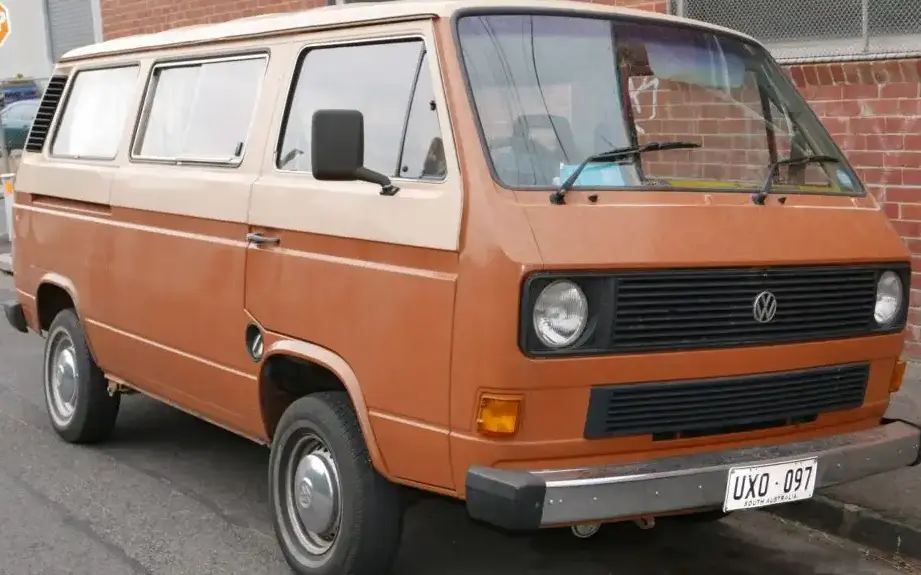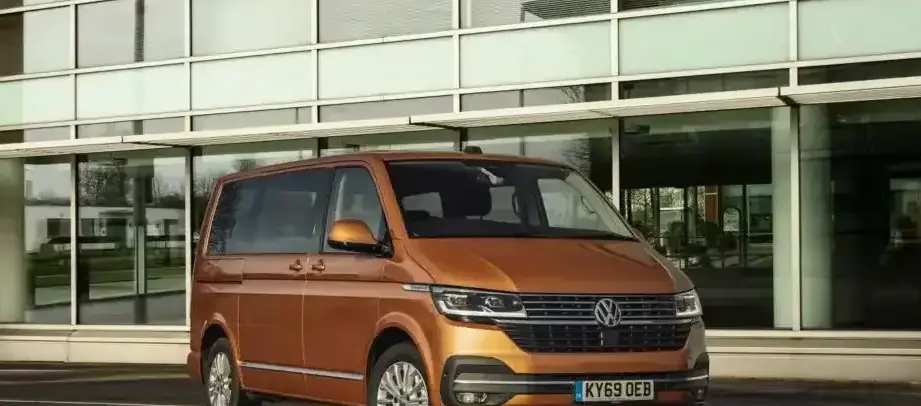
The Volkswagen Caravelle (T6.1), specifically the 2.0 TDI 150 hp variant produced from 2019 to 2020, represents a mid-cycle refresh of the highly successful T6 Transporter platform. This facelift, designated T6.1, brought updated styling, improved technology, and refined engine options to Volkswagen’s popular passenger and commercial vehicle. The Caravelle, positioned as a more comfort-oriented and feature-rich version of the Transporter, served as a versatile people-carrier and family vehicle, particularly popular in Europe and other markets where multi-purpose vehicles (MPVs) remain in high demand. This specific 2.0 TDI engine and configuration occupied a central position in the Caravelle lineup, offering a balance between fuel efficiency, performance, and affordability.
Technical Specifications
| Brand | Volkswagen |
| Model | Caravelle |
| Generation | Caravelle (T6.1, facelift 2019) |
| Type (Engine) | 2.0 TDI (150 Hp) |
| Start of production | 2019 |
| End of production | 2020 |
| Powertrain Architecture | Internal Combustion engine |
| Body type | Van |
| Seats | 4-9 |
| Doors | 4-5 |
| Fuel consumption (urban) | 7.6-8.2 l/100 km (30.9 – 28.7 US mpg) |
| Fuel consumption (extra urban) | 5.6-6.5 l/100 km (42 – 36.2 US mpg) |
| Fuel consumption (combined) | 6.3-7.2 l/100 km (37.3 – 32.7 US mpg) |
| CO2 emissions | 167-189 g/km |
| Fuel Type | Diesel |
| Acceleration 0 – 100 km/h | 11.9 sec |
| Acceleration 0 – 62 mph | 11.9 sec |
| Acceleration 0 – 60 mph | 11.3 sec |
| Maximum speed | 183 km/h (113.71 mph) |
| Emission standard | Euro 6d TEMP-EVAP-ISC |
| Weight-to-power ratio | 13.3 kg/Hp |
| Weight-to-torque ratio | 5.9 kg/Nm |
| Power | 150 Hp @ 3250-3750 rpm |
| Torque | 340 Nm @ 1500-3000 rpm (250.77 lb.-ft.) |
| Engine layout | Front, Transverse |
| Engine Model/Code | EA288 / CXFA, CXHA |
| Engine displacement | 1968 cm3 (120.09 cu. in.) |
| Number of cylinders | 4 |
| Engine configuration | Inline |
| Cylinder Bore | 81 mm (3.19 in.) |
| Piston Stroke | 95.5 mm (3.76 in.) |
| Compression ratio | 15.5:1 |
| Number of valves per cylinder | 4 |
| Fuel injection system | Diesel Commonrail |
| Engine aspiration | Turbocharger, Intercooler |
| Valvetrain | DOHC |
| Engine oil capacity | 7.4 l (7.82 US qt | 6.51 UK qt) |
| Kerb Weight | 1990-2338 kg (4387.2 – 5154.41 lbs.) |
| Max. weight | 3080-3200 kg (6790.24 – 7054.79 lbs.) |
| Max load | 862-1090 kg (1900.38 – 2403.04 lbs.) |
| Trunk (boot) space – maximum | 5800 l (204.83 cu. ft.) |
| Fuel tank capacity | 70 l (18.49 US gal | 15.4 UK gal) |
| AdBlue tank | 13 l (3.43 US gal | 2.86 UK gal) |
| Max. roof load | 100 kg (220.46 lbs.) |
| Permitted trailer load with brakes (12%) | 2500 kg (5511.56 lbs.) |
| Permitted trailer load without brakes | 750 kg (1653.47 lbs.) |
| Permitted towbar download | 100 kg (220.46 lbs.) |
| Length | 4904 mm (193.07 in.) |
| Width | 1904 mm (74.96 in.) |
| Width including mirrors | 2297 mm (90.43 in.) |
| Height | 1970-1990 mm (77.56 – 78.35 in.) |
| Wheelbase | 3000 mm (118.11 in.) |
| Front overhang | 906 mm (35.67 in.) |
| Rear overhang | 998 mm (39.29 in.) |
| Ride height (ground clearance) | 193-201 mm (7.6 – 7.91 in.) |
| Minimum turning circle | 11.9 m (39.04 ft.) |
| Drivetrain Architecture | Front wheel drive |
| Number of gears and type of gearbox | 6 gears, manual transmission |
| Front suspension | Independent, type McPherson with coil spring and anti-roll bar |
| Rear suspension | Independent coil spring, Wishbone, Transverse stabilizer |
| Front brakes | Ventilated discs, 308×29.5 mm |
| Rear brakes | Ventilated discs, 294×22 mm |
| Tires size | 205/65 R16; 215/65 R16; 215/60 R17; 235/55 R17; 255/45 R18 |
| Wheel rims size | 6.5J x 16; 7J x 17; 8J x 18 |
INTRODUCTION
The Volkswagen Caravelle T6.1 2.0 TDI 150 hp, launched in 2019, is a front-wheel-drive MPV built on the updated T6.1 platform. This iteration of the Caravelle aimed to refine the already popular T6, offering a more modern aesthetic, enhanced technology, and improved efficiency. Positioned as a versatile vehicle for families, businesses, and shuttle services, the Caravelle T6.1 provided a comfortable and practical alternative to traditional SUVs. The 2.0 TDI 150 hp engine represented a sweet spot in the range, balancing performance with fuel economy, making it a popular choice for those prioritizing practicality and running costs.
Powertrain & Engine Architecture
At the heart of the Caravelle T6.1 2.0 TDI is the EA288 series four-cylinder diesel engine. Specifically, the CXFA or CXHA engine code identifies this 1968cc unit. This engine utilizes a common rail direct injection system, delivering fuel at extremely high pressure for optimized combustion. The engine features a single turbocharger with an intercooler, boosting power output and improving torque delivery. The 150 hp peak power is achieved between 3250 and 3750 rpm, while the 340 Nm (250.77 lb-ft) of torque is available from 1500 to 3000 rpm. The engine employs a double overhead camshaft (DOHC) valvetrain with four valves per cylinder, enhancing breathing and contributing to its efficiency. The 6-speed manual transmission was standard, providing smooth gear changes and contributing to the vehicle’s overall drivability.
Driving Characteristics
The 2.0 TDI 150 hp Caravelle T6.1 offers a composed and comfortable driving experience. While not overtly sporty, the engine provides sufficient power for everyday driving and highway cruising. Acceleration from 0-60 mph takes around 11.3 seconds, and the top speed is 183 km/h (113.71 mph). The relatively high torque output at low engine speeds makes it easy to navigate urban environments and overtake slower traffic. Compared to higher-output TDI variants (like the 199 hp BiTurbo), the 150 hp version feels less strained during acceleration, but it also lacks the same level of outright performance. The 6-speed manual transmission is well-matched to the engine, offering precise shifts and a reasonable spread of gears. The front-wheel-drive configuration provides good traction in most conditions, although it can struggle slightly on slippery surfaces.
Equipment & Trim Levels
The Caravelle T6.1 2.0 TDI 150 hp typically came equipped with a generous level of standard features. These included air conditioning, power windows, central locking, and a basic infotainment system with Bluetooth connectivity. Higher trim levels offered upgrades such as a touchscreen infotainment system with navigation, parking sensors, cruise control, and upgraded interior upholstery. Interior features often included comfortable seating for up to nine passengers, depending on the configuration. Optional extras included features like a panoramic sunroof, leather seats, and advanced driver-assistance systems.
Chassis & Braking
The Caravelle T6.1 utilizes an independent suspension setup on both the front and rear axles. The front suspension employs a McPherson strut design with coil springs and an anti-roll bar, while the rear features an independent coil spring and wishbone setup with a transverse stabilizer. This suspension configuration provides a comfortable ride quality and good handling characteristics. The braking system consists of ventilated discs on all four wheels, providing ample stopping power. Anti-lock braking system (ABS) is standard, enhancing safety and stability during emergency braking situations.
Market Reception & Comparison
The Caravelle T6.1 2.0 TDI 150 hp was generally well-received by automotive critics. It was praised for its practicality, comfort, and fuel efficiency. The 2.0 TDI engine was considered a good compromise between performance and economy, making it a popular choice for buyers. Compared to the more powerful TDI variants, the 150 hp version offered lower running costs and a slightly more relaxed driving experience. Fuel economy figures typically ranged from 37.3 to 32.7 US mpg, making it an economical option for long-distance travel. Reliability was generally good, although some owners reported minor issues with the diesel particulate filter (DPF).
Legacy
The Volkswagen Caravelle T6.1 2.0 TDI 150 hp remains a popular choice in the used car market. Its reputation for reliability, practicality, and comfort has ensured strong demand. The EA288 engine, while not without its potential issues (such as DPF problems), is generally considered a robust and durable unit. Well-maintained examples of this Caravelle variant continue to offer a versatile and economical transportation solution for families and businesses alike. Its enduring appeal is a testament to Volkswagen’s commitment to building practical and well-engineered vehicles.