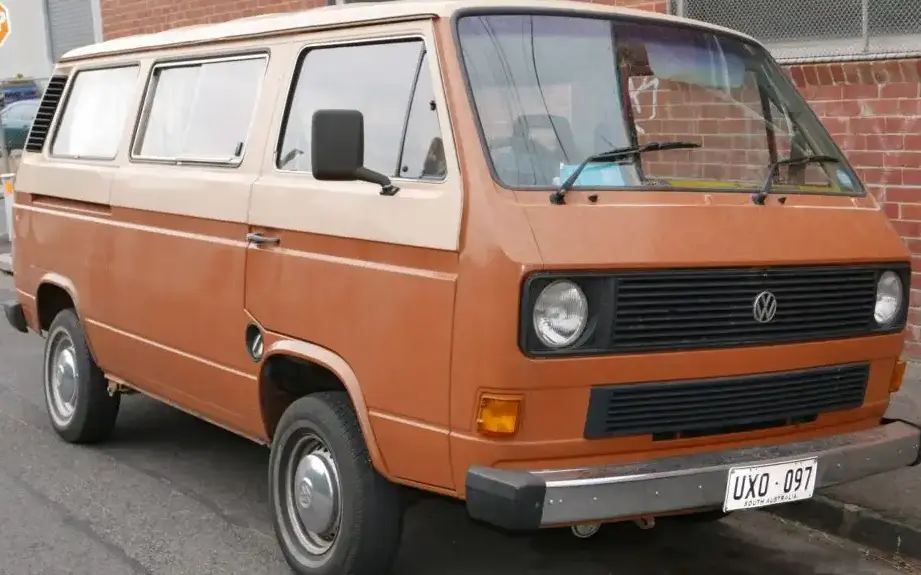
The Volkswagen Caravelle (T6.1), specifically the long wheelbase variant equipped with the 2.0 TDI 110 horsepower engine, represents a mid-cycle refresh of the popular T6 Transporter platform. Introduced in 2019 and continuing through 2020, this version of the Caravelle aimed to balance practicality, fuel efficiency, and affordability within the broader Volkswagen commercial vehicle lineup. Positioned as an entry-to-mid-range option, it catered to families and businesses needing a versatile passenger vehicle capable of both daily commuting and longer journeys. The T6.1 facelift brought updated styling, improved technology, and enhanced emissions compliance compared to the earlier T6 models.
Technical Specifications
| Brand | Volkswagen |
| Model | Caravelle |
| Generation | Caravelle (T6.1, facelift 2019) Long |
| Type (Engine) | 2.0 TDI (110 Hp) |
| Start of production | 2019 |
| End of production | 2020 |
| Powertrain Architecture | Internal Combustion engine |
| Body type | Van |
| Seats | 4-9 |
| Doors | 4-5 |
| Fuel consumption (urban) | 7.4-8 l/100 km (31.8 – 29.4 US mpg) |
| Fuel consumption (extra urban) | 5.7-6.5 l/100 km (41.3 – 36.2 US mpg) |
| Fuel consumption (combined) | 6.3-7.1 l/100 km (37.3 – 33.1 US mpg) |
| CO2 emissions | 167-187 g/km |
| Fuel Type | Diesel |
| Acceleration 0 – 100 km/h | 15.5 sec |
| Acceleration 0 – 62 mph | 15.5 sec |
| Acceleration 0 – 60 mph | 14.7 sec |
| Maximum speed | 164 km/h (101.9 mph) |
| Emission standard | Euro 6d TEMP-EVAP-ISC |
| Weight-to-power ratio | 18.6 kg/Hp |
| Weight-to-torque ratio | 8.2 kg/Nm |
| Power | 110 Hp @ 3200-4250 rpm |
| Torque | 250 Nm @ 1250-3100 rpm (184.39 lb.-ft. @ 1250-3100 rpm) |
| Engine layout | Front, Transverse |
| Engine Model/Code | EA288 / CXHC |
| Engine displacement | 1968 cm3 (120.09 cu. in.) |
| Number of cylinders | 4 |
| Engine configuration | Inline |
| Cylinder Bore | 81 mm (3.19 in.) |
| Piston Stroke | 95.5 mm (3.76 in.) |
| Compression ratio | 15.5:1 |
| Number of valves per cylinder | 4 |
| Fuel injection system | Diesel Commonrail |
| Engine aspiration | Turbocharger, Intercooler |
| Valvetrain | DOHC |
| Engine oil capacity | 7.4 l (7.82 US qt | 6.51 UK qt) |
| Kerb Weight | 2042-2361 kg (4501.84 – 5205.11 lbs.) |
| Max. weight | 3080-3200 kg (6790.24 – 7054.79 lbs.) |
| Max load | 839-1038 kg (1849.68 – 2288.4 lbs.) |
| Trunk (boot) space – maximum | 6700 l (236.61 cu. ft.) |
| Fuel tank capacity | 70 l (18.49 US gal | 15.4 UK gal) |
| AdBlue tank | 13 l (3.43 US gal | 2.86 UK gal) |
| Max. roof load | 100 kg (220.46 lbs.) |
| Permitted trailer load with brakes (12%) | 2200 kg (4850.17 lbs.) |
| Permitted trailer load without brakes | 750 kg (1653.47 lbs.) |
| Permitted towbar download | 100 kg (220.46 lbs.) |
| Length | 5304 mm (208.82 in.) |
| Width | 1904 mm (74.96 in.) |
| Width including mirrors | 2297 mm (90.43 in.) |
| Height | 1990 mm (78.35 in.) |
| Wheelbase | 3400 mm (133.86 in.) |
| Front overhang | 906 mm (35.67 in.) |
| Rear overhang | 998 mm (39.29 in.) |
| Ride height (ground clearance) | 202 mm (7.95 in.) |
| Minimum turning circle | 13.2 m (43.31 ft.) |
| Front suspension | Independent, McPherson with coil spring and anti-roll bar |
| Rear suspension | Independent coil spring, Wishbone, Transverse stabilizer |
| Front brakes | Ventilated discs, 308×29.5 mm |
| Rear brakes | Ventilated discs, 294×22 mm |
| Drive wheel | Front wheel drive |
| Number of gears | 5 |
| Gearbox type | Manual transmission |
| Tires size | 205/65 R16; 215/65 R16 |
| Wheel rims size | 6.5J x 16 |
Powertrain & Engine Architecture
The Caravelle 2.0 TDI 110 utilizes the Volkswagen Group’s EA288 engine family. Specifically, the CXHC engine code designates this particular iteration. This is a common rail direct injection diesel engine, benefitting from a turbocharger and intercooler to enhance power and efficiency. The 1968cc inline-four cylinder engine produces 110 horsepower at 3200-4250 rpm and 250 Nm (184 lb-ft) of torque between 1250-3100 rpm. The engine features a DOHC (Dual Overhead Camshaft) valvetrain with four valves per cylinder. The 5-speed manual transmission was the standard offering for this variant, providing a balance between fuel economy and usability. The engine incorporates a particulate filter and Start & Stop system to meet Euro 6d emissions standards.
Driving Characteristics
The 110 horsepower output, coupled with the 5-speed manual gearbox, results in a driving experience focused on fuel economy and practicality rather than outright performance. Acceleration from 0-60 mph takes around 14.7 seconds, and top speed is limited to 101.9 mph. The engine delivers usable torque at low revs, making it suitable for everyday driving and carrying loads. However, overtaking maneuvers require planning, and the engine can feel strained when fully loaded or climbing steep hills. Compared to higher-powered TDI variants (like the 150 or 190 hp versions), this engine prioritizes efficiency over speed. The gear ratios are tuned for economy, meaning the engine operates at relatively lower RPMs at highway speeds.
Equipment & Trim Levels
The Caravelle 2.0 TDI 110 typically came with a reasonable level of standard equipment. This included features like air conditioning, power windows, central locking, and a basic audio system. Interior upholstery was generally cloth, with durable plastics used throughout the cabin. Optional extras included features like alloy wheels, parking sensors, a touchscreen infotainment system with navigation, and upgraded seating configurations. The Caravelle offered flexible seating arrangements, accommodating between four and nine passengers depending on the configuration chosen.
Chassis & Braking
The T6.1 Caravelle utilizes an independent suspension setup on both the front and rear axles. The front employs a McPherson strut design with coil springs and an anti-roll bar, while the rear features an independent coil spring and wishbone setup with a transverse stabilizer. This configuration provides a comfortable ride quality, even when the vehicle is loaded. Braking duties are handled by ventilated discs on all four wheels, providing adequate stopping power. ABS (Anti-lock Braking System) is standard. The steering is electrically assisted, offering a light and precise feel.
Market Reception & Comparison
The Caravelle 2.0 TDI 110 was generally well-received as a practical and economical people carrier. Critics praised its fuel efficiency and versatility, but noted its relatively modest performance. Compared to the more powerful TDI variants, this version offered a lower purchase price and reduced running costs. However, it lacked the punch needed for frequent highway driving or towing heavy loads. The 1.8L petrol versions were less common and offered less torque, making the TDI a more popular choice for those needing to carry passengers or cargo.
Legacy
The EA288 engine family, including the CXHC code, has proven to be relatively reliable, although regular maintenance is crucial. Common issues include diesel particulate filter (DPF) clogging and potential problems with the dual-mass flywheel. In the used car market, the Caravelle 2.0 TDI 110 represents a good value proposition for buyers seeking a spacious and economical people carrier. Its simplicity and relatively low power output contribute to its longevity, making it a viable option for those prioritizing reliability and affordability over performance.