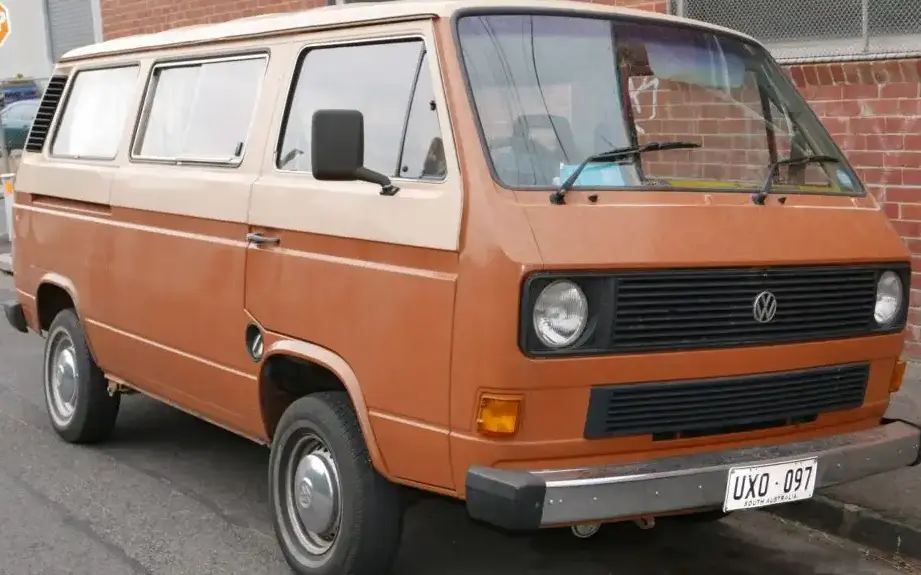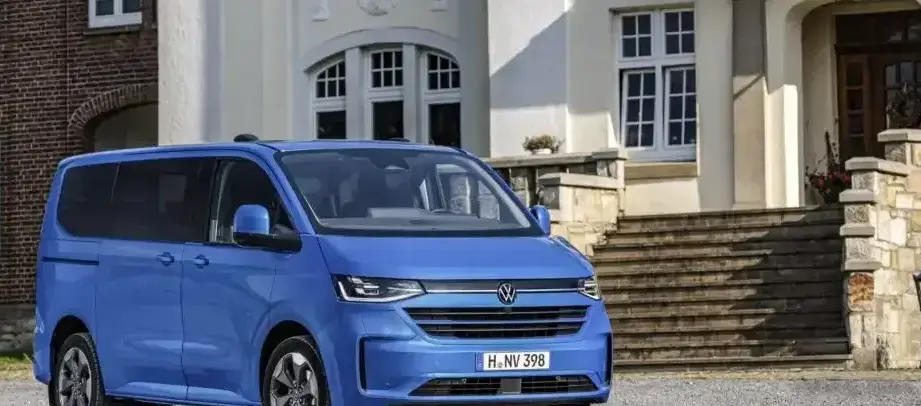
The Volkswagen Caravelle (T7) 2.0 TDI 170 hp Automatic represents the latest iteration of Volkswagen’s long-running passenger van, launched in August 2024. Positioned as a mid-range offering within the T7 Caravelle lineup, this variant balances fuel efficiency, practicality, and a comfortable driving experience. The T7 generation builds upon the foundation of the T6.1, offering updated technology, improved safety features, and a refined interior. It primarily serves the European market, catering to families, shuttle services, and those requiring a versatile multi-passenger vehicle. While the Caravelle has historically been sold in other markets, the T7’s initial rollout has focused on Europe and select regions.
Technical Specifications
| Brand | Volkswagen |
| Model | Caravelle |
| Generation | Caravelle (T7) |
| Type (Engine) | 2.0 TDI (170 Hp) Automatic |
| Start of production | August, 2024 |
| Powertrain Architecture | Internal Combustion engine |
| Body type | Van |
| Seats | 8-9 |
| Doors | 4-5 |
| Combined fuel consumption (WLTP) | 7.9-8 l/100 km (29.8 – 29.4 US mpg, 35.8 – 35.3 UK mpg, 12.7 – 12.5 km/l) |
| CO2 emissions (WLTP) | 206-210 g/km |
| Fuel Type | Diesel |
| Acceleration 0 – 100 km/h | 14 sec |
| Acceleration 0 – 62 mph | 14 sec |
| Acceleration 0 – 60 mph | 13.3 sec |
| Maximum speed | 175 km/h (108.74 mph) |
| Emission standard | Euro 6e |
| Weight-to-power ratio | 12.7 kg/Hp, 78.9 Hp/tonne |
| Weight-to-torque ratio | 5.5 kg/Nm, 181 Nm/tonne |
| Power | 170 Hp |
| Power per litre | 85.2 Hp/l |
| Torque | 390 Nm (287.65 lb.-ft.) |
| Engine layout | Front, Transverse |
| Engine Model/Code | Panther |
| Engine displacement | 1996 cm3 (121.8 cu. in.) |
| Number of cylinders | 4 |
| Engine configuration | Inline |
| Cylinder Bore | 84.01 mm (3.31 in.) |
| Piston Stroke | 90.03 mm (3.54 in.) |
| Number of valves per cylinder | 4 |
| Fuel injection system | Diesel Commonrail |
| Engine aspiration | Turbocharger, Intercooler |
| Valvetrain | DOHC |
| Engine systems | Start & Stop System, Particulate filter |
| Kerb Weight | 2155-2215 kg (4750.96 – 4883.24 lbs.) |
| Max. weight | 3150-3175 kg (6944.56 – 6999.68 lbs.) |
| Max load | 960-995 kg (2116.44 – 2193.6 lbs.) |
| Fuel tank capacity | 55 l (14.53 US gal | 12.1 UK gal) |
| AdBlue tank | 20 l (5.28 US gal | 4.4 UK gal) |
| Max. roof load | 170 kg (374.79 lbs.) |
| Permitted trailer load with brakes (12%) | 2500 kg (5511.56 lbs.) |
| Permitted trailer load without brakes | 750 kg (1653.47 lbs.) |
| Permitted towbar download | 100 kg (220.46 lbs.) |
| Length | 5050 mm (198.82 in.) |
| Width | 2032 mm (80 in.) |
| Width including mirrors | 2275 mm (89.57 in.) |
| Height | 1980 mm (77.95 in.) |
| Wheelbase | 3100 mm (122.05 in.) |
| Front overhang | 958 mm (37.72 in.) |
| Rear overhang | 992 mm (39.06 in.) |
| Minimum turning circle | 12.5 m (41.01 ft.) |
| Approach angle | 16.5° |
| Departure angle | 16.4° |
| Ramp-over angle | 13.1° |
| Drivetrain Architecture | Front wheel drive |
| Number of gears | 8 |
| Gearbox type | Automatic transmission |
Powertrain & Engine Architecture
The Caravelle T7 2.0 TDI utilizes the Panther engine, a four-cylinder, inline diesel engine displacing 1996 cc. This engine is part of Volkswagen’s EA288 family, known for its robust design and efficiency. The 170 hp output is achieved through a turbocharger with an intercooler, optimizing air intake for increased power and torque. The engine employs a Diesel Commonrail fuel injection system, delivering precise fuel metering for improved combustion and reduced emissions. The double overhead camshaft (DOHC) valvetrain, with four valves per cylinder, further enhances engine breathing and performance. The eight-speed automatic transmission, a crucial component of this variant, is designed for smooth shifting and optimized fuel economy. It features a torque converter and electronic control for precise gear selection based on driving conditions. The inclusion of a Start & Stop system and a particulate filter underscores Volkswagen’s commitment to reducing environmental impact, meeting stringent Euro 6e emission standards.
Driving Characteristics
The 170 hp 2.0 TDI Automatic configuration in the Caravelle T7 delivers a comfortable and practical driving experience, prioritizing usability over outright performance. Acceleration from 0-60 mph takes approximately 13.3 seconds, and 0-100 km/h in 14 seconds, making it suitable for everyday driving and highway cruising. The eight-speed automatic transmission is well-tuned, providing smooth gear changes and keeping the engine within its optimal power band. Compared to higher-output TDI variants (like the 200 hp version), this setup offers less aggressive acceleration, but it compensates with improved fuel economy. The front-wheel-drive configuration provides adequate traction in most conditions, although it may struggle in slippery environments compared to all-wheel-drive options available on other T7 models. The gear ratios are optimized for fuel efficiency, with taller gearing in higher gears for relaxed highway driving. The torque output of 390 Nm (287.65 lb.-ft.) provides sufficient pulling power for carrying passengers and luggage, making it ideal for family trips and shuttle services.
Equipment & Trim Levels
The 2.0 TDI 170 hp Automatic Caravelle typically comes standard with a comprehensive suite of features. Interior upholstery generally consists of durable cloth seating, although leather options are available as upgrades. The dashboard features a modern design with a digital instrument cluster and a touchscreen infotainment system. Standard equipment includes air conditioning, power windows, power mirrors, and a multi-function steering wheel. Safety features such as ABS (Anti-lock Braking System), electronic stability control, and multiple airbags are standard. Optional extras include navigation system, parking sensors, adaptive cruise control, heated seats, and upgraded audio systems. Trim levels above the base model often add features like alloy wheels, chrome exterior trim, and more luxurious interior appointments.
Chassis & Braking
The Caravelle T7’s chassis is designed to provide a comfortable ride and stable handling. The suspension system utilizes independent suspension at the front and a semi-independent suspension at the rear. The specific components vary depending on the load rating and optional equipment. Braking is typically accomplished with disc brakes on the front wheels and drum brakes on the rear wheels, although some higher-spec models may feature disc brakes all around. The electric power steering provides precise and responsive steering feel. Stabilizer bars are fitted to both the front and rear axles to reduce body roll during cornering. The T7’s suspension is tuned to prioritize comfort, absorbing bumps and irregularities in the road surface effectively.
Market Reception & Comparison
The Volkswagen Caravelle T7 2.0 TDI 170 hp Automatic has been generally well-received by automotive critics for its practicality, comfort, and fuel efficiency. Reviewers have praised the refined interior, smooth ride, and user-friendly technology. Compared to the higher-output TDI variants, this model offers a more affordable entry point into the Caravelle range, making it accessible to a wider range of buyers. Fuel economy is a key strength, with combined consumption figures ranging from 7.9-8 l/100 km. Reliability is expected to be good, based on Volkswagen’s reputation and the proven technology used in the EA288 engine family. However, some critics have noted that the 170 hp engine can feel underpowered when the vehicle is fully loaded with passengers and luggage.
Legacy
The EA288 engine family, including the Panther 2.0 TDI, has a strong track record for durability and longevity. With proper maintenance, this powertrain is expected to provide reliable service for many years. The eight-speed automatic transmission is also known for its robustness. In the used car market, the Caravelle T7 2.0 TDI Automatic is likely to hold its value well, due to its practicality, versatility, and reputation for reliability. The T7 represents a significant step forward for the Caravelle, offering a more refined and technologically advanced package than its predecessors, solidifying its position as a leading passenger van in the European market.