Technical Specifications
| Brand | Volkswagen |
| Model | Corrado |
| Generation | Corrado (53I, facelift 1991) |
| Type (Engine) | 1.8 G60 (160 Hp) |
| Start of production | 1991 |
| End of production | 1993 |
| Powertrain Architecture | Internal Combustion engine |
| Body type | Coupe |
| Seats | 4 |
| Doors | 2 |
| Fuel consumption (urban) | 12.4 l/100 km (19 US mpg, 22.8 UK mpg, 8.1 km/l) |
| Fuel consumption (extra urban) | 8.4 l/100 km (28 US mpg, 33.6 UK mpg, 11.9 km/l) |
| Fuel consumption (combined) | 10.2 l/100 km (23.1 US mpg, 27.7 UK mpg, 9.8 km/l) |
| Fuel Type | Petrol (Gasoline) |
| Acceleration 0 – 100 km/h | 8.5 sec |
| Acceleration 0 – 62 mph | 8.5 sec |
| Acceleration 0 – 60 mph | 8.1 sec |
| Maximum speed | 225 km/h (139.81 mph) |
| Weight-to-power ratio | 7.6 kg/Hp, 131.7 Hp/tonne |
| Weight-to-torque ratio | 5.5 kg/Nm, 181.1 Nm/tonne |
| Power | 160 Hp @ 5600 rpm |
| Power per litre | 89.8 Hp/l |
| Torque | 220 Nm @ 3800 rpm (162.26 lb.-ft. @ 3800 rpm) |
| Engine layout | Front, Transverse |
| Engine Model/Code | PG |
| Engine displacement | 1781 cm3 (108.68 cu. in.) |
| Number of cylinders | 4 |
| Engine configuration | Inline |
| Cylinder Bore | 81 mm (3.19 in.) |
| Piston Stroke | 86.4 mm (3.4 in.) |
| Compression ratio | 10.8:1 |
| Number of valves per cylinder | 2 |
| Fuel injection system | Multi-port manifold injection |
| Engine aspiration | Supercharger |
| Engine oil capacity | 4 l (4.23 US qt | 3.52 UK qt) |
| Coolant capacity | 5.5 l (5.81 US qt | 4.84 UK qt) |
| Kerb Weight | 1215 kg (2678.62 lbs.) |
| Max. weight | 1525 kg (3362.05 lbs.) |
| Max load | 310 kg (683.43 lbs.) |
| Trunk (boot) space – minimum | 235 l (8.3 cu. ft.) |
| Trunk (boot) space – maximum | 810 l (28.6 cu. ft.) |
| Fuel tank capacity | 55 l (14.53 US gal | 12.1 UK gal) |
| Length | 4050 mm (159.45 in.) |
| Width | 1690 mm (66.54 in.) |
| Height | 1310 mm (51.57 in.) |
| Wheelbase | 2470 mm (97.24 in.) |
| Front track | 1435 mm (56.5 in.) |
| Rear track | 1430 mm (56.3 in.) |
| Minimum turning circle | 10.5 m (34.45 ft.) |
| Drivetrain Architecture | Front wheel drive |
| Number of gears | 5 gears, manual transmission |
| Front suspension | Wishbone |
| Rear suspension | Suspension with traction connecting levers |
| Front brakes | Ventilated discs |
| Rear brakes | Disc |
| Assisting systems | ABS (Anti-lock braking system) |
| Steering type | Steering rack and pinion |
| Power steering | Hydraulic |
| Tires size | 185/55 R15 |
| Wheel rims size | 6.5J x 15 |
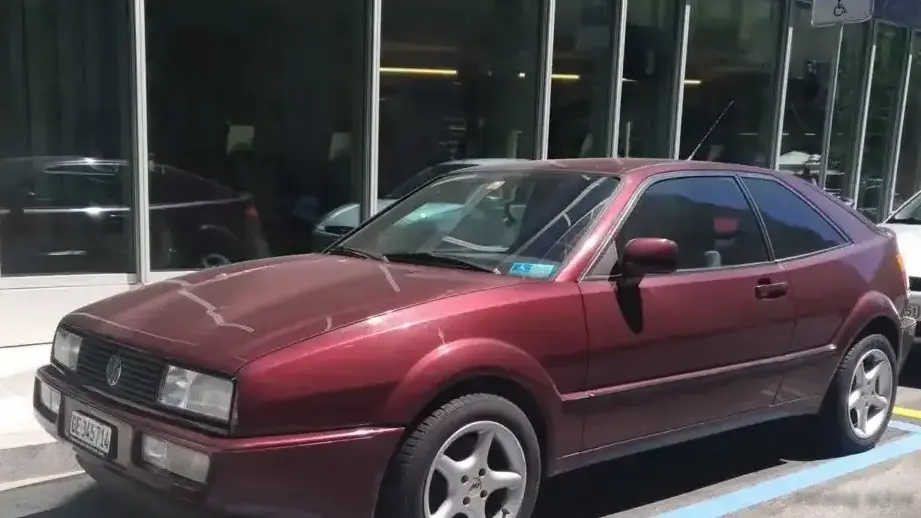
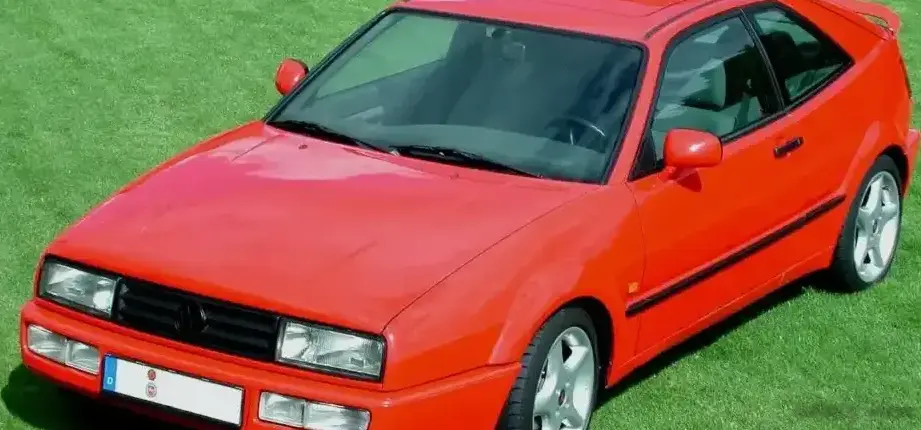
The Volkswagen Corrado G60, produced from 1991 to 1993, represents a compelling blend of sporty styling and forced-induction performance within the Corrado model range. Positioned as a step up from the base 1.8 liter naturally aspirated models, the G60 offered a significant power increase and a more engaging driving experience. This facelifted version of the Corrado (chassis code 53I) built upon the success of the original, refining the design and addressing some earlier criticisms. It was primarily marketed in Europe, where the compact coupe segment was highly competitive, offering a more affordable alternative to larger, more expensive grand tourers. While primarily a European market vehicle, a small number of Corrado G60s were privately imported into the United States.
Powertrain & Engine Architecture
The heart of the Corrado G60 is the 1.8-liter, inline-four cylinder engine, internally designated as the PG code. What truly distinguishes this engine is its roots-type supercharger, known as a G-Lader in Volkswagen terminology. Unlike turbochargers, which are powered by exhaust gases, the G-Lader is mechanically driven by the engine’s crankshaft via a belt. This direct mechanical connection provides almost instantaneous boost, resulting in strong low-end torque and eliminating much of the lag associated with turbocharging. The engine features multi-port fuel injection and a compression ratio of 10.8:1. The supercharger delivers approximately 0.8 bar (11.6 psi) of boost. A five-speed manual transmission was the standard offering, providing a direct and engaging connection to the engine’s power. While a four-speed automatic transmission was available as an option, it was less frequently paired with the G60 engine due to the higher torque output potentially impacting its longevity.
Driving Characteristics
The Corrado G60 delivered a noticeably different driving experience compared to the naturally aspirated 1.8 liter versions. The supercharger’s immediate response provided a strong and linear power delivery throughout the rev range. Acceleration to 60 mph was achieved in approximately 8.1 seconds, and the car could reach a top speed of 139.81 mph. The G60’s torque advantage made it particularly well-suited for everyday driving, offering effortless overtaking and strong acceleration from low speeds. The manual transmission allowed for precise control, while the relatively short wheelbase and well-tuned suspension contributed to a sporty and engaging handling experience. Compared to the later VR6 Corrado, the G60 offered a different character – less outright peak horsepower but more responsive low-end torque and a lighter front end, making it feel more nimble in certain situations. The automatic transmission, while offering convenience, did diminish the overall driving experience compared to the manual.
Equipment & Trim Levels
The Corrado G60 typically came with a relatively well-equipped standard specification. This included power steering, central locking, electric windows, and an upgraded interior trim compared to the base models. Sport seats were often standard, providing better support during spirited driving. Optional extras included a sunroof, alloy wheels (typically 15-inch), and upgraded audio systems. The interior featured a sporty dashboard layout with clear instrumentation. The G60 often received subtle exterior styling cues, such as a small rear spoiler and unique badging, to differentiate it from other Corrado models. Higher trim levels might include leather upholstery and additional interior trim pieces.
Chassis & Braking
The Corrado G60 utilized a front-wheel-drive layout with independent suspension at all four corners. The front suspension employed wishbones, while the rear featured a torsion beam setup with trailing arms. Braking duties were handled by ventilated discs at the front and solid discs at the rear. Anti-lock braking system (ABS) was standard, enhancing safety and control. The suspension was tuned to provide a balance between comfort and handling, offering a relatively compliant ride while maintaining good body control during cornering. Stabilizer bars were fitted front and rear to reduce body roll. The braking system, while adequate for the car’s performance, could feel somewhat limited under sustained hard use.
Market Reception & Comparison
The Corrado G60 was generally well-received by automotive critics, who praised its strong performance, responsive handling, and distinctive styling. However, some reviewers noted that the G60’s supercharger system was more complex and potentially less reliable than a traditional turbocharged engine. Compared to the naturally aspirated 1.8 liter Corrados, the G60 offered a significant performance upgrade, but at a higher price point. The later VR6 Corrado, with its larger displacement and six-cylinder engine, offered even more power but was considerably more expensive. Fuel economy was reasonable for a performance coupe of the era, averaging around 23.1 US mpg in combined driving. The G60 positioned itself as a sweet spot between affordability and performance, appealing to drivers who wanted a sporty coupe without the high cost of the VR6.
Legacy
The Corrado G60 has become a sought-after classic among Volkswagen enthusiasts. While the supercharger system can require specialized maintenance, the engine’s unique character and strong performance have ensured its enduring appeal. Finding well-maintained examples can be challenging, as many have been modified or neglected over the years. The G60’s relatively low production numbers and its status as a performance variant have contributed to its increasing value in the used car market. Today, the Corrado G60 represents a unique and enjoyable driving experience, offering a glimpse into Volkswagen’s engineering creativity during the late 1980s and early 1990s. Parts availability can be a concern, with some G-Lader components becoming increasingly rare and expensive to replace. However, a dedicated community of enthusiasts continues to support and preserve these iconic vehicles.