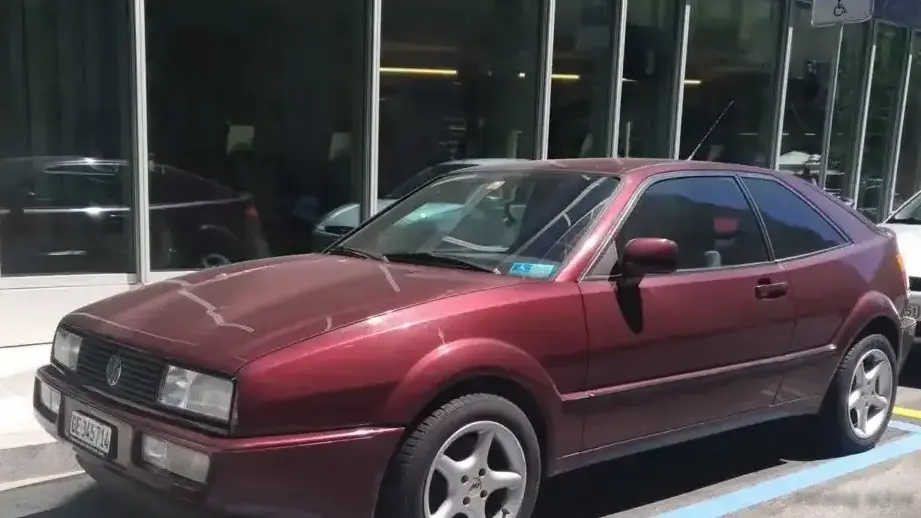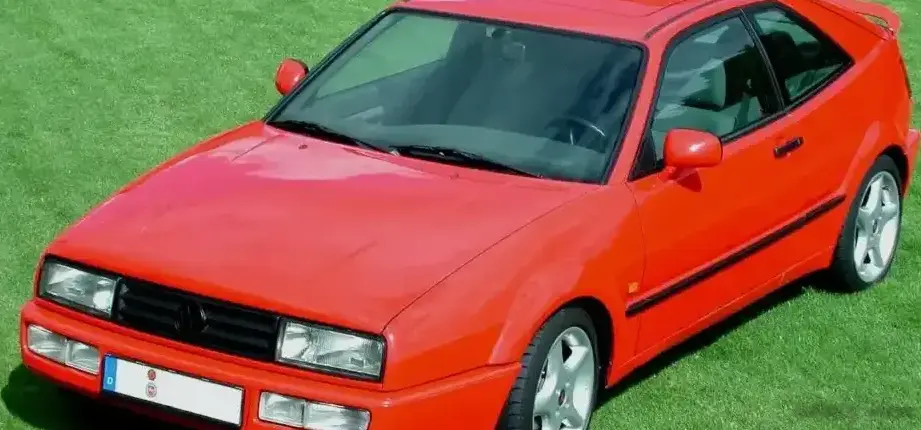
The Volkswagen Corrado VR6, specifically the 2.8-liter 178 horsepower variant produced from 1991 to 1995, represents a high-performance iteration of Volkswagen’s sporty coupe. Positioned as the flagship model within the Corrado range, it offered a significant performance upgrade over the base 1.8-liter and 2.0-liter versions. The Corrado itself was built on the Volkswagen A2 platform, sharing components with the Golf Mk2 and Jetta Mk2, but distinguished by its unique styling and more focused sporting intent. The 1991 facelift brought subtle but important changes to the exterior and interior, solidifying the Corrado’s appeal as a sophisticated and capable grand tourer for the European market, with limited official imports to the United States.
Technical Specifications
| Brand | Volkswagen |
| Model | Corrado |
| Generation | Corrado (53I, facelift 1991) |
| Type (Engine) | 2.8 VR6 (178 Hp) |
| Start of production | 1991 |
| End of production | 1995 |
| Powertrain Architecture | Internal Combustion engine |
| Body type | Coupe |
| Seats | 4 |
| Doors | 3 |
| Fuel consumption (urban) | 13.1 l/100 km (18 US mpg, 21.6 UK mpg) |
| Fuel consumption (extra urban) | 9.4 l/100 km (25 US mpg, 30.1 UK mpg) |
| Fuel Type | Petrol (Gasoline) |
| Acceleration 0 – 60 mph | 6.8 sec |
| Maximum speed | 225 km/h (139.81 mph) |
| Weight-to-power ratio | 7.2 kg/Hp, 139.6 Hp/tonne |
| Weight-to-torque ratio | 5.3 kg/Nm, 188.2 Nm/tonne |
| Power | 178 Hp @ 5800 rpm |
| Power per litre | 63.8 Hp/l |
| Torque | 240 Nm @ 4200 rpm (177.01 lb.-ft. @ 4200 rpm) |
| Engine layout | Front, Transverse |
| Engine Model/Code | AAA |
| Engine displacement | 2792 cm3 (170.38 cu. in.) |
| Number of cylinders | 6 |
| Engine configuration | VR-engine |
| Cylinder Bore | 81 mm (3.19 in.) |
| Piston Stroke | 90.3 mm (3.56 in.) |
| Compression ratio | 10.5:1 |
| Number of valves per cylinder | 2 |
| Fuel injection system | Multi-port manifold injection |
| Engine aspiration | Naturally aspirated engine |
| Valvetrain | DOHC |
| Engine oil capacity | 5.5 l (5.81 US qt | 4.84 UK qt) |
| Coolant | 6.5 l (6.87 US qt | 5.72 UK qt) |
| Kerb Weight | 1275 kg (2810.89 lbs.) |
| Trunk (boot) space – minimum | 433 l (15.29 cu. ft.) |
| Trunk (boot) space – maximum | 821 l (28.99 cu. ft.) |
| Fuel tank capacity | 70 l (18.49 US gal | 15.4 UK gal) |
| Length | 4049 mm (159.41 in.) |
| Width | 1674 mm (65.91 in.) |
| Height | 1318 mm (51.89 in.) |
| Wheelbase | 2471 mm (97.28 in.) |
| Front track | 1435 mm (56.5 in.) |
| Rear track | 1427 mm (56.18 in.) |
| Minimum turning circle | 10.5 m (34.45 ft.) |
| Drivetrain Architecture | The Internal combustion engine (ICE) drives the front wheels of the vehicle. |
| Drive wheel | Front wheel drive |
| Number of gears and type of gearbox | 5 gears, manual transmission |
| Front suspension | Independent, type McPherson with coil spring and anti-roll bar |
| Rear suspension | Transverse stabilizer, Coil spring, Torsion |
| Front brakes | Ventilated discs, 279.4 mm |
| Rear brakes | Disc, 226.06 mm |
| Assisting systems | ABS (Anti-lock braking system) |
| Steering type | Steering rack and pinion |
| Power steering | Hydraulic Steering |
| Tires size | 205/50 R15 |
| Wheel rims size | 6.5J x 15 |
Powertrain & Engine Architecture
The heart of the Corrado VR6 is the AAA engine code, a 2.8-liter naturally aspirated V6. This engine is notable for its narrow-angle VR configuration – a 15-degree V-angle – which allowed it to be packaged into the engine bay of a front-wheel-drive car with relative ease. Unlike traditional V6 engines, the VR6 utilizes a single cylinder head, simplifying the design and reducing weight. The engine features dual overhead camshafts (DOHC) operating two valves per cylinder, and a multi-port fuel injection system. The 178 horsepower output was achieved through a combination of optimized intake and exhaust systems, and a higher compression ratio of 10.5:1. The engine’s torque curve is relatively flat, providing good responsiveness across a wide range of engine speeds. The standard transmission was a 5-speed manual, although a 4-speed automatic was also available, albeit less common and generally considered to diminish the driving experience.
Driving Characteristics
The Corrado VR6 offered a distinctly sporty driving experience. The 178 hp engine, coupled with the relatively lightweight chassis, allowed for brisk acceleration – 0 to 60 mph in around 6.8 seconds. The manual transmission provided precise gear changes, and the engine’s torque made it easy to maintain momentum in various driving situations. The automatic transmission, while offering convenience, noticeably dulled the car’s performance and responsiveness. The front-wheel-drive layout, while common for its time, could exhibit torque steer under hard acceleration. The suspension, tuned for a balance between comfort and handling, provided a reasonably compliant ride while still offering good body control in corners. The steering was precise and well-weighted, contributing to a confident feel behind the wheel.
Equipment & Trim Levels
The VR6 trim was the most comprehensively equipped Corrado available. Standard features typically included power windows, power locks, central locking, a sunroof, and alloy wheels. The interior featured sport seats upholstered in a unique fabric pattern, and a leather-wrapped steering wheel. Optional extras included leather upholstery, air conditioning, and a premium sound system. The dashboard layout was clean and functional, with easy-to-read gauges. The Corrado VR6 aimed for a premium feel, offering a more refined interior than its lower-spec counterparts.
Chassis & Braking
The Corrado’s chassis featured an independent McPherson strut suspension at the front and a torsion beam rear suspension. The front suspension incorporated a stabilizer bar to reduce body roll. Braking duties were handled by ventilated discs at the front and solid discs at the rear. An Anti-lock Braking System (ABS) was standard equipment, enhancing safety and control during hard braking. The suspension setup was tuned to provide a balance between ride comfort and handling performance, suitable for both everyday driving and spirited cornering. The relatively light curb weight of around 2810 lbs contributed to the car’s agility.
Market Reception & Comparison
The Corrado VR6 was generally well-received by automotive critics. It was praised for its stylish design, strong performance, and refined interior. However, some critics noted the front-wheel-drive layout limited its handling potential compared to rear-wheel-drive competitors. Compared to the 1.8 and 2.0-liter Corrados, the VR6 offered a significant performance advantage, but at a higher price point. The VR6 was also more expensive to maintain due to the complexity of the engine and the higher cost of parts. Fuel economy was also lower than the smaller-engined models, averaging around 18 mpg in the city and 25 mpg on the highway.
Legacy
The Volkswagen Corrado VR6 has become a sought-after classic car among enthusiasts. The engine is known for its durability and tunability, and well-maintained examples are relatively rare. The VR6 engine itself has become iconic, and is still celebrated for its unique design and sound. While the Corrado was not a massive sales success, it left a lasting impression on the automotive landscape, representing a high point in Volkswagen’s sporty coupe history. Today, the Corrado VR6 commands a premium in the used car market, and is often seen as a collectible investment.