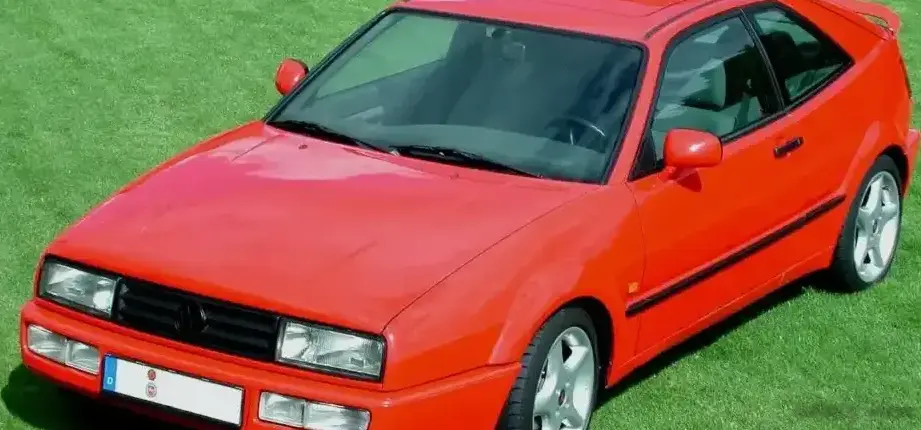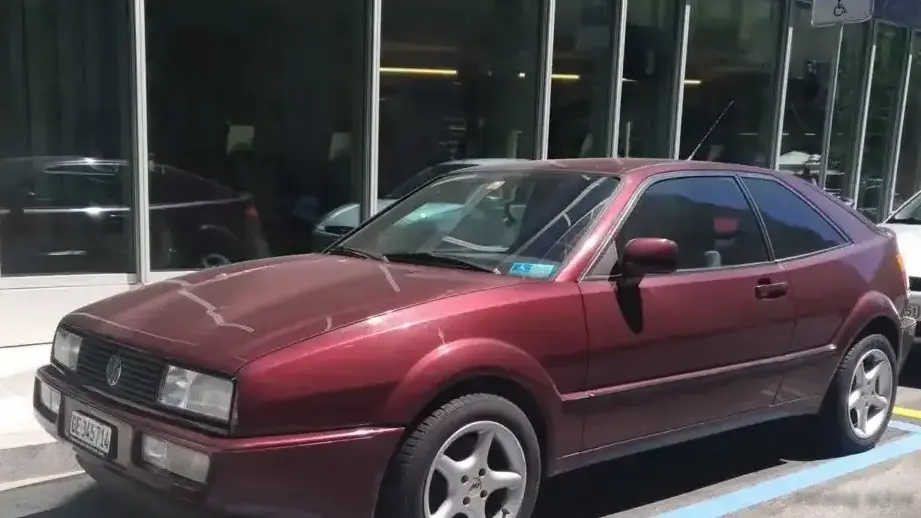
The Volkswagen Corrado 1.8 16V, produced between 1989 and 1991, represents a compelling entry point into the Corrado model range. Positioned as a sporty coupe, it served as a more accessible alternative to the higher-performance VR6 and later 1.9 TDI variants. Built on the Volkswagen Group’s B2 platform (internally designated 53L, also shared with the Golf Mk2 and Jetta Mk2), the Corrado aimed to blend style, handling, and a degree of practicality in a compact, two-door package. This particular 1.8 16V model was primarily marketed in Europe, offering a balance between performance and fuel efficiency for the discerning driver.
Technical Specifications
| Brand | Volkswagen |
| Model | Corrado |
| Generation | Corrado (53l) |
| Type (Engine) | 1.8 16V (136 Hp) |
| Start of production | 1989 |
| End of production | 1991 |
| Powertrain Architecture | Internal Combustion engine |
| Body type | Coupe |
| Seats | 4 |
| Doors | 2 |
| Fuel consumption (urban) | 12.3 l/100 km (19.1 US mpg, 23 UK mpg, 8.1 km/l) |
| Fuel consumption (extra urban) | 6 l/100 km (39.2 US mpg, 47.1 UK mpg, 16.7 km/l) |
| Fuel consumption (combined) | 7.6 l/100 km (30.9 US mpg, 37.2 UK mpg, 13.2 km/l) |
| Fuel Type | Petrol (Gasoline) |
| Acceleration 0 – 100 km/h | 9.3 sec |
| Acceleration 0 – 62 mph | 9.3 sec |
| Acceleration 0 – 60 mph | 8.8 sec |
| Maximum speed | 210 km/h (130.49 mph) |
| Weight-to-power ratio | 8.6 kg/Hp, 115.7 Hp/tonne |
| Weight-to-torque ratio | 6.5 kg/Nm, 153.2 Nm/tonne |
| Power | 136 Hp @ 5800 rpm |
| Power per litre | 76.4 Hp/l |
| Torque | 180 Nm @ 4400 rpm (132.76 lb.-ft. @ 4400 rpm) |
| Engine layout | Front, Transverse |
| Engine Model/Code | KR |
| Engine displacement | 1781 cm3 (108.68 cu. in.) |
| Number of cylinders | 4 |
| Engine configuration | Inline |
| Cylinder Bore | 81 mm (3.19 in.) |
| Piston Stroke | 86.4 mm (3.4 in.) |
| Compression ratio | 8:1 |
| Number of valves per cylinder | 4 |
| Fuel injection system | Multi-port manifold injection |
| Engine aspiration | Naturally aspirated engine |
| Engine oil capacity | 4 l (4.23 US qt | 3.52 UK qt) |
| Coolant capacity | 5.5 l (5.81 US qt | 4.84 UK qt) |
| Kerb Weight | 1175 kg (2590.43 lbs.) |
| Max. weight | 1545 kg (3406.14 lbs.) |
| Max load | 370 kg (815.71 lbs.) |
| Trunk (boot) space – minimum | 235 l (8.3 cu. ft.) |
| Trunk (boot) space – maximum | 810 l (28.6 cu. ft.) |
| Fuel tank capacity | 70 l (18.49 US gal | 15.4 UK gal) |
| Length | 4050 mm (159.45 in.) |
| Width | 1690 mm (66.54 in.) |
| Height | 1310 mm (51.57 in.) |
| Wheelbase | 2470 mm (97.24 in.) |
| Front track | 1435 mm (56.5 in.) |
| Rear track | 1430 mm (56.3 in.) |
| Drivetrain Architecture | The Internal combustion engine (ICE) drives the front wheels of the vehicle. |
| Drive wheel | Front wheel drive |
| Number of gears | 5 gears, manual transmission |
| Front suspension | Wishbone |
| Rear suspension | Suspension with traction connecting levers |
| Front brakes | Ventilated discs |
| Rear brakes | Disc |
| Assisting systems | ABS (Anti-lock braking system) |
| Steering type | Steering rack and pinion |
| Power steering | Hydraulic Steering |
| Tires size | 195/50 R15 |
| Wheel rims size | 6.5J x 15 |
Powertrain & Engine Architecture
The Corrado 1.8 16V utilized the Volkswagen KR engine code, a 1781cc inline four-cylinder engine. This engine featured a cast iron block and an aluminum cylinder head, equipped with dual overhead camshafts and four valves per cylinder – hence the “16V” designation. Fuel delivery was managed by Bosch Motronic multi-port fuel injection, providing precise control over the air-fuel mixture. The engine’s 8:1 compression ratio was a compromise between performance and the fuel quality available in European markets. The five-speed manual transmission was the standard offering, providing a direct connection between the engine and the front wheels. This transmission was known for its relatively short throws and precise engagement.
Driving Characteristics
The 136 horsepower and 133 lb-ft of torque produced by the 1.8 16V engine provided adequate, though not overwhelming, performance. Acceleration from 0 to 60 mph took approximately 8.8 seconds, and the car could reach a top speed of around 130 mph. Compared to the more potent VR6, the 1.8 16V felt noticeably less powerful, particularly at higher speeds. However, the lighter weight of the 1.8 model contributed to a more nimble and responsive feel in corners. The five-speed manual transmission allowed drivers to keep the engine in its optimal power band, maximizing acceleration. The gear ratios were well-matched for everyday driving, offering a balance between fuel economy and performance.
Equipment & Trim Levels
The Corrado 1.8 16V typically came with a reasonably well-equipped interior, reflecting its positioning as a sporty coupe. Standard features included power windows, central locking, and a basic stereo system. Interior upholstery was typically cloth, with options for upgraded materials available. The dashboard layout was driver-focused, with clearly marked gauges and intuitive controls. Optional extras included a sunroof, alloy wheels, and upgraded sound systems. The trim level was generally considered a mid-range offering, bridging the gap between the base models and the more luxurious VR6.
Chassis & Braking
The Corrado’s chassis featured independent suspension all around, with a wishbone setup at the front and a torsion beam arrangement at the rear. This suspension configuration provided a good balance between ride comfort and handling precision. The 1.8 16V models were equipped with ventilated disc brakes at the front and solid disc brakes at the rear, providing adequate stopping power for most driving situations. Anti-lock braking system (ABS) was standard, enhancing safety and control during emergency braking maneuvers. The steering was a rack-and-pinion system with hydraulic power assistance, offering a responsive and precise feel.
Market Reception & Comparison
The Corrado 1.8 16V was generally well-received by automotive critics, who praised its stylish design, engaging handling, and relatively affordable price. However, some reviewers noted that the engine lacked the outright performance of the VR6. Compared to the VR6, the 1.8 16V offered better fuel economy and lower maintenance costs. The 1.9 TDI diesel variant, introduced later in the Corrado’s production run, provided even better fuel economy but sacrificed some of the sporty character of the 1.8 16V. The 1.8 16V appealed to buyers who wanted a stylish and fun-to-drive coupe without the higher price tag of the VR6.
Legacy
The Volkswagen Corrado 1.8 16V has developed a loyal following among enthusiasts. The KR engine is known for its reliability and relatively simple maintenance requirements. While finding parts can sometimes be a challenge, a robust aftermarket exists to support these vehicles. Today, well-maintained examples of the Corrado 1.8 16V are sought after by collectors and enthusiasts who appreciate its classic styling and engaging driving experience. The car represents a significant chapter in Volkswagen’s history, showcasing the brand’s commitment to sporty and stylish coupes.