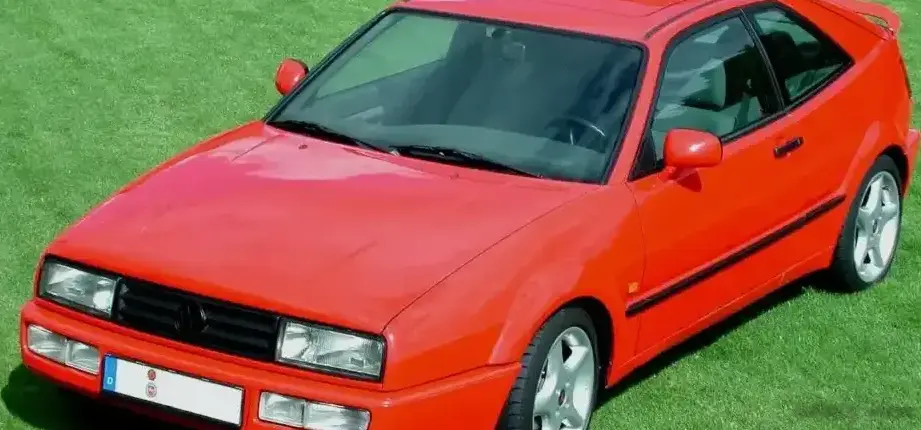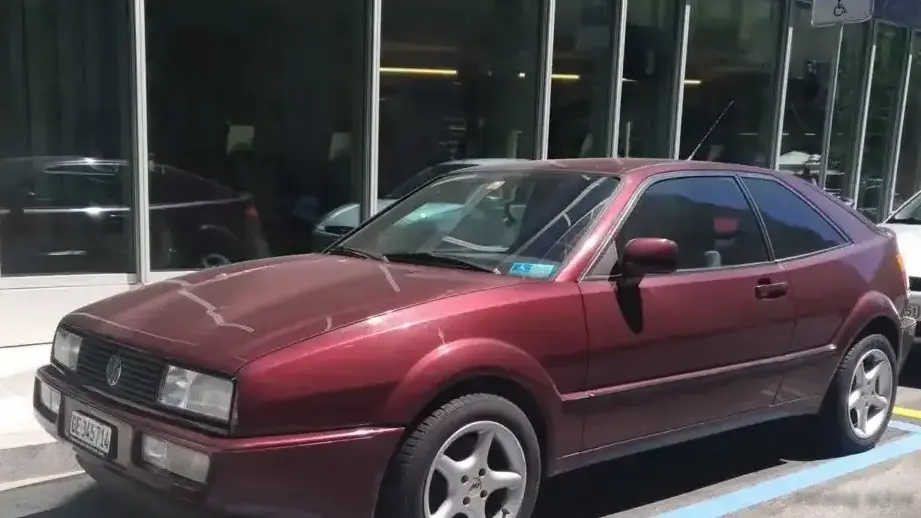
The Volkswagen Corrado 1.8 16V Automatic, produced between 1989 and 1991, represents a specific iteration within the Corrado model range (internal designation 53l). Positioned as a mid-range offering, it aimed to provide a balance between performance and affordability within the sporty coupe market. The Corrado itself was built on the Volkswagen A2 platform, shared with the Golf Mk2 and Jetta Mk2, but distinguished by its unique styling and more sophisticated aspirations. This particular variant, combining the 1.8-liter 16-valve engine with a four-speed automatic transmission, catered to buyers seeking a comfortable and stylish grand tourer rather than an outright performance machine.
Technical Specifications
| Brand | Volkswagen |
| Model | Corrado |
| Generation | Corrado (53l) |
| Type (Engine) | 1.8 16V (136 Hp) Automatic |
| Start of production | 1989 |
| End of production | 1991 |
| Powertrain Architecture | Internal Combustion engine |
| Body type | Coupe |
| Seats | 4 |
| Doors | 2 |
| Fuel consumption (urban) | 12.7 l/100 km (18.5 US mpg, 22.2 UK mpg, 7.9 km/l) |
| Fuel consumption (extra urban) | 6.7 l/100 km (35.1 US mpg, 42.2 UK mpg, 14.9 km/l) |
| Fuel consumption (combined) | 8.1 l/100 km (29 US mpg, 34.9 UK mpg, 12.3 km/l) |
| Fuel Type | Petrol (Gasoline) |
| Acceleration 0 – 100 km/h | 9.9 sec |
| Acceleration 0 – 62 mph | 9.9 sec |
| Acceleration 0 – 60 mph | 9.4 sec |
| Maximum speed | 208 km/h (129.25 mph) |
| Weight-to-power ratio | 8.6 kg/Hp, 115.7 Hp/tonne |
| Weight-to-torque ratio | 6.5 kg/Nm, 153.2 Nm/tonne |
| Power | 136 Hp @ 5800 rpm |
| Power per litre | 76.4 Hp/l |
| Torque | 180 Nm @ 4400 rpm (132.76 lb.-ft. @ 4400 rpm) |
| Engine layout | Front, Transverse |
| Engine Model/Code | KR |
| Engine displacement | 1781 cm3 (108.68 cu. in.) |
| Number of cylinders | 4 |
| Engine configuration | Inline |
| Cylinder Bore | 81 mm (3.19 in.) |
| Piston Stroke | 86.4 mm (3.4 in.) |
| Compression ratio | 8:1 |
| Number of valves per cylinder | 4 |
| Fuel injection system | Multi-port manifold injection |
| Engine aspiration | Naturally aspirated engine |
| Engine oil capacity | 4 l (4.23 US qt | 3.52 UK qt) |
| Coolant capacity | 5.5 l (5.81 US qt | 4.84 UK qt) |
| Kerb Weight | 1175 kg (2590.43 lbs.) |
| Max. weight | 1545 kg (3406.14 lbs.) |
| Max load | 370 kg (815.71 lbs.) |
| Trunk (boot) space – minimum | 235 l (8.3 cu. ft.) |
| Trunk (boot) space – maximum | 810 l (28.6 cu. ft.) |
| Fuel tank capacity | 70 l (18.49 US gal | 15.4 UK gal) |
| Length | 4050 mm (159.45 in.) |
| Width | 1690 mm (66.54 in.) |
| Height | 1310 mm (51.57 in.) |
| Wheelbase | 2470 mm (97.24 in.) |
| Front track | 1435 mm (56.5 in.) |
| Rear track | 1430 mm (56.3 in.) |
| Drivetrain Architecture | Front wheel drive |
| Number of gears | 4 |
| Gearbox type | Automatic transmission |
| Front suspension | Wishbone |
| Rear suspension | Suspension with traction connecting levers |
| Front brakes | Ventilated discs |
| Rear brakes | Disc |
| Assisting systems | ABS (Anti-lock braking system) |
| Steering type | Steering rack and pinion |
| Power steering | Hydraulic Steering |
| Tires size | 195/50 R15 |
| Wheel rims size | 6.5J x 15 |
Powertrain & Engine Architecture
The heart of this Corrado variant is the Volkswagen KR engine, a 1.8-liter inline-four cylinder powerplant. This engine is characterized by its cast iron block and aluminum cylinder head, featuring dual overhead camshafts and four valves per cylinder – hence the “16V” designation. Fuel delivery is managed by Bosch Motronic multi-port fuel injection, providing precise control over the air-fuel mixture. The KR engine, while not the most powerful in the Corrado lineup (the G60 and VR6 offered significantly more performance), was known for its relative reliability and smooth operation. The four-speed automatic transmission, a common unit in Volkswagen group vehicles of the era, was designed for comfortable cruising rather than aggressive shifting. It features a torque converter and hydraulic control, offering smooth, if not particularly sporty, gear changes. The transmission’s gear ratios were optimized for fuel efficiency and relaxed highway driving.
Driving Characteristics
The 1.8 16V Automatic Corrado delivers a driving experience focused on comfort and ease of use. Acceleration from 0-60 mph takes approximately 9.4 seconds, and top speed is around 129 mph. While these figures aren’t particularly impressive by modern standards, they were respectable for a front-wheel-drive coupe in the early 1990s. The automatic transmission, while smooth, does detract from the overall sense of driver involvement. Compared to the five-speed manual version of the same engine, the automatic feels noticeably slower and less responsive. Power delivery is linear, with peak torque arriving at 4400 rpm. The automatic transmission tends to hold onto gears longer, prioritizing fuel economy over outright acceleration. The steering is light and precise, making the Corrado easy to maneuver in city traffic.
Equipment & Trim Levels
The 1.8 16V Automatic Corrado typically came equipped with a reasonable level of standard features. Interior appointments included cloth upholstery, power windows, central locking, and an AM/FM radio. Optional extras included a sunroof, alloy wheels, upgraded sound system, and air conditioning. The dashboard layout is typical of Volkswagen’s design language of the period, with a clear and functional arrangement of gauges and controls. The interior trim level was generally considered to be a step above the base Corrado models, offering a more refined and comfortable environment.
Chassis & Braking
The Corrado’s chassis features independent suspension all around, with a wishbone setup at the front and a torsion beam arrangement at the rear. This suspension configuration provides a good balance between ride comfort and handling. Braking duties are handled by ventilated discs at the front and solid discs at the rear. Anti-lock braking system (ABS) was standard, enhancing safety and stability during hard braking. The relatively lightweight construction of the Corrado, at around 2590 lbs, contributes to its nimble handling characteristics. Stabilizer bars were fitted front and rear to reduce body roll during cornering.
Market Reception & Comparison
The Corrado 1.8 16V Automatic received mixed reviews from automotive critics. While praised for its stylish design and comfortable ride, it was often criticized for its lack of outright performance compared to other Corrado variants, particularly the supercharged G60 and the VR6. Fuel economy was considered average for its class. Compared to the manual transmission version of the 1.8 16V engine, the automatic offered less driver engagement but greater convenience. The 1.9 TDI diesel version, while slower in acceleration, offered significantly better fuel economy and was favored by those prioritizing practicality.
Legacy
The Volkswagen Corrado 1.8 16V Automatic, while not the most sought-after version of the Corrado, remains a popular choice among enthusiasts. The KR engine is generally considered to be reliable, although regular maintenance is essential. Parts availability is generally good, although some specific trim pieces can be difficult to find. Today, these Corrados are increasingly appreciated for their classic styling and relatively affordable price point. They represent a unique blend of German engineering, sporty design, and everyday usability, making them a compelling option for collectors and enthusiasts alike. Well-maintained examples continue to provide enjoyable and reliable transportation, offering a glimpse into the automotive landscape of the late 1980s and early 1990s.