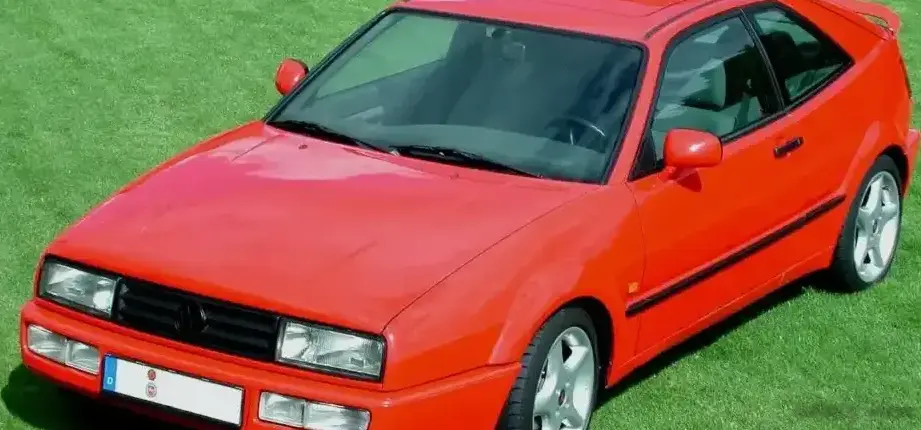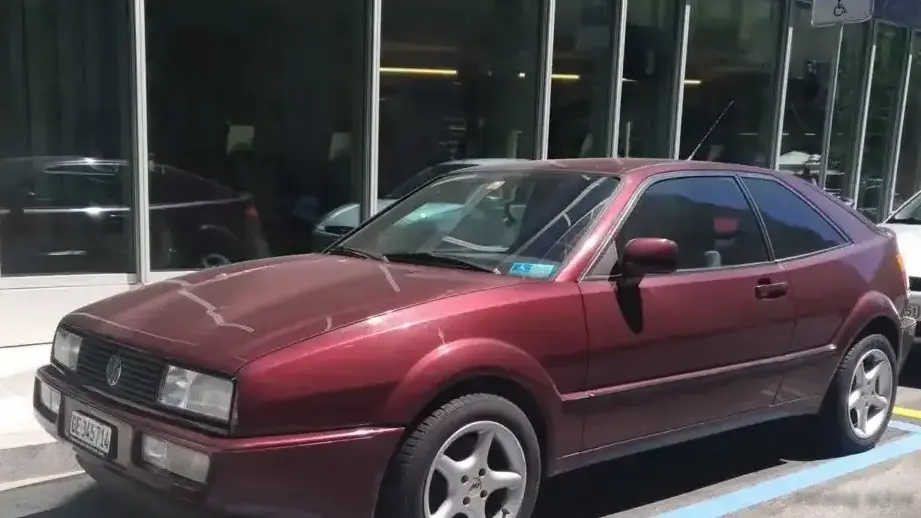
The Volkswagen Corrado 1.8 G60, produced between 1988 and 1991, represents a distinctive and performance-oriented variant within the Corrado model range. Positioned as a sporty coupe, the G60 utilized a supercharged 1.8-liter inline-four engine to deliver a significant power boost compared to the base models. The Corrado itself was built on the Volkswagen A2 platform (internally designated 53L), sharing underpinnings with the Golf Mk2 and Jetta Mk2, but distinguished by its unique styling and more focused driving experience. The G60 trim aimed to bridge the gap between the more affordable naturally aspirated versions and the later, more expensive VR6 models, offering a compelling blend of performance and relative affordability.
Technical Specifications
| Brand | Volkswagen |
| Model | Corrado |
| Generation | Corrado (53l) |
| Type (Engine) | 1.8 G60 (160 Hp) |
| Start of production | 1988 |
| End of production | 1991 |
| Powertrain Architecture | Internal Combustion engine |
| Body type | Coupe |
| Seats | 4 |
| Doors | 2 |
| Fuel consumption (economy) – urban | 12.4 l/100 km (19 US mpg, 22.8 UK mpg, 8.1 km/l) |
| Fuel consumption (economy) – extra urban | 8.4 l/100 km (28 US mpg, 33.6 UK mpg, 11.9 km/l) |
| Fuel consumption (economy) – combined | 10.2 l/100 km (23.1 US mpg, 27.7 UK mpg, 9.8 km/l) |
| Fuel Type | Petrol (Gasoline) |
| Acceleration 0 – 100 km/h | 8.5 sec |
| Acceleration 0 – 62 mph | 8.5 sec |
| Acceleration 0 – 60 mph | 8.1 sec |
| Maximum speed | 225 km/h (139.81 mph) |
| Weight-to-power ratio | 7.6 kg/Hp, 131.7 Hp/tonne |
| Weight-to-torque ratio | 5.5 kg/Nm, 181.1 Nm/tonne |
| Power | 160 Hp @ 5600 rpm |
| Power per litre | 89.8 Hp/l |
| Torque | 220 Nm @ 3800 rpm (162.26 lb.-ft. @ 3800 rpm) |
| Engine layout | Front, Transverse |
| Engine Model/Code | PG |
| Engine displacement | 1781 cm3 (108.68 cu. in.) |
| Number of cylinders | 4 |
| Engine configuration | Inline |
| Cylinder Bore | 81 mm (3.19 in.) |
| Piston Stroke | 86.4 mm (3.4 in.) |
| Compression ratio | 10.8:1 |
| Number of valves per cylinder | 2 |
| Fuel injection system | Multi-port manifold injection |
| Engine aspiration | Supercharger |
| Engine oil capacity | 4 l (4.23 US qt | 3.52 UK qt) |
| Coolant | 5.5 l (5.81 US qt | 4.84 UK qt) |
| Kerb Weight | 1215 kg (2678.62 lbs.) |
| Max. weight | 1525 kg (3362.05 lbs.) |
| Max load | 310 kg (683.43 lbs.) |
| Trunk (boot) space – minimum | 235 l (8.3 cu. ft.) |
| Trunk (boot) space – maximum | 810 l (28.6 cu. ft.) |
| Fuel tank capacity | 55 l (14.53 US gal | 12.1 UK gal) |
| Length | 4050 mm (159.45 in.) |
| Width | 1690 mm (66.54 in.) |
| Height | 1310 mm (51.57 in.) |
| Wheelbase | 2470 mm (97.24 in.) |
| Front track | 1435 mm (56.5 in.) |
| Rear (Back) track | 1430 mm (56.3 in.) |
| Minimum turning circle | 10.5 m (34.45 ft.) |
| Drivetrain Architecture | The Internal combustion engine (ICE) drives the front wheels of the vehicle. |
| Drive wheel | Front wheel drive |
| Number of gears and type of gearbox | 5 gears, manual transmission |
| Front suspension | Wishbone |
| Rear suspension | Suspension with traction connecting levers |
| Front brakes | Ventilated discs |
| Rear brakes | Disc |
| Assisting systems | ABS (Anti-lock braking system) |
| Steering type | Steering rack and pinion |
| Power steering | Hydraulic Steering |
| Tires size | 185/55 R15 |
| Wheel rims size | 6.5J x 15 |
Powertrain & Engine Architecture
The heart of the Corrado G60 is the 1.8-liter (1781cc) inline-four cylinder engine, designated PG. What sets this engine apart is its roots-type supercharger, a G-Lader in Volkswagen terminology. Unlike turbochargers, which rely on exhaust gases, the G-Lader is mechanically driven by the engine’s crankshaft via a belt. This provides near-instant boost, resulting in strong low-end torque and a linear power delivery. The engine features multi-port fuel injection and a compression ratio of 10.8:1. The supercharger’s output is intercooled to reduce intake air temperature and improve efficiency. The G60 engine produced 160 horsepower at 5600 rpm and 162 lb-ft of torque at 3800 rpm. The standard transmission for the G60 was a 5-speed manual, although a 4-speed automatic was also available, albeit less common and impacting performance.
Driving Characteristics
The Corrado G60 offered a noticeably more engaging driving experience than the base 1.8-liter models. The supercharger eliminated much of the turbo lag associated with turbocharged engines of the time, providing readily available power throughout the rev range. Acceleration to 60 mph took approximately 8.1-8.5 seconds, making it a competitive performer in its class. The manual transmission provided precise shifts, while the automatic, while offering convenience, diminished the car’s responsiveness. The G60’s front-wheel-drive configuration, combined with its relatively light weight, contributed to good handling characteristics, although torque steer could be noticeable under hard acceleration. Compared to the later VR6 Corrado, the G60 offered a different character – less outright power but a more immediate and accessible powerband.
Equipment & Trim Levels
The Corrado G60 typically came equipped with a number of features designed to enhance its sporty appeal. Standard equipment included power windows, central locking, and a basic stereo system. Sport seats with patterned upholstery were also standard. Optional extras included a sunroof, alloy wheels (often the distinctive “System II” wheels), and upgraded audio systems. The interior trim was generally functional and well-built, reflecting Volkswagen’s reputation for quality. The G60 trim level sat above the base Corrado and below the VR6, offering a balance of features and performance.
Chassis & Braking
The Corrado G60 utilized a MacPherson strut front suspension and a torsion beam rear suspension. The front suspension featured a stabilizer bar to reduce body roll during cornering. Braking duties were handled by ventilated discs at the front and solid discs at the rear. An Anti-lock Braking System (ABS) was available as an option, enhancing safety and control. The chassis was relatively lightweight, contributing to the car’s nimble handling. The suspension tuning was geared towards providing a comfortable ride while maintaining good handling characteristics.
Market Reception & Comparison
The Corrado G60 was generally well-received by automotive critics, who praised its performance, handling, and distinctive styling. However, some reviewers noted that the engine, while powerful, was not as refined as some of its competitors. Fuel economy was also a concern, with combined fuel consumption averaging around 23 mpg. Compared to the naturally aspirated Corrado models, the G60 offered a significant performance upgrade. Compared to the VR6, the G60 was more affordable but lacked the VR6’s larger engine displacement and higher peak power. The G60’s supercharger also required periodic maintenance, adding to the cost of ownership.
Legacy
The Volkswagen Corrado G60 has become a sought-after classic among enthusiasts. The G-Lader supercharger, while requiring maintenance, is a unique and iconic feature of the car. The engine’s robust construction and relatively simple design contribute to its long-term reliability, although finding parts can be challenging. Well-maintained examples of the Corrado G60 command a premium in the used car market. The G60’s blend of performance, styling, and relative rarity has cemented its place as a memorable and desirable sports coupe of the late 1980s and early 1990s.