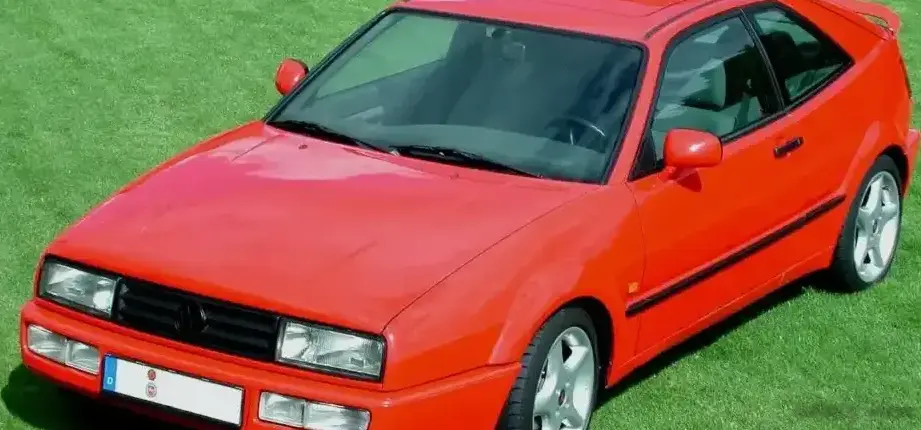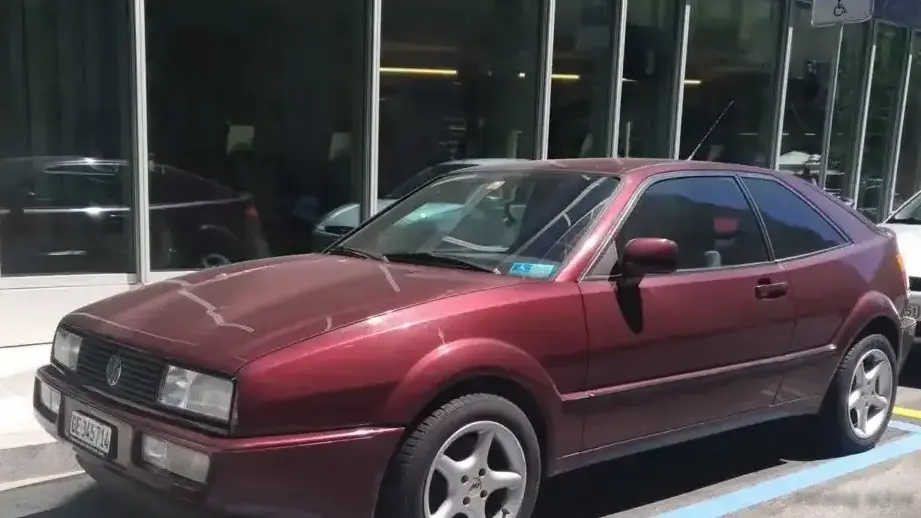
The Volkswagen Corrado 1.8 G60 Automatic, produced between 1988 and 1991, represents a unique blend of sporty styling and accessible performance within the Corrado model range. Positioned as a mid-range offering, it bridged the gap between the base 1.6-liter models and the more potent VR6 variants. Built on the Volkswagen Group’s B2 platform (internally designated 53L, also shared with the Mk2 Golf and Jetta), the Corrado aimed to provide a more sophisticated and visually striking alternative to traditional hatchbacks. The G60 designation refers to the supercharged 1.8-liter inline-four engine, paired exclusively with a four-speed automatic transmission during these production years. This combination offered a comfortable driving experience with a noticeable performance boost compared to the naturally aspirated engines available in other Corrado trims.
Technical Specifications
| Brand | Volkswagen |
| Model | Corrado |
| Generation | Corrado (53l) |
| Type (Engine) | 1.8 G60 (160 Hp) Automatic |
| Start of production | 1988 year |
| End of production | 1991 year |
| Powertrain Architecture | Internal Combustion engine |
| Body type | Coupe |
| Seats | 4 |
| Doors | 2 |
| Fuel consumption (economy) – urban | 12.7 l/100 km (18.5 US mpg, 22.2 UK mpg, 7.9 km/l) |
| Fuel consumption (economy) – extra urban | 8.7 l/100 km (27 US mpg, 32.5 UK mpg, 11.5 km/l) |
| Fuel consumption (economy) – combined | 10.2 l/100 km (23.1 US mpg, 27.7 UK mpg, 9.8 km/l) |
| Fuel Type | Petrol (Gasoline) |
| Acceleration 0 – 100 km/h | 9.1 sec |
| Acceleration 0 – 62 mph | 9.1 sec |
| Acceleration 0 – 60 mph | 8.6 sec |
| Maximum speed | 222 km/h (137.94 mph) |
| Weight-to-power ratio | 7.6 kg/Hp, 131.7 Hp/tonne |
| Weight-to-torque ratio | 5.5 kg/Nm, 181.1 Nm/tonne |
| Power | 160 Hp @ 5600 rpm |
| Power per litre | 89.8 Hp/l |
| Torque | 220 Nm @ 3800 rpm (162.26 lb.-ft. @ 3800 rpm) |
| Engine layout | Front, Transverse |
| Engine Model/Code | PG |
| Engine displacement | 1781 cm3 (108.68 cu. in.) |
| Number of cylinders | 4 |
| Engine configuration | Inline |
| Cylinder Bore | 81 mm (3.19 in.) |
| Piston Stroke | 86.4 mm (3.4 in.) |
| Compression ratio | 10.8:1 |
| Number of valves per cylinder | 2 |
| Fuel injection system | Multi-port manifold injection |
| Engine aspiration | Supercharger |
| Engine oil capacity | 4 l (4.23 US qt | 3.52 UK qt) |
| Coolant | 5.5 l (5.81 US qt | 4.84 UK qt) |
| Kerb Weight | 1215 kg (2678.62 lbs.) |
| Max. weight | 1525 kg (3362.05 lbs.) |
| Max load | 310 kg (683.43 lbs.) |
| Trunk (boot) space – minimum | 235 l (8.3 cu. ft.) |
| Trunk (boot) space – maximum | 810 l (28.6 cu. ft.) |
| Fuel tank capacity | 55 l (14.53 US gal | 12.1 UK gal) |
| Length | 4050 mm (159.45 in.) |
| Width | 1690 mm (66.54 in.) |
| Height | 1310 mm (51.57 in.) |
| Wheelbase | 2470 mm (97.24 in.) |
| Front track | 1435 mm (56.5 in.) |
| Rear (Back) track | 1430 mm (56.3 in.) |
| Minimum turning circle | 10.5 m (34.45 ft.) |
| Drivetrain Architecture | The Internal combustion engine (ICE) drives the front wheels of the vehicle. |
| Drive wheel | Front wheel drive |
| Number of gears and type of gearbox | 4 gears, automatic transmission |
| Front suspension | Wishbone |
| Rear suspension | Suspension with traction connecting levers |
| Front brakes | Ventilated discs |
| Rear brakes | Disc |
| Assisting systems | ABS (Anti-lock braking system) |
| Steering type | Steering rack and pinion |
| Power steering | Hydraulic Steering |
| Tires size | 185/55 R15 |
| Wheel rims size | 6.5J x 15 |
Powertrain & Engine Architecture
The heart of the Corrado 1.8 G60 Automatic is the Volkswagen PG engine code, a 1781cc inline-four cylinder engine. What sets this engine apart is its roots-type supercharger, a G-Lader in Volkswagen terminology. Unlike turbochargers, which rely on exhaust gases, the G-Lader is mechanically driven by the engine’s crankshaft, providing near-instant boost. This results in a very linear power delivery, a characteristic that complements the automatic transmission well. The engine utilizes multi-port fuel injection and a 10.8:1 compression ratio. The four-speed automatic transmission, while providing convenience, was not known for its sportiness. It featured a relatively conservative gear ratio spread, prioritizing fuel economy and smooth shifts over aggressive acceleration. The transmission’s programming was tailored to work with the supercharger’s characteristics, aiming to keep the engine within its optimal boost range.
Driving Characteristics
The 1.8 G60 Automatic Corrado offered a distinct driving experience. While not as overtly sporty as the VR6 or the manual transmission versions, it provided a comfortable and refined ride. The supercharger delivered strong low-end torque, making it surprisingly capable in everyday driving situations. Acceleration to 60 mph took around 8.6 seconds, respectable for the late 1980s/early 1990s. The automatic transmission, however, did detract from the overall sense of driver involvement. Shifts were smooth but lacked the responsiveness of a manual gearbox. Compared to the VR6, the G60 Automatic felt less powerful, particularly at higher speeds. However, it offered better fuel economy and a more manageable power curve. The G60’s supercharger whine was a distinctive auditory feature, adding to the car’s character.
Equipment & Trim Levels
The Corrado 1.8 G60 Automatic typically came with a reasonable level of standard equipment. This included power windows, central locking, and a basic stereo system. Interior upholstery was usually cloth, with options for leather available at an extra cost. The dashboard featured a clean, functional design with analog gauges. Optional extras included a sunroof, alloy wheels, and upgraded sound systems. The trim level was generally positioned as a step up from the base models, offering a more premium feel without the expense of the VR6.
Chassis & Braking
The Corrado’s chassis featured independent suspension all around, with a wishbone setup at the front and a torsion beam arrangement at the rear. The G60 Automatic, due to its weight, often received slightly stiffer suspension components compared to the lower-powered models. Braking was handled by ventilated discs at the front and solid discs at the rear. Anti-lock braking system (ABS) was standard, enhancing safety. The steering was rack and pinion with hydraulic power assistance, providing a reasonably direct feel.
Market Reception & Comparison
The Corrado 1.8 G60 Automatic received mixed reviews. Critics praised its stylish design, comfortable ride, and strong low-end torque. However, the automatic transmission was often criticized for its lack of sportiness. Compared to the VR6, the G60 Automatic was seen as a more sensible and affordable option, appealing to buyers who prioritized comfort and fuel economy over outright performance. Fuel economy was rated around 23.1 US mpg combined, which was competitive for a coupe of its size and performance level. Reliability was generally good, although the supercharger did require periodic maintenance.
Legacy
Today, the Volkswagen Corrado 1.8 G60 Automatic is a sought-after classic car. Its unique combination of styling, performance, and relative rarity has made it a favorite among enthusiasts. The PG engine, while requiring regular maintenance, is known for its durability when properly cared for. Parts availability can be a challenge, but a dedicated aftermarket supports the Corrado community. The G60 Automatic represents a unique chapter in Volkswagen’s history, showcasing the brand’s commitment to innovation and sporty design. Its enduring appeal lies in its ability to offer a distinctive and enjoyable driving experience that sets it apart from more common classic coupes.