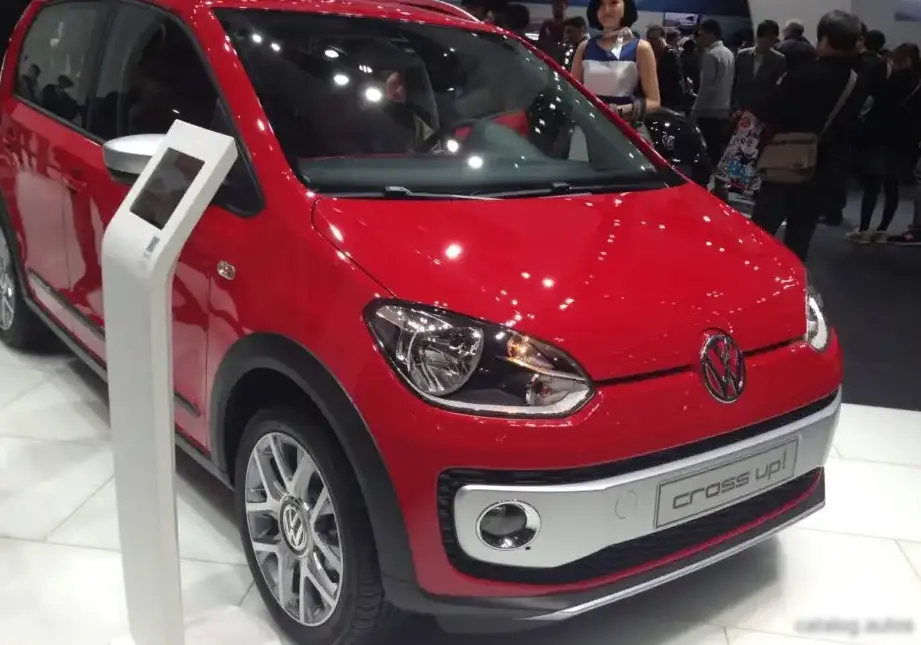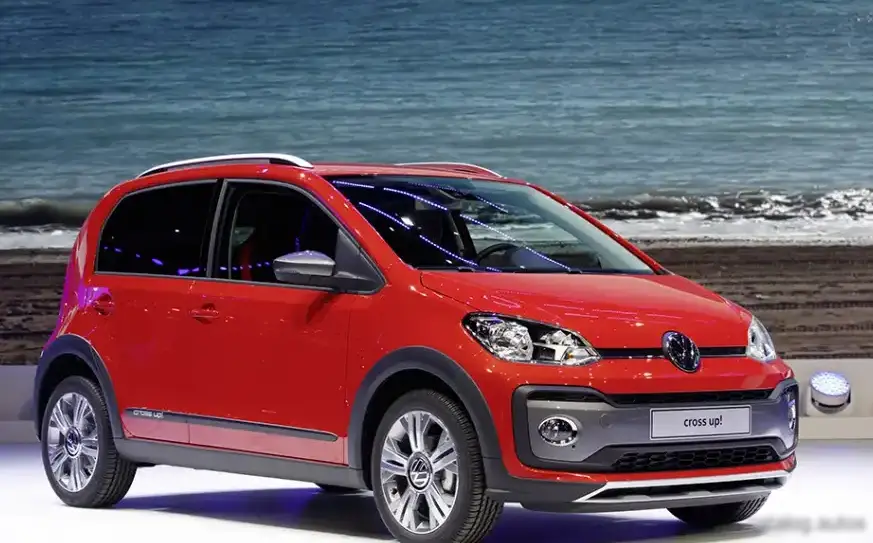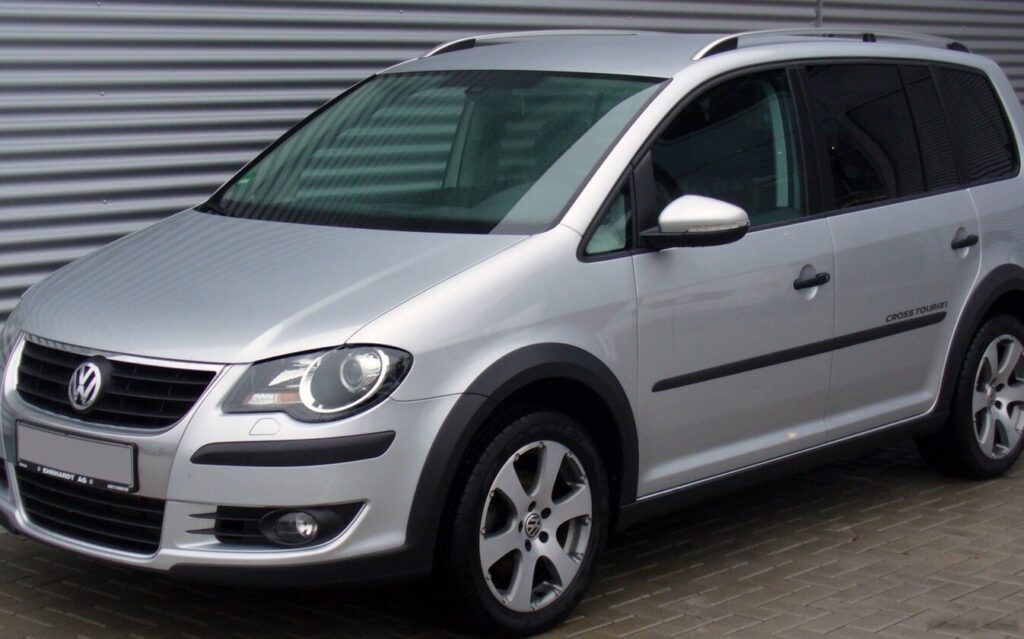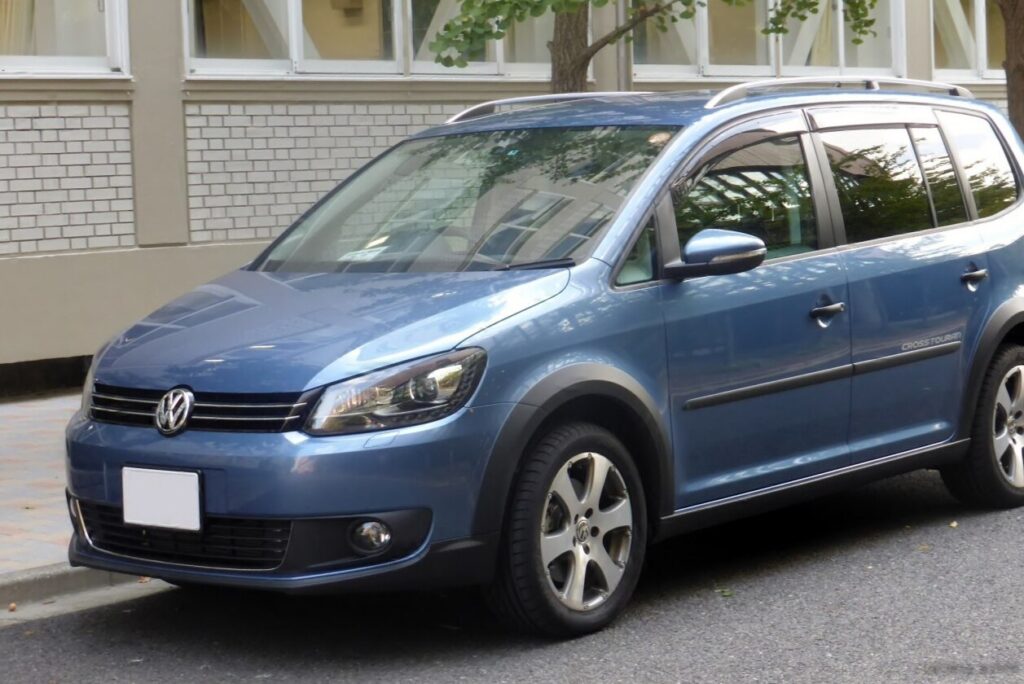
The Volkswagen Cross Touran I (facelift, 2010) 1.6 TDI, producing 105 horsepower, was a key variant within the second generation of the Touran compact minivan. Introduced in August 2010 and continuing through June 2013, this model aimed to bridge the gap between practicality and affordability within the Touran lineup. Positioned as an entry-level to mid-range option, it offered a more accessible price point compared to the higher-powered TDI variants and gasoline engines, while still providing the versatility expected of a Touran. The facelift brought styling updates and refinements to the original Touran, enhancing its appeal in the European market where it was primarily sold.
Technical Specifications
| Brand | Volkswagen |
| Model | Touran |
| Generation | Cross Touran I (facelift 2010) |
| Type (Engine) | 1.6 TDI (105 Hp) |
| Start of production | August, 2010 |
| End of production | June, 2013 |
| Powertrain Architecture | Internal Combustion engine |
| Body type | Minivan |
| Seats | 5 |
| Doors | 5 |
| Fuel consumption (urban) | 6.5 l/100 km (36.2 US mpg, 43.5 UK mpg, 15.4 km/l) |
| Fuel consumption (extra urban) | 4.7 l/100 km (50 US mpg, 60.1 UK mpg, 21.3 km/l) |
| Fuel consumption (combined) | 5.3 l/100 km (44.4 US mpg, 53.3 UK mpg, 18.9 km/l) |
| CO2 emissions | 140 g/km |
| Fuel Type | Diesel |
| Acceleration 0 – 100 km/h | 13.2 sec |
| Acceleration 0 – 62 mph | 13.2 sec |
| Acceleration 0 – 60 mph | 12.5 sec |
| Maximum speed | 175 km/h (108.74 mph) |
| Emission standard | Euro 5 |
| Weight-to-power ratio | 14.4 kg/Hp, 69.4 Hp/tonne |
| Weight-to-torque ratio | 6.1 kg/Nm, 165.1 Nm/tonne |
| Power | 105 Hp @ 4400 rpm |
| Power per litre | 65.7 Hp/l |
| Torque | 250 Nm @ 1500-2500 rpm (184.39 lb.-ft. @ 1500-2500 rpm) |
| Engine layout | Front, Transverse |
| Engine Model/Code | CAYC |
| Engine displacement | 1598 cm3 (97.52 cu. in.) |
| Number of cylinders | 4 |
| Engine configuration | Inline |
| Cylinder Bore | 79.5 mm (3.13 in.) |
| Piston Stroke | 80.5 mm (3.17 in.) |
| Compression ratio | 16.5:1 |
| Number of valves per cylinder | 4 |
| Fuel injection system | Diesel Commonrail |
| Engine aspiration | Turbocharger, Intercooler |
| Valvetrain | DOHC |
| Engine oil capacity | 4.3 l (4.54 US qt | 3.78 UK qt) |
| Kerb Weight | 1514 kg (3337.8 lbs.) |
| Max. weight | 2160 kg (4761.98 lbs.) |
| Max load | 646 kg (1424.19 lbs.) |
| Trunk (boot) space – minimum | 695 l (24.54 cu. ft.) |
| Trunk (boot) space – maximum | 1989 l (70.24 cu. ft.) |
| Fuel tank capacity | 60 l (15.85 US gal | 13.2 UK gal) |
| Max. roof load | 100 kg (220.46 lbs.) |
| Permitted trailer load with brakes (8%) | 1800 kg (3968.32 lbs.) |
| Permitted trailer load with brakes (12%) | 1500 kg (3306.93 lbs.) |
| Permitted trailer load without brakes | 750 kg (1653.47 lbs.) |
| Permitted towbar download | 75 kg (165.35 lbs.) |
| Length | 4406 mm (173.46 in.) |
| Width | 1799 mm (70.83 in.) |
| Width including mirrors | 2081 mm (81.93 in.) |
| Height | 1685 mm (66.34 in.) |
| Wheelbase | 2677 mm (105.39 in.) |
| Front track | 1550 mm (61.02 in.) |
| Rear track | 1531 mm (60.28 in.) |
| Ride height (ground clearance) | 152 mm (5.98 in.) |
| Minimum turning circle | 11.2 m (36.75 ft.) |
| Front brakes | Ventilated discs |
| Rear brakes | Disc |
| Front tires | 215/50 R17 |
| Rear tires | 235/45 R17 |
| Front wheel rims | 6.5J x 17 |
| Rear wheel rims | 8J x 17 |
| Number of gears | 6 |
| Gearbox type | Manual transmission |
Powertrain & Engine Architecture
The heart of the Cross Touran 1.6 TDI was the CAYC engine, a 1.6-liter inline-four cylinder diesel engine. This engine was part of Volkswagen’s common rail diesel family, utilizing direct fuel injection to optimize combustion efficiency. The CAYC featured a turbocharger with an intercooler, which helped to boost power output and improve torque delivery. The engine employed a double overhead camshaft (DOHC) valvetrain with four valves per cylinder, contributing to its relatively efficient operation. The 105 horsepower and 250 Nm (184 lb-ft) of torque were respectable figures for this displacement, but positioned it below the more powerful 2.0-liter TDI options available in the Touran range. The engine’s design prioritized fuel economy and reduced emissions, aligning with European market demands. The standard transmission was a 6-speed manual, although a 7-speed DSG dual-clutch automatic was offered as an option, though less common with this engine.
Driving Characteristics
The 1.6 TDI with the manual transmission offered a practical, if not particularly exhilarating, driving experience. Acceleration from 0-60 mph took around 12.5-13.2 seconds, making it suitable for everyday commuting and family transport rather than spirited driving. The engine’s torque peak, available from 1500-2500 rpm, provided adequate pulling power for overtaking and navigating hills. Compared to the 2.0 TDI variants, the 1.6 TDI felt noticeably less responsive, especially at higher speeds. The 6-speed manual gearbox was well-matched to the engine’s characteristics, offering precise shifts and allowing drivers to keep the engine within its optimal power band. Fuel economy was a strong point, with combined figures around 53.3 mpg (NEDC), making it an economical choice for long journeys.
Equipment & Trim Levels
The Cross Touran 1.6 TDI typically came with a reasonable level of standard equipment. This included air conditioning, alloy wheels, a CD/radio system, electric front windows, and central locking. Safety features such as ABS, ESP (Electronic Stability Program), and multiple airbags were also standard. Higher trim levels, often denoted by additional packages, offered features like climate control, parking sensors, a touchscreen infotainment system, and upgraded interior upholstery. The “Cross” designation itself added some rugged styling cues, including plastic body cladding and raised suspension, giving it a slightly more adventurous appearance.
Chassis & Braking
The Cross Touran utilized a front-wheel-drive layout with independent suspension all around. The front suspension featured coil springs and wishbones with a transverse stabilizer bar, while the rear employed a multi-link setup, also with a stabilizer bar. This suspension configuration provided a comfortable ride quality, although it wasn’t particularly sporty. Braking duties were handled by ventilated discs at the front and solid discs at the rear. The braking system was generally effective, providing adequate stopping power for everyday driving conditions. The steering was a power-assisted rack and pinion system, offering reasonable precision and feedback.
Market Reception & Comparison
The Cross Touran 1.6 TDI was generally well-received as a practical and economical family vehicle. Critics praised its fuel efficiency, spacious interior, and versatile seating arrangements. However, some reviewers noted that the 1.6 TDI engine lacked the punch of the larger 2.0 TDI variants. Compared to the 2.0 TDI, the 1.6 TDI offered lower running costs but compromised on performance. The 1.6 TDI was also often compared to similar compact minivans from other manufacturers, such as the Renault Scenic and Citroën C4 Picasso. The Volkswagen typically held an advantage in terms of build quality and perceived reliability.
Legacy
The CAYC engine, while not known for being exceptionally robust, proved to be generally reliable with proper maintenance. Common issues included turbocharger wear and potential problems with the diesel particulate filter (DPF), particularly on vehicles primarily used for short journeys. Today, used examples of the Cross Touran 1.6 TDI are relatively affordable and represent a good value for those seeking a practical and economical family vehicle. However, potential buyers should be aware of the potential maintenance costs associated with diesel engines, particularly the DPF and fuel injection system. The Cross Touran 1.6 TDI remains a popular choice in the used car market, particularly for those prioritizing fuel economy and practicality over outright performance.