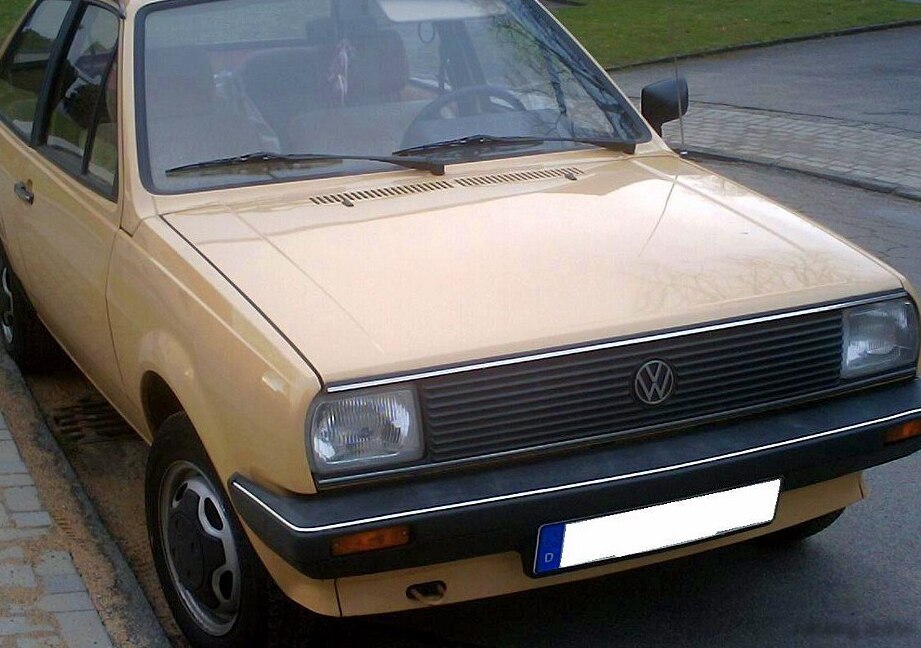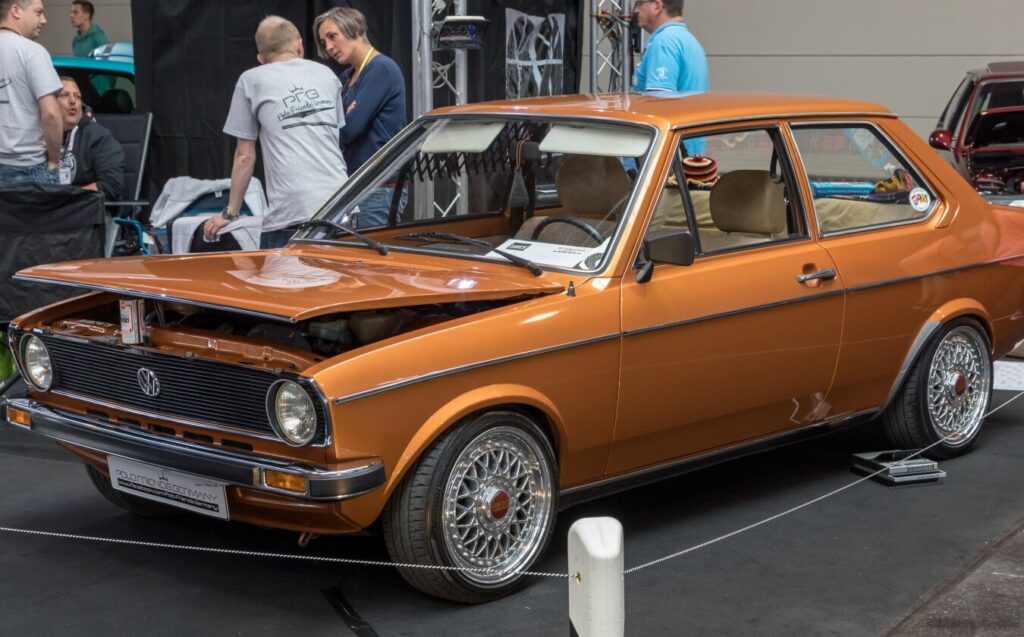
The Volkswagen Derby, produced between 1977 and 1981, was a compact sedan based on the Volkswagen Polo (Typ 86). Intended primarily for markets seeking a more traditional three-box sedan design than the hatchback Polo offered, the Derby aimed to broaden Volkswagen’s appeal, particularly in regions where sedans were favored. The 1.1-liter, 50 horsepower variant represented the entry-level offering in the Derby lineup, prioritizing affordability and fuel economy over outright performance. This model played a significant role in establishing the Derby as a budget-friendly option within the Volkswagen range.
Technical Specifications
| Brand | Volkswagen |
| Model | Derby |
| Generation | Derby (86) |
| Type (Engine) | 1.1 (50 Hp) |
| Start of production | 1977 |
| End of production | 1981 |
| Powertrain Architecture | Internal Combustion engine |
| Body type | Sedan |
| Seats | 5 |
| Doors | 2 |
| Fuel consumption (urban) | 9.1 l/100 km (25.8 US mpg, 31 UK mpg, 11 km/l) |
| Fuel consumption (extra urban) | 6.4 l/100 km (36.8 US mpg, 44.1 UK mpg, 15.6 km/l) |
| Fuel Type | Petrol (Gasoline) |
| Acceleration 0 – 60 mph | 15.4 sec |
| Maximum speed | 145 km/h (90.1 mph) |
| Weight-to-power ratio | 14 kg/Hp, 71.4 Hp/tonne |
| Weight-to-torque ratio | 9.1 kg/Nm, 110 Nm/tonne |
| Power | 50 Hp @ 5900 rpm |
| Power per litre | 45.7 Hp/l |
| Torque | 77 Nm @ 3500 rpm (56.79 lb.-ft. @ 3500 rpm) |
| Engine layout | Front, Transverse |
| Engine Model/Code | HB |
| Engine displacement | 1093 cm3 (66.7 cu. in.) |
| Number of cylinders | 4 |
| Engine configuration | Inline |
| Cylinder Bore | 69.5 mm (2.74 in.) |
| Piston Stroke | 72 mm (2.83 in.) |
| Compression ratio | 8:1 |
| Number of valves per cylinder | 2 |
| Fuel injection system | Carburettor |
| Engine aspiration | Naturally aspirated engine |
| Valvetrain | SOHC |
| Engine oil capacity | 3.5 l (3.7 US qt | 3.08 UK qt) |
| Kerb Weight | 700 kg (1543.24 lbs.) |
| Max. weight | 1130 kg (2491.22 lbs.) |
| Max load | 430 kg (947.99 lbs.) |
| Trunk (boot) space – minimum | 515 l (18.19 cu. ft.) |
| Fuel tank capacity | 36 l (9.51 US gal | 7.92 UK gal) |
| Permitted trailer load with brakes (12%) | 650 kg (1433 lbs.) |
| Permitted trailer load without brakes | 380 kg (837.76 lbs.) |
| Length | 3914 mm (154.09 in.) |
| Width | 1557 mm (61.3 in.) |
| Height | 1351 mm (53.19 in.) |
| Wheelbase | 2329 mm (91.69 in.) |
| Front track | 1295 mm (50.98 in.) |
| Rear (Back) track | 1313 mm (51.69 in.) |
| Ride height (ground clearance) | 97 mm (3.82 in.) |
| Minimum turning circle (turning diameter) | 9.6 m (31.5 ft.) |
| Drivetrain Architecture | The Internal combustion engine (ICE) drives the front wheels of the vehicle. |
| Drive wheel | Front wheel drive |
| Number of gears and type of gearbox | 4 gears, manual transmission |
| Front suspension | Wishbone, Transverse stabilizer |
| Rear suspension | Trailing arm, Torsion |
| Front brakes | Disc |
| Rear brakes | Drum |
| Steering type | Steering rack and pinion |
| Wheel rims size | Front wheel rims: 4.5J x 13Rear wheel rims: 4.5J x 13 |
Powertrain & Engine Architecture
The Derby 1.1 utilized Volkswagen’s HB engine code, a 1093cc inline four-cylinder engine. This engine was a relatively simple design, featuring a single overhead camshaft (SOHC) and two valves per cylinder. Fuel delivery was managed by a single carburetor, a common feature for vehicles of this era aiming for affordability. The engine produced 50 horsepower at 5900 rpm and 77 Nm (56.79 lb-ft) of torque at 3500 rpm. The engine was transversely mounted, driving the front wheels. The four-speed manual transmission was the standard offering, providing a straightforward driving experience. The engine’s design prioritized reliability and ease of maintenance over high performance.
Driving Characteristics
The 1.1-liter Derby was not known for its speed. Acceleration from 0 to 60 mph took approximately 15.4 seconds, and the top speed was around 90 mph. The four-speed manual transmission offered reasonable control, but the limited horsepower meant frequent gear changes were necessary, especially when tackling hills or overtaking. Compared to potential upgrades like the 1.5-liter engine available in some Derby models, the 1.1 felt noticeably underpowered. However, the lighter engine weight contributed to nimble handling, making it relatively easy to maneuver in urban environments. The gear ratios were optimized for fuel efficiency rather than rapid acceleration.
Equipment & Trim Levels
The base-level Derby 1.1 was fairly spartan in terms of equipment. Standard features typically included cloth upholstery, basic instrumentation (speedometer, fuel gauge), and manually operated windows and door locks. Options were limited but could include a radio, upgraded interior trim, and occasionally, a sunroof. The interior design was functional and durable, reflecting the car’s budget-oriented positioning. The dashboard layout was simple and straightforward, prioritizing ease of use. The Derby 1.1 was positioned as the entry point to the Derby range, appealing to buyers seeking basic, reliable transportation.
Chassis & Braking
The Derby’s chassis featured a front suspension with wishbones and a transverse stabilizer, providing a reasonable level of comfort and handling. The rear suspension utilized a trailing arm setup with torsion bars. Braking was accomplished via disc brakes on the front wheels and drum brakes on the rear. This configuration was typical for cars in this price range during the late 1970s. The relatively light weight of the 1.1-liter model helped to compensate for the less powerful braking system. Steering was via a rack and pinion system, offering precise control.
Market Reception & Comparison
The Derby 1.1 was generally well-received as an affordable and economical sedan. Critics acknowledged its simplicity and reliability, but often noted its lack of power. Compared to the Polo hatchback, the Derby offered a more conventional body style that appealed to a broader range of buyers. Within the Derby lineup, the 1.1-liter model was the most accessible, attracting buyers who prioritized fuel economy and low running costs. The 1.5-liter versions offered significantly more performance but came at a higher price point. Fuel economy was a strong point for the 1.1, achieving around 36.8 US mpg on the highway.
Legacy
The Volkswagen Derby, particularly the 1.1-liter variant, has become a popular choice among classic car enthusiasts due to its simplicity, affordability, and ease of maintenance. The HB engine is known for its durability, and parts availability remains relatively good. While not a performance icon, the Derby 1.1 represents a significant piece of Volkswagen history, demonstrating the company’s commitment to providing practical and reliable transportation to a wide range of customers. Today, well-maintained examples are sought after by collectors and those looking for a classic, economical vehicle.