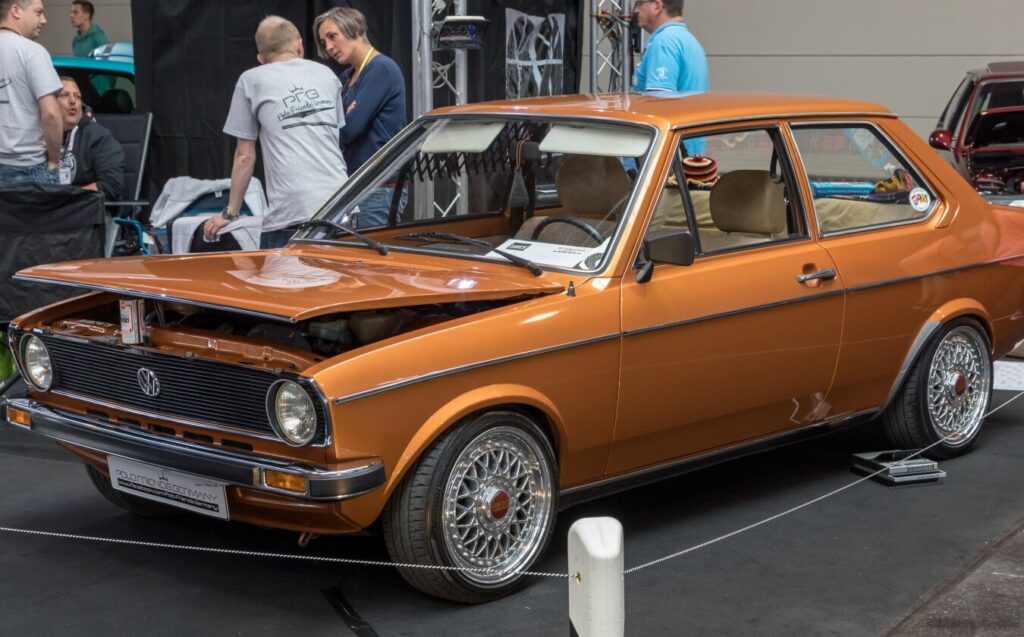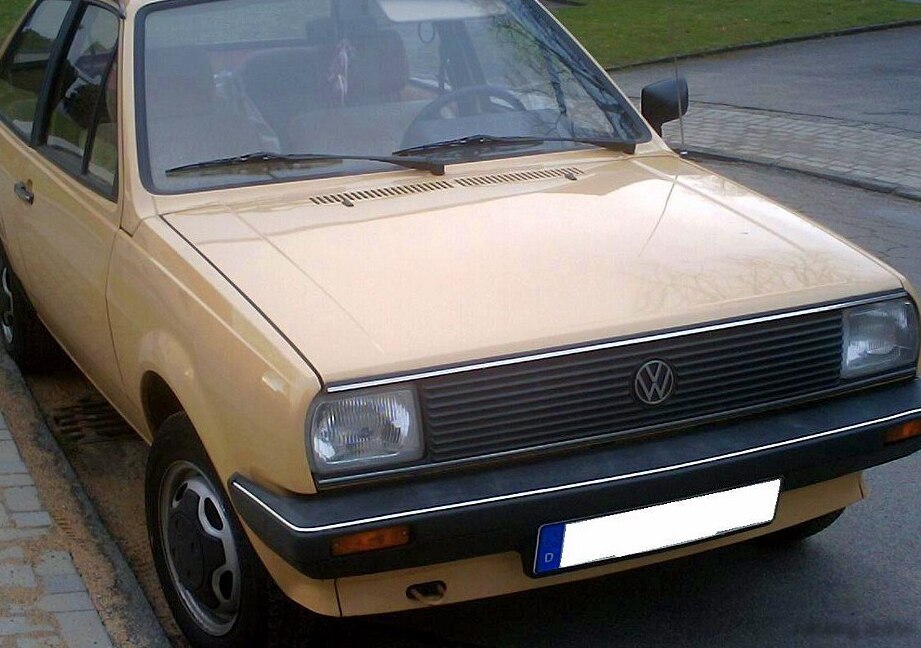
The Volkswagen Derby (86C) 1.0, produced between 1981 and 1984, represented Volkswagen’s entry-level offering within the broader Derby range. Positioned as a budget-friendly and practical sedan, the 1.0-liter variant aimed to provide affordable transportation, particularly in European markets where smaller displacement engines were favored due to tax regulations and fuel economy concerns. The Derby itself was a derivative of the Volkswagen Polo (Mk2), sharing its platform (the 1HX0/A3 platform) but offering a more traditional three-box sedan body style. This model filled a niche for buyers who desired a separate trunk for practicality, something the hatchback Polo didn’t offer.
Technical Specifications
| Brand | Volkswagen |
| Model | Derby |
| Generation | Derby (86C) |
| Type (Engine) | 1.0 (40 Hp) |
| Start of production | 1981 |
| End of production | 1984 |
| Powertrain Architecture | Internal Combustion engine |
| Body type | Sedan |
| Seats | 5 |
| Doors | 2 |
| Fuel consumption (urban) | 7.9 l/100 km (29.8 US mpg, 35.8 UK mpg, 12.7 km/l) |
| Fuel consumption (extra urban) | 5.6 l/100 km (42 US mpg, 50.4 UK mpg, 17.9 km/l) |
| Fuel Type | Petrol (Gasoline) |
| Acceleration 0 – 100 km/h | 21.2 sec |
| Acceleration 0 – 62 mph | 21.2 sec |
| Acceleration 0 – 60 mph | 20.1 sec |
| Maximum speed | 135 km/h (83.89 mph) |
| Weight-to-power ratio | 17.9 kg/Hp, 55.9 Hp/tonne |
| Weight-to-torque ratio | 9.7 kg/Nm, 103.5 Nm/tonne |
| Power | 40 Hp @ 5300 rpm |
| Power per litre | 38.4 Hp/l |
| Torque | 74 Nm @ 2700 rpm (54.58 lb.-ft. @ 2700 rpm) |
| Engine layout | Front, Transverse |
| Engine Model/Code | GL |
| Engine displacement | 1043 cm3 (63.65 cu. in.) |
| Number of cylinders | 4 |
| Engine configuration | Inline |
| Compression ratio | 9.5:1 |
| Number of valves per cylinder | 2 |
| Fuel injection system | Carburettor |
| Engine aspiration | Naturally aspirated engine |
| Valvetrain | SOHC |
| Engine oil capacity | 3.5 l (3.7 US qt | 3.08 UK qt) |
| Kerb Weight | 715 kg (1576.31 lbs.) |
| Max. weight | 1150 kg (2535.32 lbs.) |
| Max load | 435 kg (959.01 lbs.) |
| Trunk (boot) space – minimum | 445 l (15.72 cu. ft.) |
| Max. roof load | 50 kg (110.23 lbs.) |
| Permitted trailer load with brakes (12%) | 600 kg (1322.77 lbs.) |
| Permitted trailer load without brakes | 380 kg (837.76 lbs.) |
| Length | 3975 mm (156.5 in.) |
| Width | 1580 mm (62.2 in.) |
| Height | 1355 mm (53.35 in.) |
| Wheelbase | 2335 mm (91.93 in.) |
| Front track | 1306 mm (51.42 in.) |
| Rear (Back) track | 1332 mm (52.44 in.) |
| Ride height (ground clearance) | 118 mm (4.65 in.) |
| Minimum turning circle (turning diameter) | 10 m (32.81 ft.) |
| Drivetrain Architecture | The Internal combustion engine (ICE) drives the front wheels of the vehicle. |
| Drive wheel | Front wheel drive |
| Number of gears and type of gearbox | 4 gears, manual transmission |
| Front suspension | Independent type McPherson |
| Rear suspension | Torsion |
| Front brakes | Disc |
| Rear brakes | Drum |
| Steering type | Steering rack and pinion |
| Wheel rims size | Front wheel rims: 4.5J x 13Rear wheel rims: 4.5J x 13 |
Powertrain & Engine Architecture
The Derby 1.0 was powered by the Volkswagen GL engine, a 1.043-liter inline four-cylinder engine. This engine, also found in the Polo, was characterized by its simple, carbureted fuel system. The GL engine utilized a single, two-barrel carburetor for fuel delivery, a common setup for engines of this era aiming for affordability and ease of maintenance. The engine featured a single overhead camshaft (SOHC) valvetrain with two valves per cylinder. This configuration, while not particularly sophisticated, provided adequate performance for the vehicle’s intended purpose. The engine’s modest 40 horsepower output at 5300 rpm and 74 Nm (54.58 lb-ft) of torque at 2700 rpm were sufficient for city driving and moderate highway speeds, but it was not designed for rapid acceleration or high-speed cruising. The engine was transversely mounted, driving the front wheels through a four-speed manual transmission.
Driving Characteristics
The driving experience in the Derby 1.0 was defined by its economy-focused nature. Acceleration was leisurely, taking over 21 seconds to reach 62 mph (100 km/h). The four-speed manual transmission offered a relatively wide spread of gear ratios, allowing drivers to keep the engine within its optimal power band. However, the limited horsepower meant that overtaking maneuvers required careful planning. Compared to the more powerful versions of the Derby, such as those equipped with larger engines, the 1.0-liter model felt significantly underpowered. The suspension, while adequate for everyday driving, was tuned for comfort rather than sporty handling. The car’s light weight (715 kg or 1576 lbs) helped to mitigate the effects of the low horsepower, making it feel reasonably nimble in urban environments.
Equipment & Trim Levels
The Derby 1.0 was typically offered with a basic level of equipment, reflecting its position as the entry-level model. Standard features generally included cloth upholstery, basic instrumentation (speedometer, fuel gauge, and temperature gauge), and manually operated windows and door locks. Options were limited but could include a radio, upgraded interior trim, and occasionally, a sunroof. The interior design was functional and utilitarian, prioritizing practicality over luxury. The dashboard layout was simple and straightforward, with easy-to-reach controls. The Derby 1.0 was often seen as a “blank canvas” for buyers who wanted a basic, reliable sedan that they could customize to their liking.
Chassis & Braking
The Derby 1.0 utilized a McPherson strut independent suspension system at the front, providing a reasonable level of ride comfort. The rear suspension employed a torsion beam setup, which was cost-effective and space-efficient. The braking system consisted of disc brakes at the front and drum brakes at the rear. While adequate for the car’s weight and performance, the braking system lacked the stopping power of more advanced setups found in higher-end vehicles. The steering was a rack-and-pinion system, providing reasonably precise steering feel. The car’s relatively small size and light weight contributed to its maneuverability.
Market Reception & Comparison
The Derby 1.0 received mixed reviews from automotive critics. While praised for its affordability and fuel economy, it was often criticized for its lack of power and basic equipment. Compared to other small sedans available at the time, the Derby 1.0 offered a competitive price point but lacked the refinement and performance of some of its rivals. Within the Derby lineup, the 1.0-liter model was positioned as the most accessible option, appealing to budget-conscious buyers. The more powerful versions of the Derby, such as those with 1.3 or 1.5-liter engines, offered significantly improved performance but came at a higher cost. Fuel economy was a strong point for the 1.0-liter model, achieving around 42 US mpg on the highway.
Legacy
The Volkswagen Derby 1.0, while not a performance icon, holds a place in automotive history as a practical and affordable small sedan. The GL engine, while simple, proved to be relatively reliable, and many examples are still on the road today. In the used car market, the Derby 1.0 is often sought after by enthusiasts looking for a classic Volkswagen that is easy to maintain and relatively inexpensive to operate. Its simplicity and robust construction make it a popular choice for restoration projects. The Derby 1.0 represents a bygone era of automotive design, where affordability and practicality were prioritized over luxury and performance.