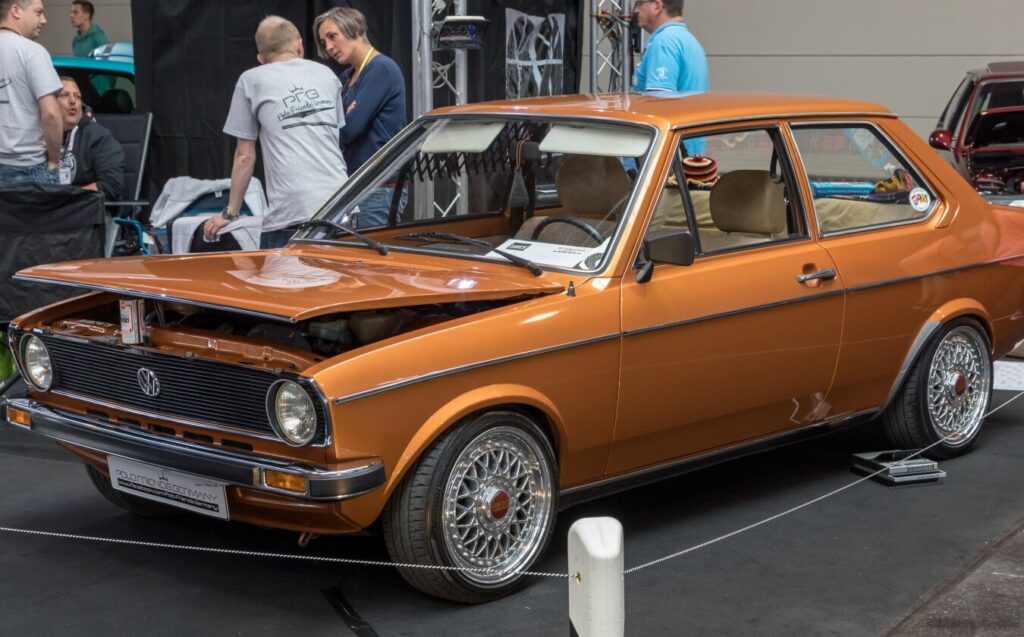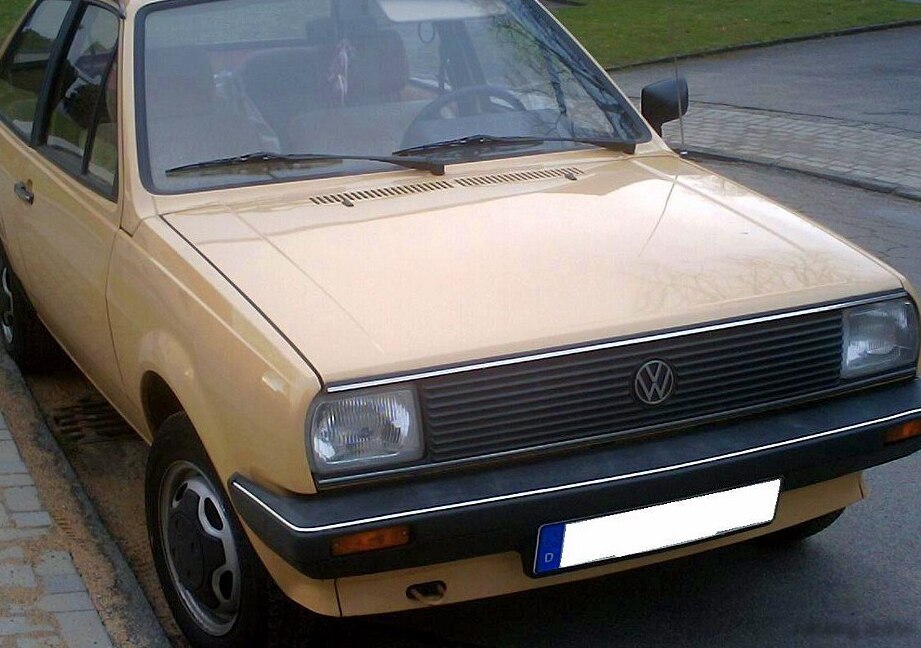
The Volkswagen Derby (86C) 1.1, produced between 1981 and 1983, represented Volkswagen’s entry-level offering in the compact sedan segment. Positioned as a more affordable alternative to the Golf, the Derby was primarily aimed at budget-conscious buyers seeking a practical and economical vehicle. It was based on the Volkswagen Polo (Mk2) platform, sharing many of its mechanical components. The 1.1-liter engine variant, producing 50 horsepower, served as the base model, offering a no-frills transportation solution. The Derby was largely a European market vehicle, with limited sales outside of the continent.
Technical Specifications
| Brand | Volkswagen |
| Model | Derby |
| Generation | Derby (86C) |
| Type (Engine) | 1.1 (50 Hp) |
| Start of production | 1981 |
| End of production | 1983 |
| Powertrain Architecture | Internal Combustion engine |
| Body type | Sedan |
| Seats | 5 |
| Doors | 2 |
| Fuel consumption (urban) | 9.2 l/100 km (25.6 US mpg) |
| Fuel consumption (extra urban) | 6.1 l/100 km (38.6 US mpg) |
| Fuel Type | Petrol (Gasoline) |
| Acceleration 0 – 100 km/h | 15.4 sec |
| Acceleration 0 – 62 mph | 15.4 sec |
| Acceleration 0 – 60 mph | 14.6 sec |
| Maximum speed | 146 km/h (90.72 mph) |
| Weight-to-power ratio | 14.5 kg/Hp |
| Weight-to-torque ratio | 9.5 kg/Nm |
| Power | 50 Hp @ 5800 rpm |
| Power per litre | 45.7 Hp/l |
| Torque | 76 Nm @ 3500 rpm (56.05 lb.-ft. @ 3500 rpm) |
| Engine layout | Front, Transverse |
| Engine Model/Code | HB |
| Engine displacement | 1093 cm3 (66.7 cu. in.) |
| Number of cylinders | 4 |
| Engine configuration | Inline |
| Compression ratio | 8.2:1 |
| Number of valves per cylinder | 2 |
| Fuel injection system | Carburettor |
| Engine aspiration | Naturally aspirated |
| Engine oil capacity | 3.5 l (3.7 US qt | 3.08 UK qt) |
| Kerb Weight | 725 kg (1598.35 lbs.) |
| Max. weight | 1150 kg (2535.32 lbs.) |
| Max load | 425 kg (936.96 lbs.) |
| Trunk (boot) space – minimum | 445 l (15.72 cu. ft.) |
| Max. roof load | 50 kg (110.23 lbs.) |
| Permitted trailer load with brakes (12%) | 650 kg (1433 lbs.) |
| Permitted trailer load without brakes | 390 kg (859.8 lbs.) |
| Length | 3975 mm (156.5 in.) |
| Width | 1580 mm (62.2 in.) |
| Height | 1355 mm (53.35 in.) |
| Wheelbase | 2335 mm (91.93 in.) |
| Front track | 1306 mm (51.42 in.) |
| Rear (Back) track | 1332 mm (52.44 in.) |
| Ride height (ground clearance) | 118 mm (4.65 in.) |
| Minimum turning circle (turning diameter) | 10 m (32.81 ft.) |
| Drivetrain Architecture | Front wheel drive |
| Number of gears and type of gearbox | 4 gears, manual transmission |
| Front suspension | Independent type McPherson |
| Rear suspension | Torsion |
| Front brakes | Disc |
| Rear brakes | Drum |
| Steering type | Steering rack and pinion |
| Wheel rims size | Front wheel rims: 4.5J x 13Rear wheel rims: 4.5J x 13 |
Powertrain & Engine Architecture
The Derby 1.1 was powered by the Volkswagen HB engine, a 1.1-liter (1093 cc) inline-four cylinder engine. This engine was a relatively simple design, featuring a single overhead camshaft (SOHC) and two valves per cylinder. Fuel delivery was handled by a carburetor, a common feature for vehicles of this era, prioritizing simplicity and cost-effectiveness over the more advanced fuel injection systems. The engine produced 50 horsepower at 5800 rpm and 76 Nm (56 lb-ft) of torque at 3500 rpm. The engine’s modest output was paired with a four-speed manual transmission, delivering power to the front wheels. The transverse engine layout, a hallmark of front-wheel-drive Volkswagen designs, contributed to efficient packaging within the compact Derby chassis.
Driving Characteristics
The Derby 1.1’s driving experience was characterized by its modest performance. Acceleration was slow, taking approximately 15.4 seconds to reach 62 mph (100 km/h). Top speed was around 91 mph (146 km/h). The four-speed manual transmission offered a relatively wide range of gear ratios, but the engine’s limited torque meant frequent downshifting was necessary, especially when encountering hills or overtaking. Compared to the more powerful Golf GTI or even the later Derby variants with larger engines, the 1.1 felt underpowered. However, its light weight (approximately 1598 lbs) helped to mitigate some of the performance shortcomings. The focus was clearly on fuel economy and ease of driving rather than outright speed.
Equipment & Trim Levels
The Derby 1.1 was offered with a fairly basic level of equipment. Standard features typically included cloth upholstery, a simple dashboard layout with basic instrumentation, and manual windows and door locks. Options were limited, but could include a radio, upgraded interior trim, and occasionally, a sunroof. The interior was functional and durable, prioritizing practicality over luxury. The exterior styling was similarly understated, with minimal chrome trim and basic steel wheels. The Derby 1.1 was positioned as a value-oriented vehicle, and its equipment level reflected that.
Chassis & Braking
The Derby 1.1 utilized a relatively simple chassis design. The front suspension featured independent McPherson struts, providing a reasonable level of ride comfort and handling. The rear suspension employed a torsion beam setup, which was cost-effective and space-efficient. Braking was handled by disc brakes at the front and drum brakes at the rear. The braking system was adequate for the vehicle’s weight and performance, but lacked the stopping power of more modern systems. Steering was via a rack and pinion system, providing reasonably precise control.
Market Reception & Comparison
The Derby 1.1 was generally well-received as an affordable and economical compact sedan. Critics praised its fuel efficiency and ease of driving, but noted its lack of performance. Compared to other vehicles in its class, such as the Ford Fiesta or Opel Corsa, the Derby 1.1 offered a similar level of practicality and affordability. However, its engine was less powerful than some of its competitors. Within the Volkswagen lineup, the Derby 1.1 served as the entry point, with higher trim levels offering larger engines and more features. The 1.3 and 1.5-liter versions provided a noticeable improvement in performance, while the diesel variants offered even better fuel economy.
Legacy
The Volkswagen Derby 1.1, while not a particularly exciting vehicle, played an important role in providing affordable transportation to a wide range of buyers. The HB engine proved to be relatively reliable, although carburetor maintenance was often required. Today, the Derby 1.1 is a relatively rare sight on the roads, but it has gained a following among classic Volkswagen enthusiasts. Parts availability can be challenging, but the engine’s simplicity makes it relatively easy to repair. The Derby 1.1 represents a snapshot of automotive engineering from the early 1980s, prioritizing practicality and economy over performance and luxury.