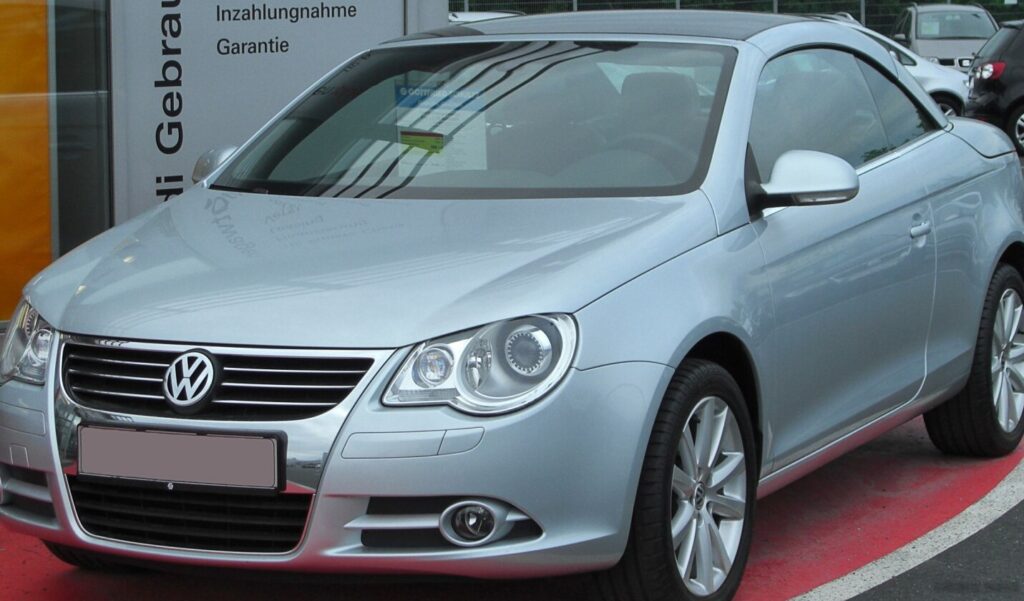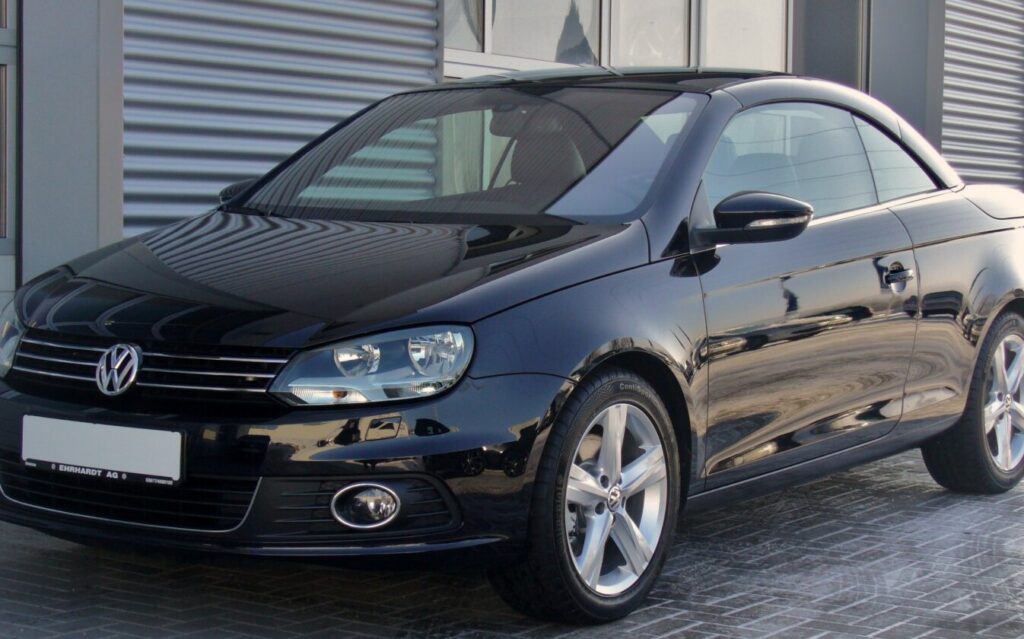
The Volkswagen Eos, particularly the facelifted version introduced in October 2010, represented Volkswagen’s entry into the premium compact coupe-convertible segment. Produced through May 2015, the Eos aimed to blend the practicality of a hardtop convertible with the style and driving experience expected of a Volkswagen. The 1.4 TSI (122 hp) variant, equipped with a six-speed manual transmission, served as a relatively accessible entry point into the Eos range, prioritizing fuel efficiency and affordability over outright performance. It was positioned below the more powerful 2.0 TSI models, appealing to buyers seeking a stylish convertible without the higher running costs associated with larger engines.
Technical Specifications
| Brand | Volkswagen |
| Model | Eos |
| Generation | Eos (facelift 2010) |
| Type (Engine) | 1.4 TSI (122 Hp) |
| Start of production | October, 2010 |
| End of production | May, 2015 |
| Powertrain Architecture | Internal Combustion engine |
| Body type | Coupe – Cabriolet |
| Seats | 4 |
| Doors | 2 |
| Fuel consumption (urban) | 7.6 l/100 km (30.9 US mpg, 37.2 UK mpg, 13.2 km/l) |
| Fuel consumption (extra urban) | 5.3 l/100 km (44.4 US mpg, 53.3 UK mpg, 18.9 km/l) |
| Fuel consumption (combined) | 6.2 l/100 km (37.9 US mpg, 45.6 UK mpg, 16.1 km/l) |
| CO2 emissions | 144 g/km |
| Fuel Type | Petrol (Gasoline) |
| Acceleration 0 – 100 km/h | 10.9 sec |
| Acceleration 0 – 62 mph | 10.9 sec |
| Acceleration 0 – 60 mph | 10.4 sec |
| Maximum speed | 198 km/h (123.03 mph) |
| Emission standard | Euro 5 |
| Weight-to-power ratio | 12.3 kg/Hp, 81.1 Hp/tonne |
| Weight-to-torque ratio | 7.5 kg/Nm, 132.9 Nm/tonne |
| Power | 122 Hp @ 5500 rpm |
| Power per litre | 87.8 Hp/l |
| Torque | 200 Nm @ 1500-4000 rpm (147.51 lb.-ft. @ 1500-4000 rpm) |
| Engine layout | Front, Transverse |
| Engine Model/Code | CAXA |
| Engine displacement | 1390 cm3 (84.82 cu. in.) |
| Number of cylinders | 4 |
| Engine configuration | Inline |
| Number of valves per cylinder | 4 |
| Fuel injection system | Direct injection |
| Engine aspiration | Turbocharger, Intercooler |
| Engine oil capacity | 3.6 l (3.8 US qt | 3.17 UK qt) |
| Kerb Weight | 1505 kg (3317.96 lbs.) |
| Max. weight | 1920 kg (4232.88 lbs.) |
| Max load | 415 kg (914.92 lbs.) |
| Trunk (boot) space – minimum | 205 l (7.24 cu. ft.) |
| Fuel tank capacity | 55 l (14.53 US gal | 12.1 UK gal) |
| Length | 4423 mm (174.13 in.) |
| Width | 1791 mm (70.51 in.) |
| Height | 1444 mm (56.85 in.) |
| Wheelbase | 2578 mm (101.5 in.) |
| Front track | 1545 mm (60.83 in.) |
| Rear (Back) track | 1547 mm (60.91 in.) |
| Minimum turning circle | 10.9 m (35.76 ft.) |
| Drivetrain Architecture | The Internal combustion engine (ICE) drives the front wheels of the vehicle. |
| Drive wheel | Front wheel drive |
| Number of gears and type of gearbox | 6 gears, manual transmission |
| Front brakes | Ventilated discs |
| Assisting systems | ABS (Anti-lock braking system) |
| Steering type | Steering rack and pinion |
| Tires size | 215/55 R16 |
| Wheel rims size | 7J x 16 |
Powertrain & Engine Architecture
The heart of the Eos 1.4 TSI was the CAXA engine code, a 1.4-liter turbocharged inline-four cylinder gasoline engine. This engine was a key component of Volkswagen’s New Engine Family (NF), known for its efficiency and advanced technology. It featured direct fuel injection (FSI) and a turbocharger with an intercooler, allowing it to produce 122 horsepower at 5500 rpm and 200 Nm (147.51 lb-ft) of torque between 1500 and 4000 rpm. The direct injection system precisely meters fuel into the combustion chamber, improving combustion efficiency and reducing emissions. The turbocharger, coupled with the intercooler, boosted power output by forcing more air into the engine. The six-speed manual transmission was chosen to maximize fuel economy and provide a more engaging driving experience, although a seven-speed DSG dual-clutch transmission was also available as an option.
Driving Characteristics
The 1.4 TSI Eos, with its manual transmission, offered a balanced driving experience. While not a sports car, it provided adequate acceleration for everyday driving, achieving 0-60 mph in approximately 10.4 seconds. The turbocharger provided a noticeable boost in power during acceleration, but the engine lacked the outright punch of the larger 2.0 TSI variants. The six-speed manual transmission allowed drivers to keep the engine in its optimal power band, enhancing responsiveness. The gear ratios were well-suited for both city and highway driving. Compared to the 2.0 TSI models, the 1.4 TSI felt less eager to rev, but it offered significantly better fuel economy. The suspension was tuned for comfort, providing a smooth ride, but it wasn’t particularly sporty.
Equipment & Trim Levels
The Eos 1.4 TSI typically came with a respectable level of standard equipment. This included air conditioning, alloy wheels, a CD stereo system, and electric windows and mirrors. Safety features such as ABS, traction control, and multiple airbags were also standard. Higher trim levels, such as Sport or Comfort, added features like automatic climate control, upgraded audio systems, leather upholstery, and parking sensors. Optional extras included a panoramic sunroof (a defining feature of the Eos), navigation system, and bi-xenon headlights. Interior upholstery was typically cloth in the base models, with leather options available on higher trims. The dashboard layout was clean and functional, typical of Volkswagen’s design language at the time.
Chassis & Braking
The Eos utilized a front-wheel-drive chassis with independent suspension at the front and a multi-link rear suspension. This setup provided a good balance of ride comfort and handling. The front brakes were ventilated discs, providing adequate stopping power, while the rear brakes were typically solid discs. The Eos’s weight, around 1505 kg (3317.96 lbs), was relatively moderate for a hardtop convertible, contributing to its manageable handling characteristics. Stabilizer bars were fitted to both the front and rear axles to reduce body roll during cornering. The steering was a rack-and-pinion system, providing precise and responsive steering feel.
Market Reception & Comparison
The Volkswagen Eos 1.4 TSI was generally well-received by automotive critics as a stylish and practical convertible. It was praised for its comfortable ride, well-appointed interior, and fuel efficiency. However, some critics noted that the 1.4 TSI engine lacked the performance of its larger counterparts. Compared to the 2.0 TSI models, the 1.4 TSI offered better fuel economy (around 37.9 US mpg combined) but slower acceleration. The 1.4 TSI was also more affordable, making it an attractive option for buyers on a budget. Reliability was generally good, although some owners reported minor issues with the turbocharger and fuel injection system.
Legacy
The Volkswagen Eos, while discontinued in 2015, remains a popular choice in the used car market. The 1.4 TSI engine, when properly maintained, has proven to be relatively reliable. However, potential buyers should be aware of the potential for turbocharger issues and ensure that the engine has been regularly serviced. The Eos’s unique combination of a hardtop convertible design, stylish interior, and reasonable running costs continues to appeal to buyers seeking a practical and enjoyable open-air driving experience. The CAXA engine, while not the most powerful in Volkswagen’s lineup, is known for its efficiency and relatively straightforward maintenance, making the 1.4 TSI Eos a viable option for those seeking an affordable and reliable convertible.